Showing posts with label WikiLeaks. Show all posts

Video - Michael Hastings Cremated Without Family Permission; Wife Hires Private Investigator.

Labels: » » » » »

(MFS - The Other News)(Video - Michael Hastings Cremated Without Family Permission; Wife Hires Private Investigator.HT: InfiniteUnknown.)
Michael Hastings’ Ashes Sent Home for Burial (San Diego 6, July 14/15, 2013):
Details uncovered by this reporter shed new light into the June 18 death of journalist Michael Hastings.
Hastings’ friend and confidant SSgt. Joe Biggs disclosed a macabre twist in the award-winning journalist’s death in a suspicious single-car accident. According to SSgt. Biggs, “Michael Hastings’ body was returned to Vermont in an urn.” He further alleged, “Family members did not want Michael’s body cremated.”
This revelation provides another wrinkle in the Los Angeles Police Department’s (LAPD) handling of a case they labeled “no foul play” only hours after the writer’s death.
Nevertheless LA County assistant corner, Ed Winter, said it took two days to identify the burned-beyond recognition body of Hastings. Officials also confirmed that an autopsy has been performed, but the cause of death is still pending. Unfortunately the family will have to wait for cause of death answers as LAPD media spokesperson Lieutenant Andrew Neiman indicated, “It will take several weeks to get the toxicology results.”
SSgt. Biggs also emphatically stated that liquor was not a factor in the accident, as Hastings hadn’t consumed alcoholic beverages in five years.
So why is the LAPD delaying the reports?
It was SSgt. Biggs who released the following chilling email to members of the media; “Subject: FBI Investigation, re: NSA -Hey (redacted names) — the Feds are interviewing my “close friends and associates.” Perhaps if the authorities arrive “BuzzFeed GQ,” er HQ, may be wise to immediately request legal counsel before any conversations or interviews about our news gathering practices or related journalism issues. Also: I’m onto a big story, and need to go off the rada[r] for a bit. All the best, and hope to see you all soon. Michael”
The receipt of this email from Hastings tipped the scales for SSgt. Biggs. “This wasn’t an accident and I will continue to investigate his death.”
As an investigative journalist, Hastings saw his fair share of threats. One particular passage in Hastings book, “The Operators: The Wild and Terrifying Inside Story of America’s War in Afghanistan,” revealed that a former McChrystal staff member made a death threat. “We’ll hunt you down and kill you if we don’t like what you write,” the unnamed staffer said. Hastings coolly retorted: “Well, I get death threats like that about once a year, so no worries.”
Despite the LAPD’s categorization of the Hasting fatal accident as a “no (evidence of) foul play,” LAPD continues to ignore FOIA (CPRA in Calif.) requests made by San Diego 6 News for the police report, 9/11 call, autopsy, bomb squad and toxicology reports, or make the Mercedes available for inspection which only fuels conjecture.)

Michael Hastings #MediaBurnOut: #Wikileaks claims #NSA conspiracy

Labels: » » » »

Michael Hastings contacted WikiLeaks lawyer Jennifer Robinson just a few hours before he died, saying that the FBI was investigating him.

#wikileaks #Palestine

Labels: »
Israel Matzav: 'Palestinian Authority' wanted Falk fired
A Wikileaks cable shows that in 2010, the 'Palestinian Authority' asked that UN 'human rights council' special envoy Richard Falk be fired... because he was too pro-Hamas (Hat Tip: Elder of Ziyon). The cable was written by Douglas Griffiths, then the American charge d'affaires in Geneva.

#Wikileaks: April 6, 1973 cable #SaudiArabia Recognizes #Israel h/t @DebbieSchussel

Labels: » » »
SECRET
PAGE 01 CAIRO 01025 061031 Z
54
ACTION SS-25
INFO OCT-01 ADP-00 /026 W
——————— 127347
R 060945 Z APR 73
FM USINT CAIRO
TO SECSTATE WASHDC 2860
S E C R E T CAIRO 1025
EXDIS
DEPARTMENT PASS JIDDA
EO 11652: XGDS-1
TAGS: PFOR, SA, XE, EG
SUBJECT: THE FUTURE OF THE PALESTINIANS
1. IN CONVERSATION APRIL 4 ARRANGED BY SAUDI ARABIAN AMBASSADOR NAZIR AT HIS RESIDENCE, KING FEISAL’ S ADVISOR KAMAL ADHAM TOUCHED SEVERAL TIMES ON THE PROB- LEM OF THE PALESTINIANS. HIS MAIN POINT WAS THAT NEITHER THE PALESTINIANS NOR ISRAEL REALLY WANT A PEACE AGREEMENT IN THE MIDDLE EAST. IN ALL THIS, I REFRAINED FROM TAKING UP THE REFERENCE TO ISRAEL, BUT SOUGHT TO ELICIT HIS VIEW OF THE FUTURE OF THE PALESTINIANS; I TRIED TO SET THE CONTEXT OF A RESPONSIBILITY OF THE ARAB GOVERNMENTS TO DEAL WITH THE PROBLEM.
2. THE FOCUS NARROWED DOWN TO THE ” MILITANT” PALES- TINIANS, AND ADHAM SAID THAT ARAFAT HAD EXPLAINED TO HIM THE PROBLEM HE AND THE PLO HAVE WITH THE HUSSEIN PLAN AS BEING ” WE ARE NOT PART OF IT.” IN OTHER WORDS, UNLESS THEY ARE INCLUDED IN THE DELIBERATIONS, THEY WILL NOT ACCEPT THE RESULTS. HE SAID THAT WHAT ” PALESTINIANS”– HE DID NOT SPECIFY WHICH ONES– WANT IS TO BE ALLOWED TO RETURN TO THE AREA ONCE CALLED PALESTINE AND THERE LIVE IN PEACE WITH THE JEWS.
3. I NOTED THAT THE USG IS ON RECORD THAT ANY SETTLE- MENT MUST TAKE INTO ACCOUNT THE LEGITIMATE ASPIRATIONS
SECRET
SECRET
PAGE 02 CAIRO 01025 061031 Z
OF THE PALESTINIAN PEOPLE. THIS DOES NOT , HOWEVER, MEAN THAT WE REGARD ELIMINATION OF THE STATE OF ISRAEL AS A LEGITIMATE ASPIRATION. ADHAM SAID ” OF COURSE NOT– NEITHER DO WE.”
4. ADHAM REFERRED TO GAZA, AND SAID HE THOUGHT THAT, AS EGYPT HAD OPENED THE WAY, THAT PROBLEM COULD BEE [sic].
[Emphasis added.]
Analysis @debbieschlussel

Revealed By WikiLeaks: Obama Team Stole Election, Bribed Jesse Jackson And Took Russian Money In 2008

Labels: » » » »
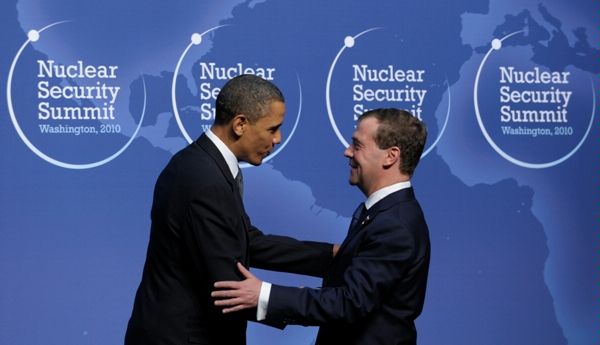
obama medvedev SC Revealed By WikiLeaks: Obama Team Stole Election, Bribed Jesse Jackson And Took Russian Money In 2008According to internal Emails circulated among the staff at Stratfor, an Austin Texas based private intelligence gathering firm, John McCain was presented with proof that Democrats in Pennsylvania and Ohio used voter fraud to win those states and committed other disturbing crimes. The communiqués were stolen and made public by WikiLeaks. An Email dated November 7, 2008 under the subject line “ Insight – The Dems & Dirty Tricks ** Internal Use Only – Pls Do Not Forward **,” was sent by Fred Burton, Stratfor’s V.P. of Intelligence. It said in part, The black Dems were caught stuffing the ballot boxes in Philly and Ohio as reported the night of the election and Sen. McCain chose not to fight. The matter is not dead inside the party. It now becomes a matter of sequence now as to how and when to “out”. 
Burton also mentioned a “six-figure” Democrat donation/bribe to Jesse Jackson to buy his silence about Israel. On October 14, 2008 Jackson told fellow attendees in at the World Policy Forum in Evian France a ‘President Obama’ would “remove the clout of Zionists who have controlled American policy for decades.”
Burton continued with an explosive charge he apparently considered quite believable, The hunt is on for the sleezy Russian money into O-mans coffers. A smoking gun has already been found. Will get more on this when the time is right. My source was too giddy to continue. Can you say Clinton and ChiCom funny money? This also becomes a matter of how and when to out.
This allegation makes some sense of Obama’s reassurances to Russian President Dmitry Medvedev caught by an open mic. Obama said “….but it’s important for him [Putin] to give me space.”
Medvedev responded: “Yeah, I understand. I understand your message about space. Space for you …”
Obama: “This is my last election. After my election, I have more flexibility.”
Medvedev: “I understand. I will transmit this information to Vladimir [Putin]…”
Fred Burton is a known quantity in the highest Intelligence circles. He has been Deputy Chief of the Department of State’s counterterrorism division for the Diplomatic Security Service (DSS).
Stratfor has acknowledged that last December its internal communications system was hacked and the group “Anonymous” has taken credit for the sabotage .  WikiLeaks started to publish Stratfor’s stolen Emails last month. Startfor will neither confirm nor deny whether the communiqués attributed to its staff are real or fabrications.

Wikileaks Publishes Fake Column from “Bill KeIler”

Labels: » »
That’s not a typo in the headline. You’ll see what I mean as you read on.
So Wikileaks published a phony article — purportedly by New York Times editor Bill Keller, but really by an imposter — which was supportive of Wikileaks. The hoax was very well done and fooled a lot of people into thinking Keller truly supports Wikileaks to the hilt. The article was published at the phony Web address opinion-nytimes.com instead of their actual opinion pages at nytimes.com/pages/opinion/index.html, and looked like this:
TIME explains further:
The phony column was posted on a website that looks exactly like the online version of the New York Times Opinion Page — the pranksters even loaded the site with similar-looking ads and links to other (legitimate) Times webpages. But that wasn’t all. The WikiLeaks hoax-masters injected some tromp l’oeil magic into their scheme. The article was initially tweeted by @nytkeIler, a ripoff of Keller’s real Twitter handle, @nytkeller. (In Twitter’s standard font, a capitalized “I” and lowercase “l” are nearly indistinguishable.) And while the host domain of the article, http://opinion-nytimes.com, clearly varies from that of the paper’s actual Opinion site (http://nytimes.com/opinion), it was approximate enough to fool readers.
(Note that the “substitution of the capital I for the lower-case L” trick was used against Jennifer George from California during Weinergate, when a hoaxster imitated her @blogarsay account with a hoax account called @bIogarsay.)
TIME also explained how the verisimilitude of the piece was enhanced by genuine Keller quotes lifted from an email sent to a blogger, who republished the email on his site.
There are those who say this stunt undermines Wikileaks’s “credibility.” I’m not sure what “credibility” a site necessarily has that publishes stolen and even “hacked” information. But to the extent that Wikileaks had credibility with anyone, publishing a hoax certainly isn’t going to enhance that credibility. I mean, it’s not like it’s April Fool’s Day or anything. (*Ducks*)
What this is, I think, is a reminder that hackers are not always going to publish the truth. Just because someone releases a huge cache of supposedly hacked emails, for example, does not mean they haven’t sprinkled a few false gems in there. Yet people will always seem to take the word of the leaker/hacker over that of the established entity, regardless of the squirrelly nature of the publisher.
It is reminiscent of Justice Scalia’s views on stories about Supreme Court deliberations, as expressed in the video I linked last night. Justice Scalia says that one should not credit stories about internal deliberations, because if they are not a lie, they are based on the word of people who are unreliable — because they have promised not to reveal those deliberations, and then turned around and did it anyway.
He has a point. I think if such stories are properly corroborated — as much of “The Brethren” appeared to be, for example — they can provide a useful insight into court deliberations. But you always have to remember that you’re trusting the word of people who promised not to tell these stories. Meaning you’re ultimately relying on unreliable people.
One final question on the Wikileaks deal: a hoaxster in the orbit of Julian Assange, you say? A dirty-tricks type guy moving the world of hackers? Someone familiar with the Weinergate-era trick of using a capital “I” in place of a lower-case “L” in a Twitter handle?
I wonder who that could be.
I find this amusing. It isn't like Assange and Co. didn't have a charming part of their shtick.

Wikileaks may have outed 'Mossad agent' causing his death

Labels: » »
A report in the Times of London shows that Wikileaks may have exposed Majid Fashi, a 24-year old Iranian 'Mossad agent' who was executed earlier this week for his alleged role in the assassination of an Iranian nuclear scientist (Hat Tip: Memeorandum).
The Times of London reported Wednesday that a document from the US Embassy in Baku, Azerbaijan, seemingly drew attention to Fashi. The September 2009 US diplomatic document — identified by the code 09BAKU687 — quotes an Iranian source who was a licensed martial arts coach and trainer as describing to his American contacts pressure from the Iranian regime to train soldiers and militiamen in martial arts.
Fashi was reportedly in Baku for an international martial arts competition only days before the US Embassy document was written.
The suggestion is that the Iranian authorities identified Fashi as someone who was in illicit contact with the West on the basis of the document. He was arrested days after the publication of the document by WikiLeaks in December of 2010 and charged with carrying out the January 2010 assassination of nuclear scientist Masoud Ali-Mohammadi on behalf of the Mossad.
The British report Wednesday quotes a UK academic, Birmingham University professor Scott Lucas, speculating that the diplomatic cable may have been a critical piece of evidence or simply a pretext on which to arrest Fashi. “It could have been used as a pretext against him; to set him up as a person who could take the fall for the assassination,” Lucas said.
There is nothing in the US document pertaining to Israel.
The evidence against him certainly sounds flimsy, but if you're an Iranian, how much contact are you going to want to have with the West after this? Let alone actually help out Israel or the US....
You can't trust your own people these days

Stratfor leaks: NATO commandos in illegal special ops in Syria

Labels: » »
(Other) Stratfor leaks: NATO commandos in illegal special ops in Syria.(RT).Undercover NATO troops are already in Syria despite denials from their parent governments, according to a leaked brief from a highly-placed analyst.
The information comes from a hacked email from leading private US intelligence agency Stratfor, whose correspondence has been released by Wikileaks since February 27. The email appears to be written from the address of Reva Bhalla (bhalla@stratfor.com), the company’s director of analysis, for internal use, and details a confidential Pentagon meeting in December. The consultation is alleged to have been attended by senior analysts from the US Air Force, and representatives from its chief allies, France and the United Kingdom.
Western powers have categorically denied military involvement in Syria’s internal conflict, for which they have no international mandate. But if the information contained in the letter is reliable, a radically different picture of Western activity in Syria emerges.
The author of the letter claims that US officials “said without saying that SOF [special operation forces] teams (presumably from the US, UK, France, Jordan and Turkey) are already on the ground, focused on recce [reconnaissance] missions and training opposition forces.” A little later the US army experts expand on the role of the undercover commandos: “the idea 'hypothetically' is to commit guerrilla attacks, assassination campaigns, try to break the back of the Alawite forces, elicit collapse from within.”
Alawites are a minority Islamic sect, to which Syrian President Bashar Assad and his support base belong. For the past year he has battled an insurrection that has united a range of opponents, from pro-democracy activists to radical Sunni Muslims.There have been previous allegations of a Western presence on the side of the rebels and on Monday 13 French officers were reportedly captured by the loyalist forces.
Despite the commandos’ already wide remit, the email states that the US experts “stress that this is all being done as contingency planning, not as a move toward escalation.”
If confirmed, the information will give ammunition to Russia and China, who have accused Western powers of paving the way for an invasion of Syria. These fears have already been cited as the reason.

Stratfor Files Discuss Israeli Commandos Destroying Iran Nuclear Facility | Wikileak

Labels: » »
(Anonymous Conceptual Graph of Power)
...conjecture at best...
(1Jerusalem) Last December, the global intelligence company , referred to as Stratfor, was hacked by members of the . Among the files gathered were a very large number of internal emails, showing how the private intelligence gathering company conducted its business around the world, and include a lot of revelations that are only now becoming public. One such email for example hints at the fact that Israeli commandos and Kurdish fighters may have destroyed an Iran nuclear facility. If true, this could have wide repercussions in the middle east.
The email is just one of five millions that the firm sent and that was hacked in the December attack. In it, Stratfor analysts apparently obtained information that would indicate an Israeli commando wiped out an Iranian nuclear facility. Some of the company staff discuss how likely that is, and come to the conclusion that it could be true if the Israeli forces cooperated with Kurdish fighters. The explosion at the Iranian facility was seen as possibly being caused by such an attack: “[He] was asked what he thought of reports that the Israelis were preparing a military offensive against Iran. Response: I think this is a diversion. The Israelis already destroyed all the Iranian nuclear infrastructure on the ground weeks ago.” Thanks to the series of emails that followed, the company comes to the conclusion that it may well have happened the way their informant says it did.
But this is just one of many revelations that are already starting to come out from these massive files. In its press release, portrayed Stratfor as a private intelligence agency, a shadow CIA bribing people to obtain their intelligence through a series of hidden Swiss bank accounts, working with large corporations, executives, government agencies and the military to get the best intelligence they could through money exchanges or extortion, and then turning this into a money making business. Their latest fund StratCap aims at profiting financially from getting this early access to facts and rumors from around the world. Meanwhile, a select few individuals and corporations are allowed to pay the company to get early access to this information.
Meanwhile, Stratfor has posted a statement on its web site, saying the hack and subsequent release of private emails is a deplorable and illegal act, something they did not authorize, and warn that some of the emails may be altered or faked. They claim that their internal systems are now more secure and that such a hacking attempt would not happen again. Still, there’s no doubt that the emails released will more than likely bring us more facts about powerful world figures in the weeks to come.

Wikileaked: Bin Laden NOT Buried at Sea

Labels: » »
050211SeaBurial.jpg...or was it? RT.com by way of Drudge (Boker Tov): Bin Laden not buried at sea, body moved on CIA plane to US. (image via Gothamist) The body of Al-Qaeda leader Osama Bin Laden was not buried at sea, according to leaked emails of intelligence firm Stratfor, as revealed by WikiLeaks.
Stratfor’s vice-president for intelligence, Fred Burton, believes the body was “bound for Dover, [Delaware] on [a] CIA plane” and then “onward to the Armed Forces Institute of Pathology in Bethesda [Maryland],” an email says.
The official version is that the body of Al-Qaeda’s top man, who was killed by a US raid in Pakistan on May 2, 2011, was buried at an undisclosed location at sea in a proper Muslim ceremony.
"If body dumped at sea, which I doubt, the touch is very Adolph Eichman like. The Tribe did the same thing with the Nazi's ashes," Burton commented in another email. Eichman was one of the masterminds of the Holocaust by Nazi Germany. He was captured by Mossad agents in Argentina and, tried in Israel, found guilty and executed in 1962. His body was cremated and his ashes were scattered at sea over the Mediterranean.
"Eichmann was seen alive for many months on trial before being sentenced to death and executed. No one wanted a monument to him so they cremated him. But i dont know anyone who claimed he wasnt eicjhman [sic]. No comparison with suddenly burying him at sea without any chance to view him which i doubt happened [sic],"Stratfor CEO George Friedman replied.
"The US Govt needs to make body pics available like the MX's do, with OBL's pants pulled down, to shout down the lunatics like Alex Jones and Glenn Beck,"Burton says in another message.
In another missive Burton says Osama’s body “is a crime scene and I don’t see the FBI nor DOJ letting that happen.”
WikiLeaks began publishing Stratfor emails in late February. The archive was obtained by the hacker group Anonymous, which successfully attacked one of the firm’s servers. More than 5 million emails were apparently stolen.
Stratfor is a US-based intelligence firm called the “shadow CIA” by some media. Among its clients are several US agencies and many big companies. The company relies on paid tips from informants placed in high circles of business, government and security all around the world.

Wikileaks (Stratfor) CIA alive and well in Lebanon?

Labels: » » »
(Carl) Some of you may recall that back in November, it was reported that several CIA operatives in Lebanon were 'outed,' and that as a result it was reported that the crucial CIA listening post in Beirut was shut down. Stratfor documents released by Wikileaks on Wednesday report that the station is still alive and well, and that the claim that the CIA was shut down was one that was made to get Hezbullah off the CIA's back.

Email-ID 5287911
Date 2011-11-21 16:10:50
From Anya.Alfano@stratfor.com
To burton@stratfor.com, alfano@stratfor.com, korena.zucha@stratfor.com
Some of this feels like disinfo. If the CIA lost a few people in Beirut,
it would be reasonable for them to send a few "current and former US
Officials" to the AP to "leak" a story that the all US coverage of Hez has
been "wiped out" -- best way to stop the search for more informants.
On 11/21/11 10:03 AM, burton@stratfor.com wrote:
Sent via BlackBerry by AT&T
----------------------------------------------------------------------
From: "Goldman, Adam"
Date: Mon, 21 Nov 2011 08:56:44 -0600 (CST)
To: Fred Burton
Subject: RE: CIA spies outed in Lebanon
Thanks! Been working on this for a while. It's bad. CIA's Hezbollah
coverage has been wiped out.
From: Fred Burton [mailto:burton@stratfor.com]
Sent: Monday, November 21, 2011 8:05 AM
To: Goldman, Adam
Subject: Fwd: CIA spies outed in Lebanon
Great work Adam!
AP Exclusive: Spies Outed, CIA Suffers In Lebanon
http://www.salon.com/2011/11/21/ap_exclusive_spies_outed_cia_suffers_in_lebanon_2/
Monday, Nov 21, 2011 10:17 AM 11:15:26 GMT+0200
By Adam Goldman and Matt Apuzzo, Associated Press
WASHINGTON (AP) - The CIA's operations in Lebanon have been badly
damaged after Hezbollah identified and captured a number of U.S. spies
recently, current and former U.S. officials told The Associated Press.
The intelligence debacle is particularly troubling because the CIA saw
it coming.
The CIA may not have anyone on the ground in Beirut (or more likely they do), but you can bet that the Mossad does. Heh. ok... so?

Wikileaks (Stratfor): Israel traded Georgian UAV codes to Russia for Iranian Tor M-1 codes, Turkey gave Israel S-300 codes

Labels: » » » » »
Not sure how reliable a Mexican police officer is....but the US gov was ready to believe anything... which actually shows how little credibility the Obama administration has regarding their so called friend Israel. It should also be of note that while some of these cables are helpful to the Israelis... (Assange obviously released the less controversial of these cables first), a lot of the cables that are now trickling out are quite damaging. The real problem is that they show the United States government's real feelings towards Israel... much less then at issue is the damage Israel's rep, but more it is a reflection of Obama's true aliance... which is completely paranoid of a Jewish state. Obama is willing to believe anything.
(Carl) Wikileaks' Stratfor email dump is reporting that Israel gave Russia the codes for UAV's that Israel sold to Georgia in exchange for the codes for the Tor M-1 anti-aircraft systems that Russia sold to Iran. Again, I am putting this in chronological order:
PUBLICATION: ask me first
ATTRIBUTION: N/A
SOURCE DESCRIPTION: MX301 - Former Mexican cop, Latam military analyst,
writes for Jane's
SOURCE RELIABILITY: A
ITEM CREDIBILITY: 1
SUGGESTED DISTRIBUTION:
SPECIAL HANDLING: n/a
...
Ok, here's the really juicy part:
There is a private Mexican company called Idra that the government funded
to make UAVs. They are actually pretty high standard according to him and
beat out the Israeli UAVs in testing. My friend was consulting Idra at the
time and so he was privy to a lot of deals that were on the table. This is
the story --
The Mexican government is now paying some $25m (? can get the #s later)
for UAVs from Israel. Idra is basically like WTF, but the reason is
basically corruption. There is a deal b/w the Mexican interior ministry
and the Israelis where they're getting a hefty kickback.
This is the interesting part, though.
Idra had an offer to sell UAVs to Georgia (this was happening during and
after the war). The reason Georgia needed the UAVs is because the UAVs
they had bought from Israel had been compromised by the Russians. The
Russians got the data link for the UAV (there is some suspicion that the
Israelis after the war may have given this to them. Remember all the
intense mtgs b/w the Israelis and the Russians where the Russians got the
Israelis to back off of defense deals to Georgia in return for Russia
backing off Iran?). Anyway, the Georgians gave Idra a picture of one of
their crashed UAVs. The source explained though that if the UAV were
targeted, it would have been blown to pieces pretty much (it's like the
size of a car basically). But the picture he saw showed the UAV intact. He
inquired and basically what happened was that the Russians acquired the
data link to hack into the system and force the UAV into the ground. I
think they may have crashed another one too.
So, since the Georgian UAVs were compromised, they then tried to sell them
to the Azerbaijanis. I dont know if that deal went through. Idra backed
off the deal to Georgia because they were advised that it would raise a
lot of political complications between Mexico and Russia.
...
PUBLICATION: No, but ask first
ATTRIBUTION: N/A
SOURCE DESCRIPTION: MX301 - Former Mexican cop, Latam military analyst,
writes for Jane's
SOURCE RELIABILITY: A
ITEM CREDIBILITY: 1
SUGGESTED DISTRIBUTION:
SPECIAL HANDLING: n/a
Met with my Mexican source/friend again today and dude is getting shadier
by the day. We followed up on our past discussion on Russia compromising
the Israeli-made Georgian UAVs prior to the August war.
Here is what else I learned
One of the source's friends/colleagues -- formerly military i think but
now does private defense deals on the side (it's Mexico) contacted him in
July (prior to the Georgia war). Apparently the Georgians had contacted
this guy because they were frantically looking for a replacement for the
Israeli UAVs that were compromised....
Here is the most interesting part:
I inquired more about the compromised Israeli UAVs. What he explained was
that Israel and Russia made a swap -- Israel gave Russia the 'data link'
code for those specific UAVs; in return, Russia gave Israel the codes for
Iran's Tor-M1s.
I asked about the S-300 (source tracks a lot of defense deals for Jane's).
He doesn't think the Russians will give it to the Iranians. Besides, he
said... Israel and Turkey have been collaborating very closely on the
S-300s. He explain how about 8 years ago when Russia sold S-300s to Greece
to base in Crete (which were supposed to protect Cyprus), Russia delivered
those with a carrier so that Turkey wouldn't try to sink them. (things got
a bit noisy so i may have misheard some of this). The gist of what he said
is that Turkey has been cracking the S-300 since the Crete sale and has
been sharing intel on the S-300 with the Israelis to ensure that they
retain an advantage over Iran should Iran get them from the Russians.
as far as the Georgian UAVs go, they were interested in the Mexican ones
because the Mexican UAVs had something (forget the name. it was
auto-something' that basically backs up teh UAV system in case someone
hacks into it and immediately returns the UAV to base.
Hmmm.
By the way, that's a Tor M-1 at the top.
Now you see the true Wikileaks bias... and not the public relations we saw before.

Pakistan attempts to influence US policy, blasts Israel

Labels: »
Wikileaks intercepts Stratfor emails that indicate that Pakistan (Carl) where they love Barack Hussein Obama (and where Korans are dumped in raw sewage canals without any apologies) - attempted to influence US policy toward India and Israel.
Source Code: PK700
ATTRIBUTION: STRATFOR security source
SOURCE DESCRIPTION: Former Pakistani intelligence officer
SOURCE RELIABILITY: B
ITEM CREDIBILITY: 3
SOURCE HANDLER: Fred
Pakistan bashing continues. How convenient it is to ignore the huge size of India cocuss and the campaign funding they receive from India through Indian Americans acting as conduits. No one talks about the covert and overt influence israel enjoys through funding American congressmen and the control Israel has on American policies through coercion and fear of Jewish lobby. Since FBI is involved the blessing of US administration is obvious. Unfortunately this PAK bashing is earning hatred for US in a normally pro US country specially it's Armed Forces. This campaign to browbeat or pressurize Pakistan will have an opposite effect in a society where respect is valued and enmities leave memories for generations
By the way, the email was written two months after the United States killed Osama Bin Laden a few blocks away from Pakistan's intelligence agency's headquarters. Maybe there was a reason people in the US were 'bashing' Pakistan?
Another irony with Wikileaks. Assange was a Jew basher too

Who guards us from the Guardian's guardian?

Labels: » » » » » » » »

Bradley Manning
May Face Death Penalty...

ANNA ARDEN
Julian Assange might be hostile to Jews

(StoneGate) Julian Assange, was plunged into anti-Semitic row as he told a journalist he thought a Jewish conspiracy was being worked against him, which "included" the Guardian's editor Alan Rusbridger. When told Rusbridger was not Jewish, Assange reportedly noted that Rusbridger was "sort of Jewish" because he was related to David Leigh, a Jewish journalist. How do his views and convictions possibly filter down to the way he runs Wikileaks? As it took Helen Thomas close to six decades to come out about her true feelings, this is something that perhaps one can only speculate about.
Who guards us from the Guardian's guardian? 

Manning's Sexual Orientation Is Raised At Hearing : NPR

Labels: »
Manning's lawyers claiming gender identity disorder compromised his judgement. LOLZ... I just love the LEFT and NPR sometimes... so Homosexuality is a disorder?!
If I said this... what would happen?
(npr.org) FORT MEADE, Md. (AP) — The young Army intelligence specialist accused of leaking government secrets spent his 24th birthday in court Saturday as his lawyers argued his status as a gay soldier before the repeal of "don't ask, don't tell" played an important role in his actions.
Lawyers for Pfc. Bradley Manning began laying out a defense to show that his struggles in an environment hostile to homosexuality contributed to mental and emotional problems that should have barred him from having access to sensitive material.
Manning is accused of leaking hundreds of thousands of sensitive items to the anti-secrecy group WikiLeaks, including Iraq and Afghanistan war logs, State Department cables and a military video of a 2007 American helicopter attack in Iraq that killed 11 men, including a Reuters news photographer and his driver.
Prosecutors at the pretrial hearing in a small courtroom on an Army post outside Washington began trying to connect Manning to the publication of that material by WikiLeaks. On Saturday, they presented six of about 20 witnesses they plan to call during the hearing being held to determine whether Manning will be court-martialed on 22 counts, including aiding the enemy.
Testimony included the first references since the hearing began Friday to Adrian Lamo, a former hacker to whom Manning allegedly confessed his ties to WikiLeaks. The basis for the charges Manning faces are transcripts of a series of online chats with Lamo.
The Obama administration says the released information has threatened valuable military and diplomatic sources and strained America's relations with other governments. Manning's lawyers counter that much of the information that was classified by the Pentagon posed no risk.
Army criminal investigators described evidence they collected that links Manning to the WikiLeaks website's collection of U.S. military and diplomatic secrets.
But among the first issues to arise Saturday was whether Manning's sexual orientation is relevant to the case against him. The defense revealed that Manning had written to one of his supervisors in Baghdad before his arrest, saying he was suffering from gender-identity disorder. He included a picture of himself dressed as a woman and talked about how it was affecting his ability to do his job and even think clearly.
Maj. Matthew Kemkes, a defense lawyer, asked Special Agent Toni Graham, an Army criminal investigator, whether she had talked to people who believed Manning was gay or found evidence among his belongings relating to gender-identity disorder. The condition often is described as a mental diagnosis in which people believe they were born the wrong sex.
Graham said such questions were irrelevant to the investigation. "We already knew before we arrived that Pfc. Manning was a homosexual," Graham said.
Prosecutors objected several times to the questions. Kemkes responded that if the government can argue that Manning intended to leak secrets, "what is going on in my client's mind is very important."
During cross -examination of Treasury Department Special Agent Troy Bettencourt, who investigated the case, defense attorney Capt. Paul Bouchard asked him he was aware during his investigation that Manning was gay. "Yes, sir," Bettencourrt said.
Bouchard asked Bettencourt if he believes Manning's military leaders failed him, given his behavior such as overturning a table and throwing a chair in episodes of rage. Bettencourt said that in hindsight, "I would like to think that had I been in the chain of command, I would have maybe done things differently. I would have been aware of everything we now know to prevent him from deploying — but that is with the benefit of hindsight."
Prosecutor Capt. Joe Morrow quickly asked Bettencourt if he believes people who have signed nondisclosure agreements, like Manning, "have an individual responsibility to safeguard classified information." Bettencourt replied, "Yes."
One of Manning's commanders in Baghdad, Capt. Steven Lim, said Manning should have had his security clearance suspended because of his problems. Lim said the outbursts occurred before he arrived, and that when he learned of them after Manning's arrest, he was shocked. Lim said he was also unaware that Manning believed he was suffering from gender-identity disorder.
A former platoon sergeant testified that Manning knew from training he shouldn't give classified information to people not authorized to have it. That witness, now retired Sgt. First Class Brian Madrid, said by phone from Arizona that he also had to give Manning "corrective training" in 2008 after Manning prepared a video for his family of himself talking about his daily life.
Madrid said Manning had used words in the video like "top secret" and "classified." And while he didn't reveal any secrets, those words could identify him as a person with a high-level security clearance and make him a target of those would want to compromise him.
During its cross examination of Graham, the Army criminal investigator, Manning's defense team also sought to convince the court that not all of the material he is accused of leaking is classified.
Graham, who collected evidence from Manning's living quarters and workplace, testified that among the items seized was a DVD marked "secret" that contained a military video showing the 2007 incident in which Apache attack helicopters gunned down unarmed men in Iraq.
The video was taken from the cockpit of one the helicopters. WikiLeaks posted the video in April 2010, sparking questions about the military's rules of engagement and whether more needed to be done to prevent civilian casualties. The gunners can be heard laughing and referring to the men as "dead bastards."
Kemkes asked Graham whether she knew the video was unclassified. She said she didn't. "In fact, it was an unclassified video," Kemkes said.
At the time the video was posted by WikiLeaks, the Pentagon called it a breach of national security and it was believed to be secret.
Although WikiLeaks had been posting sensitive information to the Web since 2006, release of the Apache video drew worldwide attention to the organization as it prepared to publish secret documents on the war in Afghanistan.
Manning's appearances Friday and Saturday in the Fort Meade courtroom mark the first time he has been seen in public after 19 months in detention. The Oklahoma native comes to court in Army camouflage fatigues and wearing dark-rimmed glasses. Manning sat calmly in the courtroom Saturday without appearing to react to the testimony, even when centered on his troubled mental state and homosexuality. Manning listened intently and regularly took notes.
An Army appeals court on Friday rejected a defense effort to have the presiding officer, Lt. Col. Paul Almanza, because of alleged bias. Separately, lawyers for WikiLeaks and founder Julian Assange are asking the military's highest appeals court to guarantee two seats in the Fort Meade courtroom.
Manning's hearing is open to the public, with limited seating. Inside the courtroom, no civilian recording equipment is allowed. Instead of a judge, a presiding officer delivers a recommendation as to whether prosecutors have enough evidence to bring a suspect to trial. A military commander then makes the final decision.
The case has spawned an international support network of people who believe the U.S. government has gone too far in seeking to punish Manning.
More than 100 people gathered outside Fort Meade for a march in support of Manning, some holding signs declaring "Americans have the right to know. Free Bradley Manning" and "Blowing the whistle on war crimes is not a crime."
Todd Anderson, 64, said he drove from New York City to take part. "I think this man showed a great deal of courage, the kind of thing I wouldn't have the courage to do, and I really consider him to be a hero," Anderson said.
Juline Jordan, 46, said she flew in from Detroit just for the day. "I support what he did because he exposed some horrific war crimes and horrific things done at the hands of the United States government and the Department of Defense, and he's a hero for that," Jordan said.
In London, several dozen protesters from gay organizations, the Occupy London protest camp and other groups rallied outside the U.S. Embassy Saturday calling for Manning's release and offering birthday wishes.
__
Associated Press writers Jill Lawless in London, Richard Lardner and Mark Sherman in Washington and Brian Witte at Fort Meade contributed to this report.
wait... so if I said in public what Manning's lawyers are claiming... then what? but this is just like... Don't Ask Don't Tell. The lawyers are winking to their liberal colleagues. They all know this is bullshit and if any American said this he would lose his job... especially in a Blue State. This is why I hate the left
FORT MEADE, MD (Manning showed warning signs before WikiLeak | Reuters) - Bradley Manning, the suspected source of the largest leak of classified U.S. documents in history, displayed warning signs of emotional instability before his alleged wrongdoing and struggled with his gender identity, his attorney said on Saturday.
Manning was a U.S. Army intelligence analyst in Iraq when he is alleged to have illegally downloaded massive data files from the military's classified network and became a source for anti-secrecy website WikiLeaks.

On the second-day of pre-trial hearings that coincided with Manning's 24th birthday, his defense team appeared to suggest the troubled young man shouldn't have had access to classified documents, given his emotional state, as it cross-examined prosecution witnesses.

Details emerged in the courtroom about incidents including one occasion when Manning "got furious and upset, flipped a table during the outburst" and sent a computer crashing to the ground, according to Manning's attorney, David Coombs. He had to be restrained over fears he was headed for a weapon.

Another time, Manning was found curled up in a ball.

Still, Coombs pointed out that access to the military's classified network was granted widely throughout America's armed forces and Manning's access was never revoked.

"If you were told this behavior, would you consider it a minor incident?" Coombs asked Army Captain Steven Lim, who oversaw the work of the team of analysts Manning belonged to.

"Probably not," Lim answered. He later added that the outburst, if pursued further, could have resulted in the immediate removal of Manning's access to sensitive files.

U.S. officials say WikiLeaks' successive data dumps last year, including diplomatic cables, endangered national security and Manning faces charges including aiding the enemy which could send him to prison for life.

Manning, wearing military fatigues and dark-rimmed glasses, was led into the courtroom at Fort Meade, Maryland, uncuffed. He listened intently as prosecutors attempted to show they had enough evidence to go to trial under a general court marshal.

That evidence included chat logs in which Manning appears to disclose his activities to former hacker Adrian Lamo, who turned the intelligence analyst in to authorities, triggering the U.S. military investigation in May, 2010.

In Internet chats with Lamo, Manning said he would bring in CDs and load them with downloaded data from the military's Secret Internet Protocol Router Network, known as SIPRNet, Lamo told Reuters in a previous interview.

GENDER IDENTITY

Even as prosecution witnesses laid out the case against Manning, the defense appeared to sidestep the question of whether he was to blame for the leaks. It appeared focused instead on Manning's mental state.

Beyond emotional instability, Coombs also flagged Manning's concerns - which he said were communicated to a superior officer - that his gender identity was seriously affecting his life, work and ability to think.

Manning, it was disclosed during the proceedings, created a female alter-ego online, Breanna Manning.

At the time the files were leaked, being openly gay was prohibited in the U.S. military under the "Don't Ask, Don't Tell" policy, a ban which was scrapped earlier this year.

Special Agent Toni Graham, with the Army Criminal Investigation Division of the Military Police, told the court she had found a folder with printed materials related to gender identity, but disregarded them as irrelevant to the leak investigation.

"We already knew that Pfc Manning was a homosexual. ... We knew he was interested in those topics," she said, adding that he also had a "very limited" number of friends.

Manning was quiet during Saturday's proceedings, occasionally taking notes or twirling a pen in his hands. He sometimes turned to speak softly to his attorneys but did not address the court.

In his Web chats with Lamo, Manning appeared to acknowledge giving materials to WikiLeaks founder Julian Assange.

He wrote to Lamo: "I'm a high profile source ... and I've developed a relationship with Assange," according to details of the chats confirmed by Lamo to Reuters.

The Justice Department is investigating Assange and one of his attorneys, Jennifer Robinson, was in the courtroom Saturday.

Assange is in Britain fighting extradition to Sweden over accusations of rape and sexual assault made by two female former WikiLeaks volunteers in August 2010. Britain's Supreme Court said on Friday it had granted permission for Assange to appeal his case.
he's a folk hero to many. and frankly...they have good reason. don't ask don't tell was wrong. it was lies. I was against it and I'm against Gays in military combat. sooner or later the progressive need someone to look them square in the eye and say no. I'm not a Gay basher. I don't think it is an illness. I think it is part of human nature... something that happens either because of experience or sometimes something some people are born with. They offer many positive contributions to society... and that is obvious by the way this guy wasn't fired to begin with. Gay people are hard workers, but the military isn't just about working hard and being witty. People have the right to say... hey... I like my Gay stylist, but I don't want classified military information in their hands. BTW... I wouldn't last long in the military either... and if I tried I would hope people would love me enough to tell me that I'm not right for the job. There are people who just are not right for following orders. I would never have myself in this position either.

#Wikileaks: the ore processing facility at #Ardakan was scheduled to start operations in March 2009

Labels: »
(h/t @ChallahHuAkbar)
Reference id aka Wikileaks id #204636  ? 
...
SubjectIaea/iran: P5+1 Experts Meeting Useful Mechanism For Technical Dialogue
OriginUNVIE (United Nations)
Cable timeWed, 29 Apr 2009 11:35 UTC
ClassificationCONFIDENTIAL//NOFORN
Sourcehttp://wikileaks.org/cable/2009/04/09UNVIEVIENNA192.htmlRelease timeThu, 8 Sep 2011 13:29 UTC -->
HistoryFirst published on Fri, 21 Jan 2011 20:36 UTC (original)
Modified on Thu, 1 Sep 2011 23:24 UTC (diff from original)
Modified on Thu, 8 Sep 2011 13:29 UTC (diff from original)
Extras? Comments, 1 media item
VZCZCXYZ0002 OO RUEHWEB DE RUEHUNV #0192/01 1191135 ZNY CCCCC ZZH O 291135Z APR 09 FM USMISSION UNVIE VIENNA TO RHEBAAA/DOE WASHDC IMMEDIATE RUEHC/SECSTATE WASHDC IMMEDIATE 9362 INFO RUCNIRA/IRAN COLLECTIVE PRIORITY RUEHII/VIENNA IAEA POSTS COLLECTIVE PRIORITY RUEHBJ/AMEMBASSY BEIJING PRIORITY 0834 RUEHRL/AMEMBASSY BERLIN PRIORITY 0786 RUEHLO/AMEMBASSY LONDON PRIORITY 1138 RUEHMO/AMEMBASSY MOSCOW PRIORITY 0889 RUEHFR/AMEMBASSY PARIS PRIORITY 0993
Hide header C O N F I D E N T I A L UNVIE VIENNA 000192 NOFORN SIPDIS CORRECTED COPY (PARA 28 CONTAINS ADDITIONAL INFORMATION THAT WAS INADVERTENTLY LEFT OUT OF THE ORIGINAL CABLE.) E.O. 12958: DECL: 03/19/2024 TAGS: AORC [International Organizations and Conferences], IR [Iran], IAEA [International Atomic Energy Agency], KNNP [Nuclear Non-Proliferation], MNUC [Military Nuclear Applications] SUBJECT: IAEA/IRAN: P5+1 EXPERTS MEETING USEFUL MECHANISM FOR TECHNICAL DIALOGUE Classified By: Ambassador Gregory L. Schulte FOR REASONS 1.4 (c) AND (e ) ------- Summary ------- ¶1. (C) P5 1 experts and an EU representative met at the U.K. Mission on March 9 to discuss technical issues contained in the IAEA Director General's reports on Iran and what that report implies for Iran's progress on its nuclear program. This was the third meeting in a series of similar experts' discussions (previously held in May 2008 and June 2007). By pre-agreement, the meetings do not produce agreed/common conclusions, but there were no objections to the UK Ambassador's summary of discussions noting that Iran's current centrifuge operations at Natanz were not adequate to support Tehran's stated commercial objective, although they had improved substantially over the 2007 performance. The experts also noted it was of concern that Iran has not cooperated with the IAEA on issues related to possible military dimensions. All agreed to show continued support for the IAEA's investigation into these issues. ¶2. (C) France, the U.K., and the U.S. provided all the presentations on Iran's nuclear fuel cycle, weaponization-related activities, and IAEA safeguards, but Russia offered useful commentary about the status of the Bushehr power reactor. China was more engaged than in previous meetings and was heavily focused on questions regarding Iran's centrifuge performance and the possibility of further progress by Iran on that front. DDG for Safeguards Olli Heinonen participated at the end of the session and usefully answered questions about Iran's centrifuge program and Iran's refusal to allow IAEA access to the Heavy Water Research Reactor. He also reviewed the fact that select sensitive issues from the August 2007 work plan had been kicked back to the "alleged studies basket" in order to facilitate reaching that basket as the IAEA attempts to engage the Iranians on the most sensitive, military-related aspects of the investigation. Heinonen was unambiguous in dismissing Iran's "need" to have copies of the "alleged studies" documents, an issue unhelpfully raised by the German DCM. Overall, experts found the discussions useful, especially since there seemed to be no dissent on the unofficial conclusions made. No one objected to the Chair's suggestion that the group should meet again. End Summary. -------------------------------------- The Enrichment Part of the Fuel Cycle --------------------------------------- ¶3. (C) The French began the discussion by highlighting Iran's indigenous sources of uranium -- from phosphate deposits (a potential future source), the Saghand uranium mine, and the Gachin uranium mine. The French noted that the ore processing facility at Ardakan, which will process the uranium from Saghand, is scheduled to start operations in March 2009, according to Iranian statements, while the current status of the ore processing facility at Gachin is unknown. They also pointed out that even if the mines at Saghand and Gachin operated at their stated capacity of approximately 70 tons per year, this amount of uranium would support only about 50 percent of the demonstrated capacity of the Uranium Conversion Facility (UCF) at Esfahan. Regarding activities at the UCF, the French explained that Iran's current uranium stockpile was dwindling, with less than 100 tons of uranium remaining, and that Iran had significantly slowed down operations at the UCF during 2008 and 2009, most likely to preserve its declining stockpile. The French noted that Iran is thought to have uranium-bearing phosphate rock deposits in the northern part of the country, with uranium content ranging from 50 to 700 parts per million, and that Iran might in the future look to exploit these deposits. Regarding potential sources for importing additional uranium, the French experts mentioned the Congo without further elaboration. Such transfers are proscribed under UNSCR 1737. ¶4. (C) The U.S. noted that operations at the UCF already have been impacted by the uranium shortage and that Iran can never be fully independent for its complete nuclear fuel cycle. The U.K. added that the current uranium shortage will not have a near term impact on operations at Natanz, since Iran has plenty of UF6 to keep existing centrifuges running for several years. The U.S. suggested that countries should be on the look out for Iran trying to procure uranium or large amounts of uranium-bearing phosphate rock from abroad, and also possible efforts to modify existing phosphoric acid production lines to extract the uranium. ¶5. (C) Turning to enrichment-related activities, the U.K. led the discussion with a detailed presentation on Iran's centrifuge progress and performance in 2008. The U.K. estimated that the IR-1 (P-1) cascades at the Fuel Enrichment Plant (FEP) performed at an average level of 0.6 separative work units (SWU) per machine-year during 2008. The U.S. indicated agreement with this value, adding that performance peaked during mid-2008 and declined somewhat since then. The U.K. developed a sliding scale of Iranian uranium enrichment, concluding that after 5 years, Iran could possess 20 tons of low enriched uranium hexafluoride (UF6) with 8 units of 3,000 centrifuge machines, at Iran's current pace of installation--approximately 2 cascades per month--and operation. The U.S. noted that this was about two-thirds of the amount needed for a single annual fuel reload for a Bushehr-type reactor. Russia inquired as to UK views on whether Iran has enough centrifuge parts to continue cascade installation at a rate 2 per month; the U.K. noted that it is conceivable that they do, but that it is difficult to say absent further Iranian transparency. The U.K. noted that it is possible Iran still needs to procure some associated parts. Both the U.K. and the U.S. noted that Iran had operated its centrifuges at Natanz considerably better in 2008 than in 2007, but it was implausible, as disussed at the previous experts meeting, that Tehran could reach its claimed commercial program goal with the P1-type/IR-1 centrifuges. ¶6. (C) Russia agreed that equipping all 8 cascade units or beyond at Natanz with P-1/IR-1 machines was a "waste" in the commercial context. Russia also replied that Iran does not need a commercial program to support the Bushehr reactor because Russia already has committed to support the lifetime operations of that reactor, including by providing fuel. The U.S. commented that although centrifuge operations in 2008 were "mediocre," Iran had now demonstrated centrifuge operations such that it had the technical ability to produce highly enriched uranium (HEU) if it so chose. Consequently, even if Iran did not have a viable commercial capability, Iran is capable of producing significant amounts of low enriched uranium. The U.S. also called into question the assumption that Iran was focused on developing a commercial capability, and that it is possible Iran was intending only to demonstrate a "fait accompli" capability in the face of international pressure and to produce a stockpile of LEU. ¶7. (C) The U.S. asked what were the drivers--political, technical, or both--for Iran not feeding UF6 into the nine installed, but not-yet-operating, cascades in Unit A26, and when might Iran transition from the IR-1 centrifuge to one of the new generation machines. The U.K. agreed with the U.S. comment that it was possible that Iran was performing more mechanical and quality control tests, and fixing leaks and other problems before proceeding forward with operations of additional cascades, unlike in the past. ¶8. (C) Germany said it had a "feeling" that Iran would use the first cascade hall of 27,000 machines for the IR-1 centrifuges and fill the second cascade hall with the more advanced centrifuges. The U.K. responded that the relatively low numbers of the new generation centrifuge machines--IR-2, IR-3, and IR-4--in the pilot fuel enrichment plant (PFEP) at Natanz seems to indicate that the Iranians are still in the test and development stage. ¶9. (C) France presented a chart of Iran's production of low enriched UF6 and asked for others' assessments on how much low enriched uranium (LEU) would equate to a "significant quantity" (SQ) of HEU, if it were further enriched and converted to metal. The U.K. responded that in a simple steady-state system, 1000 kg of low enriched UF6 would equal one SQ, but Iran would need more than that for its first weapons-worth of material. France noted their estimates were roughly around 1500 kg for Iran's first weapon. There was no dissent among experts to 1500 kg as the likely threshold. France also asked if Iran could produce 20 percent enriched uranium at Natanz using its existing cascade configuration. The U.S. indicated that Iran could re-feed the 3.5 percent enriched uranium that it currently is producing to achieve roughly 20 percent enrichment, but did not know what measures Iran might have to take to ensure the higher enrichment level did not produce a safety/criticality issue in the cascade feed and withdrawal systems. The U.S. pointed out that it would be more practical to use only a portion of the existing cascades for such re-feeding, leaving the remaining cascades to continue low enriched UF6 production. -------------------------- The Reactor Side of Things -------------------------- ¶10. (C) The U.K. led a short discussion on reactors and fuel fabrication, noting that this section of Iran's fuel cycle was well behind the uranium enrichment track. In a particularly helpful intervention, Russia reiterated (without prompting) the statement it had made at the previous experts meeting that Iran's fuel cycle/fuel fabrication activity currently has no connection to the Bushehr reactor, because there already is a contract for Russia to provide 10 fuel loads--which will last for a little more than 10 years--for the reactor. Replying to the U.S. question if it was possible for the fuel to be lQd into Bushehr the second quarter of this year, as indicated in the IAEA Director General's February report, Russia said that it was possible, but it was more difficult to determine when the reactor would go critical. The U.S. asked if Russia would supply Iran with the licensing so that Tehran could make its own fuel for Bushehr once the 10-load contract runs out. Russia responded that when negotiating fuel contracts with Iran, Tehran insisted on only the first 10 loads, but Russia expects to supply fuel for the lifetime of Bushehr and it would not agree to provide Iran the necessary technology/license to make its own fuel for the Bushehr reactor. ¶11. (C) France asked if the 10-load contract had actually been signed by the Iranians and was "in effect." Russia responded that the contract had been "agreed to," and that is what mattered. The U.S. commented that IAEA-sponsored Iranian safety and regulatory training for Bushehr was not scheduled until later this year, and posited that there might be a safety issue associated with operating Bushehr before that training takes place. Russia replied that its technicians would be in charge of all the operations at Bushehr in the near term, so it did not matter when the safety training for Iranians took place. (Comment: In a side conversation with the Russian ROSATOM representative Koutchinov, Msnoff pressed further the issue of Bushehr start-up. Koutchinov made clear that Iranians will have very little to do with the operation of Bushehr for some time, stressing that for "at least the first year or two," Russians will be in full control of the reactor. Koutchinov said the Bushehr plant has evolved into a "joint venture," implying that Russia has asserted a wider scope of control over near-term operations. End Comment.) --------------------------------- Concerns with Lack of Progress on Possible Military Dimensions --------------------------------- ¶12. (C) The U.S. started the discussion on possible military dimensions (PMD) and noted the IAEA has not been able to make any progress on this issue of serious concern since August 2008 because of lack of Iranian cooperation. The U.S. noted that the IAEA has reported at length on the extensive documentation related to Iran's effort to design a nuclear warhead and that the only response Iran has offered is that the information is "fabricated." The U.S. explained that the IAEA first began reporting on Iran's nuclear weaponization-related work in January 2006 and continued to describe in detail the nature of the work in subsequent DG reports and technical briefings. ¶13. (C) Recalling the U.S. Intelligence Community's assessment in the 2007 NIE that Iran halted its nuclear weapons work in 2003, France asked about information in DDG Safeguards Olli Heinonen's February 2008 technical briefing which indicated some activities had taken place in 2004. The U.S. responded that the information in Heinonen's February 2008 briefing was consistent with the 2003 weaponization halt assessment, since some activities were wrapping up in 2004. The U.S. commented that acquisition of a nuclear weapons capability requires more than just the work on a nuclear device. Instead, production of fissile material is key, and Iran has continued to develop that capability. At the end of the day, the U.S. noted, it is important for Iran to fully disclose any past weaponization-related work, implement the Additional Protocol (AP), suspend all proliferation sensitive nuclear activities, and fully cooperate with the IAEA in order to begin to restore international confidence in the peaceful nature of Iran's nuclear program. If Iran does not do this, U.S. experts said, that would suggest Iran wishes to hide and preserve its past work, perhaps to keep a future weapons option open. ¶14. (C) The U.K. expressed concern that the PMD issues receive less and less attention in the DG's reports. Russia agreed, but noted its view that the IAEA has shared as much information as it has related to PMD and that there is nothing new to report. Sharing the concern that less attention seems to be paid to PMD, the U.S. recalled that the 2007 NIE assessment indicated that the 2003 weapons halt was at least partially due to the increased international scrutiny and pressure at the time. It is extremely important to continue the international pressure, in the U.S. view, so that Tehran does not feel comfortable reversing the halt. ¶15. (C) The DCM from the German Mission asked why copies of the alleged studies information could not be provided to Iran and remarked that some Board members saw this as a hindrance to the verification process. The U.S. suggested that it would be a good idea to get Heinonen's opinion on that issue, in particular whether the IAEA inspectors truly saw this as a hindrance to their investigation. The U.K. replied that Heinonen has made very clear to them that the IAEA is not asking for anything more to be shared with Iran, especially since Iran refuses to cooperate on what the IAEA already has shared. The French noted that Iran still has not provided an answer to the origin of the uranium hemispheres document and how it came to be in Iran. The U.S. acknowledged this, and noted that it is also important that the IAEA receive all possible assistance in resolving concerns that foreign expertise was provided to Iran regarding design of an implosion device. ------------------------ Other Outstanding Issues ------------------------ ¶16. (C) The U.S. noted that in addition to the outstanding issues related to PMD, Iran still has not clarified the IAEA's concerns about the nature of the Lavizan facility and equipment, has not granted the IAEA access to the Gachin mine and ore processing plant, and that several issues from the August 2007 work plan that were not resolved were pushed to the "alleged studies" section of the work plan. Russia asked how the IAEA could address all these issues as long as Iran refuses to implement the AP. The U.S. replied that the UNSC has empowered the IAEA to resolve all outstanding issues; therefore, the IAEA has the right to seek clarifications on these issues, but cannot do so without Iranian cooperation. --------------------------- Safeguards and Verification --------------------------- ¶17. (C) France took the lead in discussing safeguards and verification of Iran's nuclear program by mentioning that the IAEA has been able to verify the non-diversion of declared nuclear material, implement full safeguards at Natanz, and perform 21 unannounced inspections at Natanz, but Iran continues to refuse design information verification (DIV) access to the IR-40 and design information for the reactor to be built at Darkhovin. France also noted the problems in the past that Iran created over the designation of inspectors and issuing visas. France recalled the IAEA's Legal Office opinion, provided during the March Board meeting, that Iran's refusal to implement Code 3.1 Modified and allow IAEA access to the IR-40 reactor was inconsistent with Tehran's safeguards obligations. The U.S. noted that we should inquire with Heinonen as to the point at which failure to provide DIV access was imperiling safeguards integrity. ¶18. (C) Describing additional concerns about the IAEA's ability to verify/investigate Iran's nuclear program, France stated that there were less than a dozen inspectors in Ops B, there continues to be a rapid turnover of IAEA officials associated with the Iranian nuclear account, and the IAEA's "Iranian" expertise is tenuous, citing the retirement of the IAEA's centrifuge expert last summer. Germany agreed that there were a lot of issues with Iran's cooperation, but the biggest problem most likely was the non-implementation of the AP, especially if there was an undeclared facility somewhere in Iran. France reiterated the importance of Code 3.1 Modified, and commented that we should focus on the issue of prompting Iranian implementation of its related obligations. ----------------------------- U.K.'s Summary of Discussions ----------------------------- ¶19. (C) The U.K. Ambassador summarized the main points from the meeting, stating clearly these were not "official, agreed to positions," but just general conclusions from the Chair's perspective. (Note: China and Russia came to the meeting in the understanding that ground rules from the previous meetings would obtain, ground rules which preclude any formal agreement on shared conclusions. End note.) The main points were: --Iran's centrifuge operations in 2008 had improved from 2007, but the centrifuge performance still was relatively poor and not at a steady state; --the performance of Iran's centrifuge operations was not adequate to achieve Tehran's stated commercial goals; --delays in centrifuge cascade commissioning may have more to do with centrifuge operators attempting to address performance problems than any political signal from Tehran to the international community; --there has been a complete lack of progress on PMD and the IAEA has been unable to report any developments on these issues; --the P5 1 shared the concern that the outstanding issues have not been adequately addressed by Iran, and Tehran must provide the IAEA access to individuals, documentation, and locations associated with PMD; and --the P5 1 will continue to support the IAEA on the Iranian nuclear issue. ------------------------- Session with DDG Heinonen ------------------------- ¶20. (C) As requested, Heinonen and IAEA weapons expert Chris Hutchinson joined the meeting before it concluded. After a brief summary of the agenda, the U.K. Chair posed several questions, Heinonen responded and subsequently answered additional questions from the experts. Heinonen explained that the IAEA does not have much access to the actual centrifuges at Natanz (as they are inside casings), but said the installation of the IR-1 has been linear, although the commissioning--feeding with UF6--has not. Heinonen said the believed the installation of the additional IR-1's suggests that Iran has faith in its ability to operate those machines, but he said he would not add to the speculation as to why the Iranians have not yet fed UF6 into them. Heinonen described the low enriched UF6 reporting discrepancy at the physical inventory verification (PIV) in November 2008 as an Iranian operator calculation error. He said the IAEA is conducting a systematic internal review of the matter and also continues to work closely with Iran to assess the causes of this error and help change practices in the future so that it does not happen again. ¶21. (C) Regarding the question of providing copies of "alleged studies" documents to Iran, Heinonen explained in detail that the IAEA has been seeking answers from Tehran on these issues since 2005 and that Iran has been given repeated, ample access to the information, but still claims only that they are "forgeries." Noting specifically the IAEA's attempts to investigate possible military-related procurements, Heinonen described the process by which some questions in the IAEA work plan for Iran were kicked back to the final "alleged studies" basket of issues because Iran would not deal with them under other, earlier issues. He also said the work plan stated that "access," not copies or originals, to the documentation would be provided to Iran. Tehran, however, has tried to change the "rules of the game" over time and started to focus on a call to receive "originals" only in September 2008. Heinonen mentioned that he does not foresee any progress on these issues in the near term, especially without AP access and the implementation of Code 3.1 Modified. ¶22. (C) Responding to a question from the French about visas and the designation of inspectors for Iran, Heinonen said the IAEA currently had available the personnel it needs to work in Iran, but a problem could arise if the IAEA and Iran were to hold technical discussions requiring experts/consultants who are not designated inspectors, for example, Chris Hutchinson. The U.K. asked what Iran's long-term plans were for the installation and operation of the new generation centrifuges at Natanz. Heinonen replied that he thinks Iran has realized the IR-1 is not the most dependable machine and he would be surprised if Iran installed 54,000 IR-1s in the FEP at Natanz. He speculated that maybe the fourth unit of 3,000 machines at the FEP would consist of a more advanced centrifuge. ¶23. (C) Germany asked if the LEU produced at Natanz was for Bushehr fuel and if Iran could enrich uranium beyond 3.5 percent. Heinonen said the safeguards agreement for Natanz allows up to 5 percent enrichment. Iran could choose to increase that level, but it would have to notify the IAEA. The U.S. asked if the safeguards approach for Natanz would change as the number of centrifuges or assay were to increase, and Heinonen responded that the camera positions would have to be rearranged and the frequency of unannounced inspections increased. In response to a query from the U.K., Heinonen specified that safeguards cameras at Natanz cover the perimeter of the cascade halls, focusing on input/output points. He also noted that, unlike such inspections under the IAEA's "Hexapartite" approach to safeguards at enrichment plants, inspectors at Natanz can go "anywhere underground" they like, i.e., there is no set course inspectors must follow during unannounced inspections. Heinonen said this combined monitoring assures that Iran cannot take machines in and out of the cascades without the IAEA knowing. ¶24. (C) Responding to the U.S. question about the source of the uranium dioxide (UO2) that Iran is using to produce fuel rods at the FMP, Heinonen said he thought the UO2 was being produced at the UCF, although he was not 100 percent sure. He also said that Iran has a stock of UO2 that it acquired from abroad in the early 1990s. (Comment: In a separate conversation with Msnoff, two other IAEA officials--strictly protect--reported the UO2 being used to produce fuel rods at the FMP came from the imported material and not Iran's own domestic production. One official also noted that although Iran was producing fuel rods, they had yet to build the fuel assemblies. End comment.) ¶25. (C) The U.S. commented about the difference between a State's legal obligations under the comprehensive safeguards agreement and transparency measures, and how Syria now seems to be taking cues from Iran's behavior. Is there really a clean break between obligations and "transparency?" Heinonen said he did not think it was a clean break and that it was difficult to make the exact determination of where voluntary transparency begins. The U.K. asked if the Board could assist the IAEA Secretariat in this area, and Heinonen recalled a 1992 discussion on the strengthening of safeguards as well as States implementing the AP. ¶26. (C) China noted that the assessed SWU for Iran's operations of the IR-1 centrifuge in 2008 was 0.6 and asked if this low number was because of the poor design of the centrifuge. Heinonen said, "I wish I knew." The U.S. asked if Iran's DIV refusal for the IR-40 was an immediate concern and what Iran planned to do with the spent fuel from that reactor. Heinonen said he has no information on spent fuel plans for the IR-40 and that currently the main concern for DIV access is for UNSC reporting responsibilities, since Iran is at least 4-5 years away from operating the reactor. Heinonen then emphasized that safeguards concerns will grow over time and "we shouldn't tolerate this Iranian behavior too long." Germany asked about the status of the Heavy Water Production Plant (HWPP), which will support the IR-40 reactor, and Heinonen said the IAEA was as "equally blind" about the operational status of the HWPP, but he did not think Iran currently was producing high quality heavy water. ¶27. (C) Responding to Germany's question about the status of the uranium metal production line at the UCF, Heinonen explained that Iran has yet to test that process at the UCF, although all the equipment is installed. Heinonen also stated that Iran could not produce HEU metal at the UCF with the current set-up and safeguards, as different equipment would be required to make HEU metal. France asked why the uranium metal document is under seal in Iran and not in Vienna. Heinonen replied that the IAEA has asked to move the document to Vienna, but Iran has yet to turn the document over to the IAEA. The U.K. asked about Iran's time scale for converting the low enriched UF6 into UO2--for reactor fuel--at the UCF. Heinonen said that there was little work left for Iran to complete on that process, but all low enriched UF6 remains at Natanz. (Comment: In a separate meeting with Msnoff, another IAEA official--strictly protect--said that both the U metal and UO2 productions lines at the UCF were still under construction, although the U metal line was further along. Another IAEA official reported that the R&D work at the Jabr Ibn Hayan Multipurpose Laboratories using the LEU from the PFEP at Natanz--as reported in the DG's February report--was for converting the enriched UF6 into UO2. The official said Iran indicated it would use the low enriched UO2 for medical isotope testing, but the IAEA continues to seek additional information from Tehran regarding this. End comment.) ¶28. (C) China inquired about how many centrifuge components and raw material for component manufacturing Iran currently has. Heinonen explained the IAEA's knowledge regarding Iran's component manufacturing and materials capabilities had diminished since the suspension agreement and AP were no longer in place. He said that before the IAEA lost access in 2007, Iran had enough components for approximately 10,000 IR-1 centrifuges. He remarked that during his January 2008 visit to Kalaye Electric, he discovered that Iran was actively reverse engineering components for more advance centrifuges. Also at that time Atomic Energy Organization of Iran (AEOI) head Aqazadeh claimed that Iran was self-sufficient in making the high-strength aluminum alloy, maraging steel and magnets it needs for centrifuges. Heinonen commented that he did not think the maraging steel the IAEA had previously seen in Iran was appropriate for use in producing IR-2 centrifuges. He also noted that Iran would need a source of carbon fiber to build composite centrifuges and he had no idea where that carbon fiber would come from. He described maraging steel and carbon fiber as possible "bottlenecks" in the Iranian centrifuge program. Heinonen further stated that he believes that the Iranians have come to realize that the IR-1 is not the "ultimate solution" and he believes that the "IR-2 is the future". He also noted that the IR-2 and the IR-3 have approximately the same dimensions but are constructed of different materials. He stated that the IR-2 and the IR-3 appear to be subcritical machines and approximately half the height of the P-2, but the same diameter. He further believes one to be maraging steel and the other to involve carbon composite. ------- Comment ------- ¶29. (C) The U.S. delegation believed this meeting worthwhile as a means for engaging Russian and Chinese experts on the technical facts of the Iranian nuclear program, facts that we hope will be accurately reported to more senior officials in Moscow and Beijing. Specifically, the meeting again provided a relatively depoliticized forum for experts to hear the details regarding IAEA interactions with Iran. Perhaps most valuable on this from was Heinonen's clear statement that Iran already has the option for all the "access" it needs to PMD documents and "we shouldn't tolerate this Iranian behavior too long" with regard to Tehran's continued refusal allow DIV access to the IR-40. We note that Chinese participation was more robust than in the previous two such experts meetings, and that China's questions focused heavily on better understanding the level of Iran's centrifuge prowess. Members of the U.S. delegation engaged the Chinese Mission and CAEC representatives in an extended discussion on this issue over the lunch break. These expert meetings have evolved into a relatively comfortable mechanism for discussing technical issues on Iran at the expert level, and convening them is also a useful optic for the IAEA Secretariat to witness. ------------ Participants ------------ ¶30. (C) The following people participated in the experts' meeting. China: Mr. Liu Hongbin, Expert from CAEA Mr. Li Sen, Chinese Mission in Vienna Mr. Qu Guangzhou, Chinese Mission in Vienna EU Council Secretariat: Dr. Stephan Klement France: Mr. Arnaud Mentre, MFA Paris Colonel Paupert, Secretariat General de la Defense Nationale Mr. Zacharie Gross, French Mission in Vienna Mr. Marc Albert, French Mission in Vienna Mr. Stephane Baude, French Mission in Vienna Germany: Mr. Olaf Krosing, Director, MFA Mr. Martin Langer, Head of Section IAEA, MFA Mr. Guido Kemmerling, German Mission in Vienna Mr. Michael Kugler, German Mission in Vienna Russia: Mr. Vladimir Koutchinov, Rosatom Mr. Vladimir Sergeev, Russian Mission in Vienna Mr. Andrey Karasev, Russian Mission in Vienna Mr. Mikhail Knodratenkov, Russian Mission in Vienna U.K. Ambassador Simon Smith, UK Mission in Vienna Mr. Simon Mustart, FCO London Mr. John Schofield, MOD London Ms. Caroline Cliff, UK Mission in Vienna Mr. Richard Vowles, UK Mission in Vienna U.S. Mr. Richard Nephew, State Dept Mr. Kurt Kessler, UNVIE Mission Ms. Chala Cripps McDonald, UNVIE Mission Ms. Andrea Hall, UNVIE Mission Mr. Roger Miller, Lawerence Livermore Lab Mr. Jeffrey Bedell, Los Alamos Lab Mr. Steve LaMontagne, DOE/NNSA SCHULTE

Translate