Showing posts with label cuba. Show all posts

#JayCarney denies #WhiteHouse involvement with #JayZ & #Beyonce’s #Cuba trip

Labels: » » » » »
I'm not sure why I'm bothering to reblog this. The economy is in shambles. Men are out of work... the feminists deny it... and people are worried about Jay Z getting clearance from a guy who said Ayers was just some guy in his neighborhood.

 **Written by Doug Powers (Michelle Malkin)
After it was reported that Jay-Z and Beyoncé traveled to Cuba to soak up some warm Havana weather and maybe get a chance to meet Jimmy Carter, even some of President Obama’s fellow Democrats, including Debbie Wasserman Schultz, were critical of the fact that somebody in the federal government gave the couple permission to make the trip (rumor has it Beyonce was asked to leave Cuba after being caught lip-syncing El Himno de Bayamo).
Thursday, Jay Carney insisted the person who ok’d the trip was from the Treasury Department, and not a certain White House resident who likes golf and just happens to be good friends with Jay-Z:
White House Press Secretary Jay Carney today denied the White House had any involvement with their trip, saying the Treasury Department handles all clearances for travel to Cuba.
“I guess nothing rhymes with Treasury,” Carney joked.
In the song, Jay-Z also recounts a conversation he had with President Obama about his trip. “Obama said, ‘Chill, you, gonna get me impeached… We don’t need this s-t anyway, chill with me on the beach,” he raps in the nearly three-minute song.
Carney dismissed the claim. “It’s a song,” he said. “The president did not communicate with Jay-Z over this trip.”
Carney said it was preposterous to think that the White House was involved in Jay-Z and Beyonce’s Cuba trip, which might be true. Jay-Z could have given himself permission from the Situation Room for all we know.
I haven’t seen anything like this since Marlin Fitzwater’s flat denial of reports that then-President Reagan gave Run DMC permission to perform in East Germany:
The blog Naked D.C. performs a more in-depth analysis of Jay-Z’s “Open Letter” here.
Oh, and North Korea might have nuclear weapons capable of being delivered by ballistic missiles. Hopefully at tomorrow’s presser Carney will be asked what Beyoncé thinks of that.
**Written by Doug Powers
Twitter @ThePowersThatBe

breathing machine is involved

Labels: » » » » » » » » » »
(Simply) The history of this part of the world shows that close associates are often the initiators of coups and army, swearing loyalty to the current government, forgets the oath. In addition to the multibillion dollar arms contracts, Russia has also invested in the oil industry in Venezuela. Russia plans to set up a consortium to develop oil fields in the country, the project involving all major Russian oil and gas companies. The project is estimated at $ 20 billion. The sources cited by Stratfor reported that the candidate favored by Chinese, Russians and Brazilians is Nicolas Maduro, while Cubans tilt more toward Chávez’s brother Adam, mainly because they don’t believe Maduro will guarantee the oil subsidies they have enjoyed so far.

Brazil's President in Cuba: Business Yes, Dissidents No

Labels: » » »


Media_httpwwwcbccagfx_kzozgMedia_httpblogsaljaze_khlxbMedia_httpblogsaljaze_cjyzc(Anna Mahjar-Barducci)Human rights activists had high expectations for Brazilian President Dilma Rousseff's first official visit to Cuba last January 30. Rousseff visited Cuba just few days after the international media reported that Brazil was distancing itself from Iran over the Iranian regime's human rights abuses. Further, just a week before her arrival to Cuba, the Brazilian government gave a visa to a Cuban opponent and blogger, Yoani Sanchez, raising hopes that Rousseff would show some support to dissidents. Many therefore thought that the Brazilian president would have taken a public stand against human rights violations perpetrated by the Castro's dictatorship, but that turned out to be just wishful thinking.Media_httpblogsaljaze_xacfb
Although Rousseff once said she "prefer[red] a million critical voices over the silence of the dictatorships," in Cuba the Brazilian President preferred business. Rousseff refused to meet Yoani Sanchez or other Cuban dissidents, and focused in promoting bilateral trade. The Americas Society website reports that trade between the two Latin American countries increased 31% from 2010 to 2011, reaching $642 million last year. The Brazilian government is opening a $350 million credit line to Cuba to finance food purchases, and another $200 million to purchase agricultural equipment. Moreover, Brazil's development bank, Odebrecht, is investing in the Cuban sugar industry and also helping to finance an $800 million plan to renovate the port of Mariel, hoping to transform it into one of the most important hubs in Latin America that could be of use to Cuba's nascent oil industry. The Miami Herald's Cuban Colada blog stated that Cuba confirmed the presence of reserves of up to 20 billion barrels of crude oil in waters off the Gulf of Mexico; and the Brazilian oil company Petrobras is negotiating with Cuba for offshore exploration rights. Oil was evidently more attractive than human rights. Reuters sarcastically commented that Rousseff made her first visit to Cuba with capitalism on her mind.
Rousseff, who was a leftist guerrilla fighter inspired by Fidel Castro's communist revolution, nevertheless found the time to criticize the US prison camp at Guantanamo and the US trade embargo against Cuba, but apparently felt it was not relevant to discuss the condition of dissidents in Cuba. According to a recent Human Rights Watch report, the Cuban government relies on beatings, short-term detentions, forced exile and travel restrictions to repress virtually all forms of political dissent. In January, the Cuban dissident Wilman Villar died in custody after a 50 day hunger strike. The Buenos Aires Herald mentioned that Villar's death created pressure on Rousseff to raise human rights issues with Cuban leaders, but that she was unlikely to do so publicly.
Reuters notes that Rousseff's trip to Cuba was made just before a visit in Washington set for next month, and mentioned that the decision raised some eyebrows, given Brazil's recent confrontations with the United States over trade. Brazil's economy is one of the fastest growing in the world. In the last few years, in spite of the world's crisis, Brazil's GDP kept growing at an average rate of more than 5%. As the seventh largest economy by GDP, with a population nearing 190 million, Brazil understandably aspires to become a world power and a regional giant. The last two Brazilian presidencies, however, former President Lula da Silva's and Rousseff's, have coupled this legitimate aspiration to an ideological confrontation with the US.
The Americas Society website suggests that Brazil's strategic trade and investments in the Caribbean, and elsewhere in the developing world, are part of the government's global strategy. Matthew Taylor, a Brazil specialist at the American University's School of International Service, commented that Rousseff's policy is to grow Brazil's "soft power" on the international scale to raise Brazil's role in the world. As Taylor told the Wall Street Journal, "Brazil is taking on a bigger role in the hemisphere in terms of aid and finance."
Brazilian commentators, however, mentioned that precisely because Brazil is becoming a raising power, it would have been better for Rousseff not to visit Cuba at this moment. The visit actually provoked strong criticism both in Brazil and worldwide. The Brazilian diplomat Marcos Azambuja wrote that if Brazil wanted to do business with Cuba, he should have sent high government officials, but that Rousseff herself should have not gone. "A [Presidential] visit to Cuba has its price to pay," he wrote, mentioning that even if Rousseff's intentions were only to do business, the end result is that she paid tribute to the failed policies of the Cuban regime.
(IMAGE VIA AJ)
Compromises, Compromises...

US met Cubans over jailed Jewish-American, official says

Labels: »
Washington official declines to comment on report that US offered Cuba prisoner exchanger deal to win the release of Alan Gross. (Reuters/Jerusalem Post)
WASHINGTON - US officials met Cuban officials recently to discuss the case of Alan Gross, a Jewish-American aid contractor imprisoned on the communist-ruled island, US Undersecretary of State Wendy Sherman said on Friday.
But she declined to comment on a US media report which said Washington offered to let a convicted Cuban spy freed last week from a US jail, Rene Gonzalez, return home immediately in exchange for Havana's release of Gross.
The Associated Press report, citing unnamed US officials, said Cuba rebuffed the American offer to lift parole restrictions requiring Gonzalez to remain in the United States for three years. Havana asked that Washington also pardon at least some of the four other Cuban spies who were jailed along with Gonzalez in 2001, according to the report.
"I can confirm that a meeting between US officials and the Cubans did take place as part of our efforts to get Alan Gross home," Sherman told the House of Representatives Foreign Affairs Committee, adding the meeting was "quite recent."
"I cannot comment on what was said in that meeting," she said.
Gross was sentenced in Cuba this year to 15 years in prison for crimes against the Cuban state. When arrested in 2009, the contractor was working for a US Agency for International Development (USAID) pro-democracy program and was accused by Havana of illegally distributing Internet and satellite communications equipment on the island.
US President Barack Obama's administration, which has eased restrictions on US travel and remittances to the Caribbean island, has said Gross must be released before any further moves to improve US-Cuba ties can go ahead.
The release a week ago of Gonzalez, a Cuban intelligence agent jailed for spying on Cuban exiles, raised some speculation that he could be exchanged for Gross. Gonzalez had served 13 years of his 15-year sentence in the United States.
"We have always said we would use all diplomatic channels to try to get Alan Gross home. We continue to call on the Cuban government to release Mr. Gross on humanitarian grounds, and to allow him to return to his family and bring to an end the long ordeal that began well over a year and a half ago," Sherman told lawmakers.
Gonzalez, 55, was the first to be freed of the so-called "Cuban Five" espionage agents arrested in 1998.
Gonzalez left the jail in Florida but his original sentence included the condition that he spend three years of supervised release in the United States.
Cuba's government and Gonzalez' family and supporters are demanding he be allowed to immediately leave the United States, saying he is at risk from possible reprisals by the Cuban exiles on whom he was convicted of spying.
Representative David Rivera, a Republican from Miami, which has a large Cuban-American population, told Sherman he was angered by the Associated Press report that US officials as well as a former US state governor, Bill Richardson, had discussed with the Cubans a possible swap of Gonzalez for Gross.
It was "outrageous," Rivera said, "that we would be negotiating with a terrorist regime to release an American hostage." Cuba is on the official US list of state sponsors of terrorism.
 WASHINGTON - US officials met Cuban officials recently to discuss the case of Alan Gross, a Jewish-American aid contractor imprisoned on the communist-ruled island, US Undersecretary of State Wendy Sherman said on Friday.
But she declined to comment on a US media report which said Washington offered to let a convicted Cuban spy freed last week from a US jail, Rene Gonzalez, return home immediately in exchange for Havana's release of Gross.
The Associated Press report, citing unnamed US officials, said Cuba rebuffed the American offer to lift parole restrictions requiring Gonzalez to remain in the United States for three years. Havana asked that Washington also pardon at least some of the four other Cuban spies who were jailed along with Gonzalez in 2001, according to the report.
"I can confirm that a meeting between US officials and the Cubans did take place as part of our efforts to get Alan Gross home," Sherman told the House of Representatives Foreign Affairs Committee, adding the meeting was "quite recent."
"I cannot comment on what was said in that meeting," she said.
Gross was sentenced in Cuba this year to 15 years in prison for crimes against the Cuban state. When arrested in 2009, the contractor was working for a US Agency for International Development (USAID) pro-democracy program and was accused by Havana of illegally distributing Internet and satellite communications equipment on the island.
US President Barack Obama's administration, which has eased restrictions on US travel and remittances to the Caribbean island, has said Gross must be released before any further moves to improve US-Cuba ties can go ahead.
The release a week ago of Gonzalez, a Cuban intelligence agent jailed for spying on Cuban exiles, raised some speculation that he could be exchanged for Gross. Gonzalez had served 13 years of his 15-year sentence in the United States.
"We have always said we would use all diplomatic channels to try to get Alan Gross home. We continue to call on the Cuban government to release Mr. Gross on humanitarian grounds, and to allow him to return to his family and bring to an end the long ordeal that began well over a year and a half ago," Sherman told lawmakers.
Gonzalez, 55, was the first to be freed of the so-called "Cuban Five" espionage agents arrested in 1998.
Gonzalez left the jail in Florida but his original sentence included the condition that he spend three years of supervised release in the United States.
Cuba's government and Gonzalez' family and supporters are demanding he be allowed to immediately leave the United States, saying he is at risk from possible reprisals by the Cuban exiles on whom he was convicted of spying.
Representative David Rivera, a Republican from Miami, which has a large Cuban-American population, told Sherman he was angered by the Associated Press report that US officials as well as a former US state governor, Bill Richardson, had discussed with the Cubans a possible swap of Gonzalez for Gross.
It was "outrageous," Rivera said, "that we would be negotiating with a terrorist regime to release an American hostage." Cuba is on the official US list of state sponsors of terrorism.

Cuba to drill six oil wells off Florida coast

Labels: » » » » » » » » »
Mark Tapscott Editorial Page Editor
President Obama and his Interior Secretary Ken Salazar have all but shut down the U.S. oil and natural gas industry drilling in the Gulf of Mexico, but foreign powers like China, Cuba and Venezuela aren't hesitating to move in to take advantage of America's bureaucratic paralysis.
Global Post reports preparations are moving forward for six wells in an area off the Florida coast in which U.S. experts have estimated could contain five billion barrels of oil. The Cubans are moving to tap into this potential energy bonanza with extensive aid from China, which built the massive drilling rig, and Hugo Chavez' Venezuela, which is providing drilling and production expertise.
A Spanish firm, Repsol, with partners in Norway's Statoil and Italy's Saipem, will oversee the operation. For more from Global Post, go here. Not by coincidence, the latest data on U.S. drilling activity shows a continuing decline in the number of rigs in operation. The Washington Post reports this morning that another 10 units stopped operating, leaving a total of 1,958. Most of the newly idled rigs are in Texas.HAVANA, Cuba — Somewhere between here and China, a hulking, hungry oil rig dubbed “Scarabeo 9” is making its way across the oceans, preparing to put a very controversial hole deep in the Gulf of Mexico.
To nervous Floridians, even its name suggests “scare,” or “scar.” It will puncture the sea floor in Cuban-controlled waters just 60 miles off the Florida Keys, not far from a protected coastline where offshore drilling is banned under U.S. law.
More from Cuba: Economic inequality on the rise
U.S. geologists believe there may be 5 billion barrels of oil down there. Cuban studies estimate the total at four times that, enough to put the island on par with mid-size energy exporters in the region like Ecuador and Colombia.
A major oil strike could rescue Cuba’s struggling socialist system from its financial woes, giving the Castro government access to new credit and a potentially lucrative industry.
More from Cuba: Venezuelan subsidies keep Cuba afloat
Having conducted test wells in the area before, Spanish energy company Repsol and its partners are now bringing the Chinese-built Scarabeo 9 to a site off Cuba’s northwest coast, where it aims to drill as soon as November at a depth of more than 5,500 feet, deeper than the blown-out well that spewed 5 million barrels of crude into the Gulf last summer.
That disaster has added to anxiety about Cuba’s exploration efforts, but it has also intensified calls for U.S. officials to engage the Castro government on spill prevention and contingency plans.
A high-level delegation of U.S. oil-spill experts traveled to Havana this week to meet with Cuban officials. It has urged the Obama administration to cooperate with the Castro government on a joint-response plan that could avert environmental catastrophe for both countries.
India and Pakistan are the powerhouses of South Asia as well as historic enemies. How do their military forces stack up today?
Last week's winner compares the military might of two continually feuding countries. Check the membership site in late-September for a link to completed piece.
The delegation included William Reilly, co-chair of the presidential commission that investigated last year’s spill at the Deepwater Horizon rig, at the well known as Macondo.
“The fact that Cuba is about to drill six wells in the next two years, some of them very deep, deeper than Macondo, in places we wouldn’t allow it if it were in our waters … you better believe that the United States has an important interest in that,” Reilly said.
“The Cubans have never regulated this industry, they don’t have familiarity with it, but they are doing things to get ready for it,” he added. “We want to make sure the Cubans have got the lessons we learned, and get a sense of what they do need — that the U.S., in its own interest — would help them get.”
Congresswoman Ileana Ros-Lehtinen (R-Fla.), a long-time Castro foe, criticized the delegation’s visit, saying it gave “credibility” to Cuba’s attempt to become “the oil tycoons of the Caribbean.” Other lawmakers have also urged retaliatory measures against Repsol.
But experts say with Cuba moving forward, the U.S. should help them do so as safely as possible. Some of the industry’s leading safety-equipment providers and cleanup contractors are nearby along the Gulf Coast, but the U.S. trade embargo bars them from doing business with the island.
In recent months, Cuban authorities have given minimal information about their drilling plans, but the U.S. delegation gave new details into the project.
The fact that the drilling rig was built in China should not raise concerns, said delegation member Lee Hunt, president of the Houston-based International Association of Drilling Contractors, a trade group. As many six other rigs already working safely in the Gulf of Mexico were built in the same Chinese shipyard, Hunt said.
“It has the latest generation of equipment,” said Hunt.
American trade sanctions against Cuba prohibited the use of more than 10 percent U.S. technology in the rig’s construction, but Hunt said the Norwegian-designed platform will have an American-made blowout-prevention system that is more advanced than the one which failed on the Deepwater Horizon.
While Cuban oil officials will manage and regulate the operations, the engineers and crews doing the actually drilling will be composed of experienced international oil workers, said Hunt. An Italian firm, Saipem, will be operating the rig, and Repsol’s partners include Statoil, a Norwegian company that he and others praise as a world leader in safe deepwater drilling.
When asked how closely U.S. oil companies were following Cuba’s drilling plans — and if they might be angling behind the scenes for access to its waters — members of the delegation said it would depend on the size of the find.
If the deposits hold close to 20 billion barrels, as Cuban geologists claim, that would probably attract some interest, said delegation member Richard Sears, a former vice president and deepwater drilling specialist at Royal Dutch Shell.
For now, though, Sears said, U.S. firms will likely prefer to work in parts of the world with proven hydrocarbon reserves and fewer political hurdles than Cuba. “The challenge for any company is how you allocate resources,” he said.
“Do I want to fight political and public-relations battles?” said Sears. “Or do I put my resources into other parts of the Gulf of Mexico where I have well-established leases?”

Hezbollah Cuba

Labels: » » » » » » » » » » » » » »

...According to a report in Italy’s respected Corriere della Sera Wednesday, three Hezbollah terrorists operating out of Mexico have left that country to establish a permanent “bridgehead” to the communist island, calling their clandestine operation “The Caribbean Dossier.”...Twenty-three other terrorists from the Iran-linked terror group are expected to join the operation, which has a startup budget of more than $500,000. Corriere reported that the mission in Cuba is to provide logistical support for upcoming terrorist attacks planned in the hemisphere.
This is what “state sponsor of terrorism” means, which is how the U.S. accurately classified this odious regime since 1982, even as Cuba’s leftist apologists have dismissed it, claiming Cuba is no threat...The Italian newspaper reported that Hezbollah might be planning a major attack against Israeli targets in the Western Hemisphere in retaliation for Israel’s killing of Hezbollah’s chief assassin, Imad Mughniyeh, in Damascus in 2008. Mughniyeh was a Hezbollah terrorist leader implicated in the two huge attacks in Buenos Aires in the 1990s on Jewish targets — strikes that remain unpunished.

Hugo Chávez hospitalized in critical condition in Cuba

Labels: » » » »
Venezuelan president Hugo Chávez was hospitalized in critical condition in a Cuban hospital on Saturday, according to a report in El Nuevo Herald. (Ynet) and image via blabbeando.blogspot.com

Here, Mr. Emanuel, are the tests that Obama will fail:

Labels: » » » » » » » » » »
1. Will the United States government call for the overthrow of the anti-American Syrian dictatorship?
2. Will the U.S. government take strong action as Egypt moves to become a radical state and stop observing the U.S.-guaranteed peace treaty with Israel?
3. Will the U.S. government take strong action to stop helping the Fatah-Hamas government, incorporating terrorist and genocidal forces?
4. Will the U.S. government take strong action to stop the fundamental transformation of Turkey into a semi-Islamist, anti-democratic, antisemitic, anti-American regime allied with Iran and Syria?
5. Will the U.S. government reverse its policies so that once again America is a world leader that will protect its allies in Latin America (against radical regimes in Venezuela, Bolivia, Brazil, and Cuba); Central Europe and the south Caucasus (against Russia); and elsewhere?
Since the answer to all of those questions is “no,” why the Hell should Israel risk its existence on your (bad) ideas and your (worthless) promises? via rubinreports.blogspot.com

Cuba dissident Juan Wilfredo Soto 'dies after arrest'

Labels: » » » » »
How is that SOCIALISM working for you?...Mr Soto died on Sunday in the central city of Santa Clara, fellow dissident Guillermo Farinas told the Associated Press news agency. He said Mr Soto had been detained and beaten on Thursday during an anti-government protest. via bbc.co.uk

The bitter taste of Socialism in Cuba

Labels: » » » »
Media_httpwwwroasteco_gtrhrMedia_httpwwwhavanaco_fdavg(Havana) A few years ago, I had the pleasure to avail myself to the pleasures of drinking UN coffee...I can assure you it isn't something to write home about. It was grown and packed in Bolivia, and drinking mud would have afforded better health benefits. Which is why a couple of times a week I would don body armour, pack my wee rucksack with enough rounds to start a war, a couple of ration packs, a few grenades, toilet paper and a book, in which to go out on patrol with the police just so I could purchase some decent coffee when they dropped into the nearest NATO base which had a shop. (Our camp didn't have one, hence the UN coffee.) Of course, when word got around that I was off shopping, I would be undated with requests to buy coffee/biscuits (what is with squaddies and Hobnobs?) for those who couldn't leave the base.
The point I'm trying to make here is that state sponsored coffee is crap and people will go to the ends of the earth in which to rectify the situation. (In my case, around 50 miles.)
Well, it seems that in the socialist paradise of Cuba, they can't afford to provide the population with enough coffee to drink. (Ah, the pleasures of communism.) So in order to fill the shortfall, they have taken to adding ground up roasted peas in which to ensure that everybody gets to drink coffee during the day. I'll bet anybody here that Fidel and his cronies don't get to drink RedStarbucks' finest blend.

Pittsburgh Pirates Relocating?

Labels: » » » » » » » » »


Somali Pirates?
(CBN)The City of Pittsburgh, Pa, home of the Major League baseball team, the Pittsburgh Pirates is abuzz with shock and outrage over the discovery of secretly recorded meeting between between Pirates majority Owner  Robert Nutting and General Manager Neal Huntington .
The bizarre exchange occurred last year in Nutting’s office at the conclusion of the Pirates 3rd worst season in Club History finishing 57-105, leading to the firing of manager John Russell.  The outrage over their 18th consecutive losing season with no real hope for 2011 improvement prompted the recent front page headline, “WHO THE HELL ARE THESE GUYS” in the local Pittsburgh newspaper.  Click the link for a transcript via Brian Cuban of the secretly recorded conversation.

Wikileaks: How the Muslims took over the UNHRC

Labels: » » » » » » » » » » » » »
Media_httpwwwiranhuma_njkac
A series of memos released by WikiLeaks exposes how the Organization of the Islamic Conference took over the then-new UN Human Rights Council in 2008. For those who are fans of the arcane world of negotiations, here is how the OIC managed to outmaneuver Western states on one resolution:
AN OIC TRIUMPH

OIC efforts to amend -- and in effect subvert -- the Freedom of Expression resolution had been a dominant subtext throughout the Council's seventh regular session. With support from the U.S., the EU and others, Canada, as chief sponsor, had sought to fend off an OIC amendment that would instruct the Special Rapporteur on Freedom of Expression to report on "instances in which the abuse of the right of freedom of expression constitutes an act of racial or religious discrimination." The OIC, taking advantage of its internal discipline, had held firm throughout. China, apparently angered by criticism during the Council's March 25 meeting of its behavior in Tibet, floated its own killer amendments two days before the vote. Canada rejected these as having been raised too late in the game.
The decisive action on the freedom of expression resolution and its amendments came on the session's last day. We had joined Canada and others in efforts to sway moderate OIC members, but these had fallen short. Meanwhile, Canada had sought to find compromise language that would avoid the OIC amendment. When those efforts failed, and with the session having been extended beyond its scheduled 6pm closing time, the OIC called for a vote on its amendment, which passed (27-17-3). The U.S., Canada, the EU and others dropped their co-sponsorship. With the momentum clearly favoring the OIC and its allies, Cuba then pulled an unexpected move, proposing an oral amendment underscoring "the importance for all forms of media to report and to deliver information in a fair and impartial manner." That amendment passed (29-15-3). Canada and the EU failed in last minute procedural efforts to head off the fully amended resolution, which then passed (32-0-15).
The Ambassador's April 2 meeting with like-minded ambassadors to take stock of the session provided additional insights into the dynamics behind the last-minute maneuvering. Canada's ambassador expressed frustration at the African Group's solidarity with the OIC. Madagascar and Angola, for instance, had expressed discomfort with the amendment in conversations with the Canadians but had eventually been pressured into voting for it. The OIC had also exerted immense pressure on others during the end game, he reported; Bosnia and Herzegovina, for instance, had been pressed hard, although it had ended up voting against the amendment. Both the Canadian and Danish ambassadors expressed particular resentment toward China: though the Chinese had ostensibly kept their promise, made on the session's last day, not to put forth an oral amendment, they had clearly struck a deal for Cuba to do so.
In an April 1 extension of the seventh session to allow for closing statements, several OIC members defended the newly amended resolution. Pakistan argued that the OIC amendment had done nothing beyond providing an "add-on" that made the resolution more "comprehensive and holistic," in order to protect the stability of multicultural societies. Sri Lanka echoed that theme and expressed hope that the decisions on the freedom of expression mandate would not leave the Council as a "house divided." The U.S. was among several delegations that sharply criticized the amendments.
The OIC had scored an earlier victory with adoption of a resolution on defamation of religions (21-10-14). It also succeeded in rescheduling the Item 7 discussion of the Occupied Palestinian Territories to early in the Council session in order more quickly to condemn Israel's response to rocket attacks from Gaza. In addition to the resolution passed on that occasion, the Council also passed three other anti-Israel resolutions. One of these, on Israeli settlements, passed 46-1-0, with only Canada voting against it.
Another memo ends off with the observation that the EU has given up and decided to support the OIC:
The prevailing political and negotiating dynamics at the Human Rights Council must be broken if that body, which is still taking shape, is to address human rights problems in a serious and substantive way. Instead of seeking the support of the U.S. and other sympathetic delegations in its efforts to hold violators to their international human rights obligations, the instinct of the EU appears to be to bend over backwards to accommodate the concerns of the violators and their supporters. The result is not pretty. South Africa, which serves as the driving force behind the Durban process and has a tunnel-vision interest on issues of racial equality, appears to have made common cause with the OIC and its parallel tunnel-vision interest in ensuring the alleged rights of the collective in Muslim societies. This vision is fundamentally incompatible with the interests of Western democracies. Until the EU can be made to see that its paramount goal of ensuring its internal unity, with its predictable lowest-common-denominator results, will rarely hold anyone accountable for anything, our efforts to see the HRC evolve into an effective and respectable human rights mechanism are likely to go unrewarded. The U.S. made a greater effort in this short session to influence events, but this level and manner of engagement simply were not enough to have a significant impact.

Cuba gives Jewish-American aid worker 15-years in jail

Labels: » » » » »
US State Department, Conf. of Presidents and AJC condemn ruling on Alan Gross after Cuba accuses him of engaging in "subversive" activities.
Cuba sentenced Jewish-American aid contractor Alan P. Gross to 15 years in prison on Saturday for engaging in "subversive" activities, a decision which was strongly condemned by Washington.

Gross had been arrested by Cuban authorities last year and charged with secretly delivering satellite phones to the Jewish community on the island and entering the country on the wrong visa.

“We deplore this ruling,” Philip J. Crowley, the State Department spokesman was quoted by media as saying. “Alan Gross is a dedicated international development worker who has devoted his life to helping people in more than 50 countries. He was in Cuba to help the Cuban people connect with the rest of the world.” The Obama administration also condemned the ruling. "Today's sentencing adds another injustice to Alan Gross's ordeal," Tommy Vietor, the US National Security Council spokesman said in a statement. "He has already spent too many days in detention and should not spend one more. We urge the immediate release of Mr. Gross so that he can return home to his wife and family." Several Jewish groups including the Conference of Presidents of Major North American Organizations and the American Jewish Committee have petitioned Havana since his arrest calling for his immediate release. "We are disappointed that the prosecution presented Mr. Gross as attempting to destabilize the Cuban government when the project he was working on in Cuba was aimed at helping communication in the local Jewish community. As we mentioned in the appeal we sent to President of Cuba Raul Castro prior to the trial, Mr. Gross has managed multiple humanitarian projects around the world and believed he was advancing his humanitarian work in Cuba, Conference of Presidents Chairman Alan Solow and Executive Vice Chairman Malcolm Hoenlein said last week. Gross, 61, was convicted of "acts against the independence and territorial integrity of the state" for working to set up clandestine Internet networks for Cuba dissidents using "sophisticated" communications technology. Prosecutors sought a 20-year sentence for the longtime development worker, who has been jailed since his arrest in Havana on Dec. 3, 2009. U.S. officials had contended from the beginning that Gross was only setting up Internet access for the island's small Jewish community. Few details of the trial have been released, but the television report said Gross told the court he had been "used and manipulated" by DAI, the Maryland-based company that had contracted him to work in Cuba. DAI had a contract from the US Agency for International Development (USAID) to conduct projects aimed at promoting political change on the Caribbean island. Since Gross was arrested speculation has been rife that he is being used as a bargaining card by Havana in return for several Cuban spies in US custody.
the left's view of a legal system uses too much discretion.

US cable predicts Cuba's economic troubles will leave island insolvent within 2-3 years

Labels: » »

HAVANA - A newly released confidential U.S. diplomatic cable predicted Cuba's economic situation could become "fatal" within two to three years, and detailed concerns from other countries' diplomats — including China — that the communist-run country has been slow to adopt reforms.

The cable was written last February, months before Cuban President Raul Castro announced a major revamp of the island's economy, laying out plans to fire a half-million state workers and open up the island to expanded forms of private enterprise.

The cable, sent by the U.S. Interests Section in Havana, which Washington maintains instead of an embassy, was released Friday by WikiLeaks. It was apparently written by America's chief diplomat on the island, Jonathan Farrar.

Cuban parliament chief Ricardo Alarcon, who often speaks on U.S. issues, told The Associated Press the cable did not contain anything new or interesting. "It seems to me Jonathan Farrar was a little depressed that day" that he wrote the dispatch, Alarcon said.

Relations between Washington and Havana are already strained by the long detention of an American contractor on suspicion of spying — not to mention 50 years of Cold War animus, and the release of the cable was not likely to help matters.

It details a breakfast meeting held by the Interests Section's chief economic officer with diplomats from some of Cuba's main trading partners, including China, Spain, Canada, Brazil and Italy, as well as France and Japan, both of which are among the island's top creditors.

"All diplomats agreed that Cuba could survive this year without substantial policy changes, but the financial situation could become fatal within 2-3 years," the cable said, adding that Italian diplomats cited sources within the Cuban government as predicting that the island "would become insolvent as early as 2011."

Even the Chinese diplomat expressed what the cable referred to as "visible exasperation." It said the Chinese were particularly annoyed by Cuba's insistence on retaining majority control of any joint venture.

"No matter whether a foreign business invests $10 million or $100 million, the GOC's (Government of Cuba's) investment will always add up to 51%," the cable quoted the unidentified Chinese commercial counselor as saying.

The Chinese also complained about problems getting loans repaid, and in particular a Cuban request to extend from one year to four years the amount of time it has to repay credit.

It is no secret that Cuba's financial situation is increasingly dire. Raul Castro has warned that the state can no longer afford to subsidize nearly all forms of Cuban life. The government provides free health care and education, and nearly free transportation, housing and utilities. All Cubans also receive a ration book that provides them with some basic food, though not enough to live on.

Most islanders work for just $20 a month in a state-dominated economic system riddled with inefficiency.

Yet the country has survived the collapse of the Soviet Union, which caused the near-failure of its economy, as well as a 48-year U.S. trade embargo, the retirement of revolutionary leader Fidel Castro in 2006 and countless other bumps along the way.

And the cable's confidence that the government would not enact economic reforms did not pan out. The reforms announced by Raul Castro in September are considered the most significant in a generation. Still, it is unclear if they will be enough to save the island's perennially weak economy.

The cable said Cuba's attempts at agricultural and other reform up to that point had been ineffective, and said more changes were unlikely. It said the country seemed determined to give the more control over state-run businesses to the military, and particularly Agriculture Minister Ulises Rosales del Toro, whom the cable described as Raul Castro's most trusted general.

The cable said the situation would worsen dramatically should there be economic or political problems involving Cuba's top ally, Venezuela, which the dispatch said was "increasingly unstable." It quoted the French diplomat at the meeting as saying Hugo Chavez's country "is in flames" and "a source of serious concern for Cuba."

Cuba receives billions of dollars worth of oil a year from Venezuela at greatly subsidized prices in exchange for the services of Cuban doctors and other help.

"There is little prospect of economic reform in 2010 despite an economic crisis that is expected to get even worse for Cuba in the next few years," the cable said, citing Cuba experts. It closed with a scathing criticism of the leadership of a government ruled by aging brothers Fidel and Raul Castro since they overthrew dictator Fulgencio Batista in 1959.

The government's "direction and leadership remains muddled and unclear, in great measure because its leaders are paralyzed by fear that reforms will loosen the tight grip on power that they have held for over 50 years," it said.

Posted via email from noahdavidsimon's posterous

Cuba's Jewish hostage

Labels: » » »
via alongthemalecon.blogspot.com

his daughter's blog says she has breast cancer and has lost all her hair
RAUL CASTRO'S attempt to win foreign favor and investment for Cuba's moribund economy took a particularly cynical turn on Sunday, when the dictator celebrated Hanukkah with Havana's tiny Jewish community. Broadcast on state television, the event was designed to prove that the regime doesn't share the anti-Semitism of allies such as Iran and Venezuela. There was just one problem: No mention was made of Alan P. Gross, an American from Potomac who passed the holiday in a Cuban military facility, where he has been imprisoned for a year without trial because he tried to help Cuba's Jews.
Mr. Gross, a 61-year-old specialist in international development, traveled to Cuba under a contract from the State Department's Agency for International Development. His mission was to connect members of the Jewish community to the Internet, using laptops and satellite equipment, so that they could contact other Jewish communities and download information from sites such as Wikipedia. Though that is normal activity in most of the world - and Mr. Gross declared his garden-variety equipment to Cuban customs - he was arrested on Dec. 3, 2009.
Senior Cuban officials claimed that Mr. Gross, who is himself Jewish but speaks little Spanish, was sent to Cuba as a spy. Yet a year later, not a single charge has been brought against him - a violation of Cuba's laws. In that time, the contractor's health has badly deteriorated. According to his wife, he has lost 90 pounds and developed back problems that have caused partial paralysis in one leg. Several months ago, one of his daughters was diagnosed with breast cancer and is undergoing chemotherapy. Because of the loss of his income, his wife has been forced to move from their Potomac home to a small apartment in Washington.
Appeals by the State Department and congressional leaders for Mr. Gross's release on humanitarian grounds - or at least the detailing of charges against him - have fallen on deaf ears in Havana. Instead the regime appears to be intent on forcing an exchange of Mr. Gross for one or more of five Cuban intelligence agents who are serving federal prison terms after being tried and convicted on espionage charges. This makes Mr. Gross not a prisoner but a hostage - one whose continued detention is a flagrant violation of international law and human decency.
To its credit, the Obama administration has put further improvement of relations with Cuba on hold while pressing for Mr. Gross's release. A statement released Friday said the State Department had "made it very clear to the Cuban government that the continued detention of Alan Gross is a major impediment to advancing the dialogue between our two countries." Raul Castro should know that orchestrated media events like his Hanukkah celebration are no substitute for reversing this wrong.
via washingtonpost.com

would be nice if Obama would free Pollard too and not be a hypocrite. 

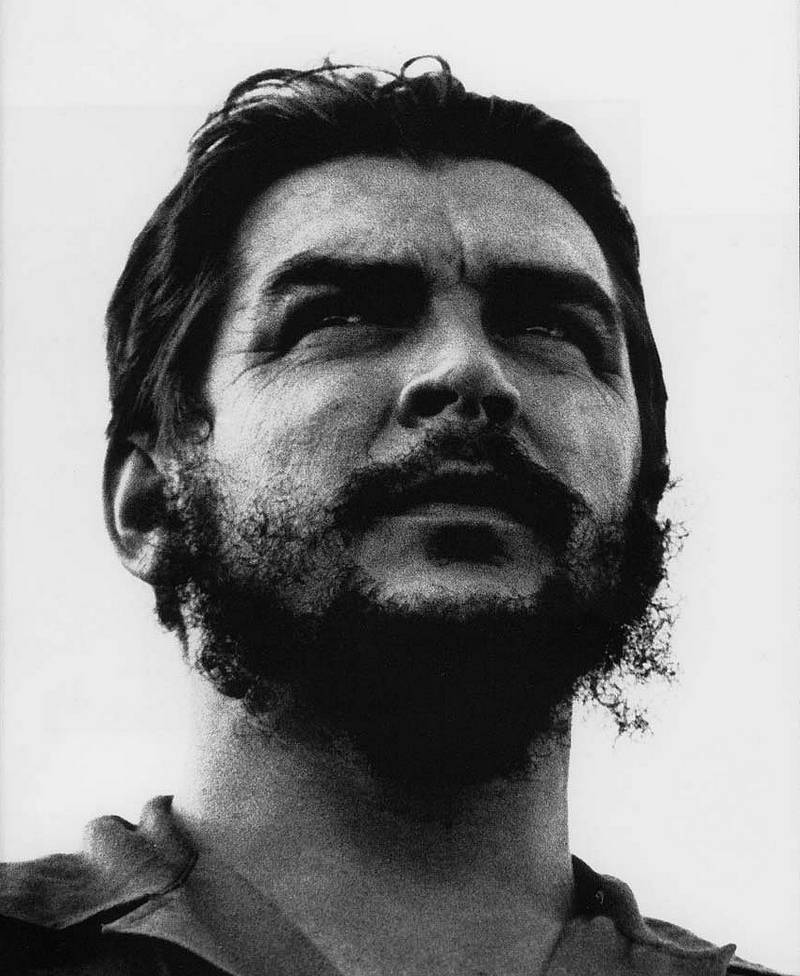
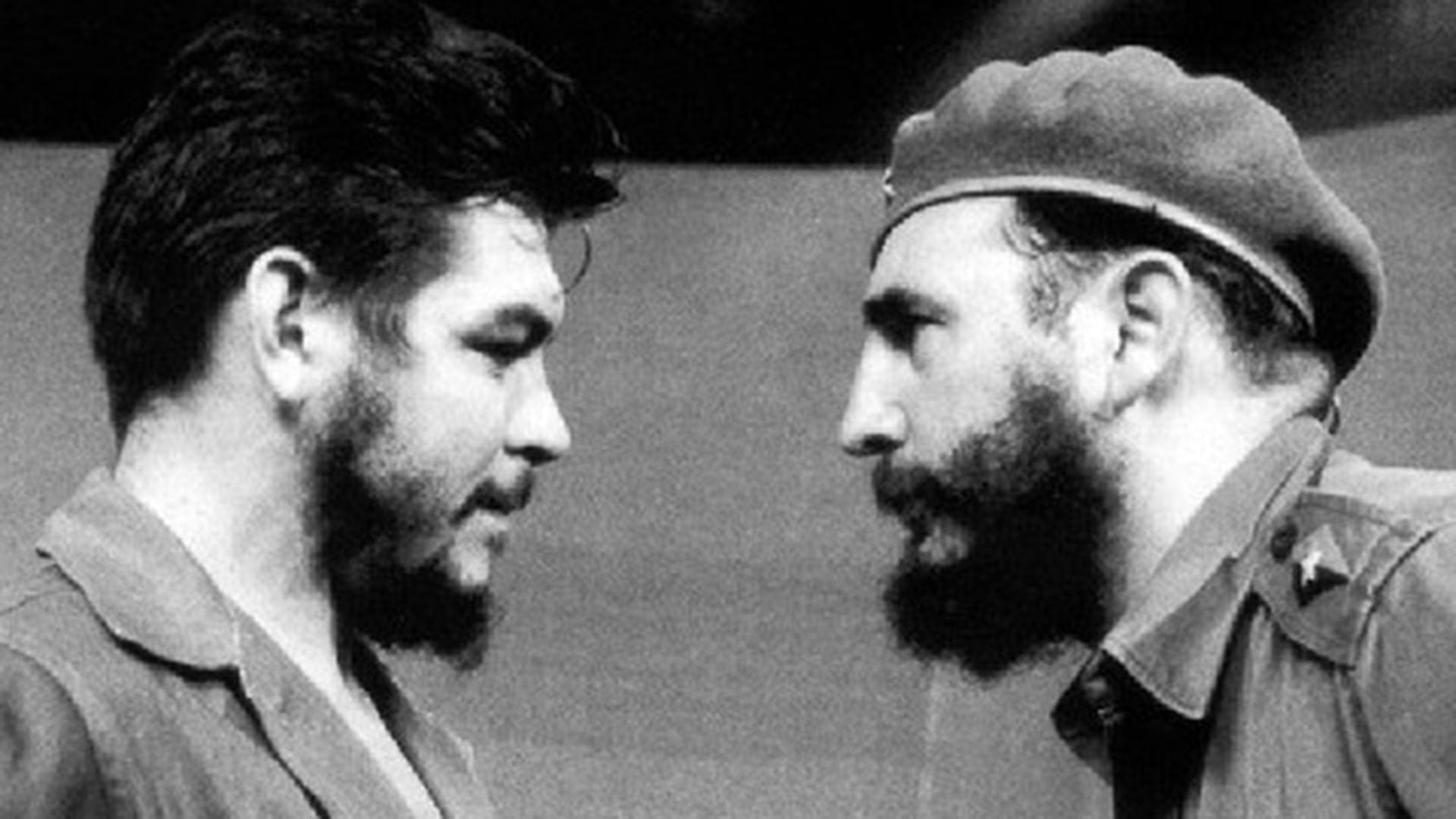
Ernesto Che Guevara

Labels: » » » »

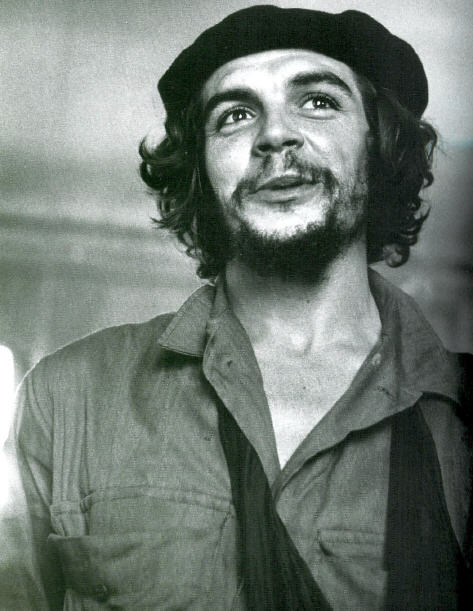
The Left have been talking for decades about the CIA operation to assassinate Che. My parents spoke of the murder of Che as being one of the great disgraces of the United States... even though my mother was apparently friends with or was dating one of Che's assassins. Regardless my leftist parents have always felt that Che was a hero and this is reflected by Hollywood and the media. It is a lie and a myth. I am sorry to say I grew up thinking of Guevara as a freedom fighter myself.

H
ere are some lovely Che quotes that my Leftist mother failed to tell me about:


We're going to do for blacks exactly what blacks did for the revolution. By which I mean: nothing.

The Negro is indolent and lazy, and spends his money on frivolities, whereas the European is forward-looking, organized and intelligent.

Mexicans are a band of illiterate Indians.

Given the prevailing lack of discipline, it would have been impossible to use Congolese machine-gunners to defend the base from air attack: they did not know how to handle their weapons and did not want to learn


Increasingly, one hopes, Che's image is becoming openly mocked as the ugly reality of his life outlasts the shiny revolutionary veneer. As Alvaro Vargas Llosa reported five years ago, young Argentines have taken to sporting shirts emblazoned with the putdown, "I have a Che T-Shirt and I don't know why." The Australian band The Clap sings of the "Che Guevara T-Shirt Wearer" who has "no idea" of who he is. The Cuban punk band, Porno para Ricardo, which has been arrested for "social dangerousness," openly declaims the Castro regime and its heroes such as Guevara.

Karl Marx, of all people, once remarked that history repeats itself, the first time as tragedy and the second time as farce. Marx argued that history was the key to understanding the real world, and history is certainly no friend to Che Guevara. If his younger admirers study the historical Che--the one reputed to have declared "I feel my nostrils dilate savoring the acrid smell of gunpowder and blood of the enemy"--they will understand that Che's original influence was indeed tragic, not just for Cubans but for many others as well. And they just might skip the farce phase, out of deference to the many victims of the butcher of La Cabaña
via reason.com
...I want to see more evidence before I am convinced that Che worship is really declining. Che wasn’t that important in and of himself. He was a second-rate functionary in a second-rate communist regime and later a fourth-rate guerrilla leader and terrorist who failed dismally in his efforts to spread communism beyond Cuba. Had Che never lived, Cuban communism would have been only marginally less oppressive than it actually was. Ultimately, the Cult of Che is deplorable less because of what it says about attitudes towards him than because it is the most blatant manifestation of our much broader tendency to ignore or downplay communist crimes.

How did he, a monstrous mass murderer, responsible for the blood curdling murders of thousands of teenagers, women and men, become a popular cultural figure embraced by the t-shirt industry, college students and hollywood directors? It's not like we walk around proclaiming Charles Manson a brilliant & kind revolutionary. There must be some machiavellian backdrop. Because this seems like an Alice in Wonderland upside- down world where we celebrate a cold-blooded killer.
On Tuesday Benicio del Toro, who plays Che in Soderbergh's new movie walked out during an interview because he was "uncomfortable" with the questions. He dedicated his Cannes award to Guevara.

I first noticed this cultural phenomenan when my step-son started using "Che" as his pen name on the internet. Then Gisele Bundchen catwalked in a "Che bikini", & suddenly everyone under 21 was wearing a Che Guevera t-shirt. Taco Bell dressed up its Chihuahua spokesdog like Che for its "Taco Revolution" ads and now Steven Soderbergh comes out with his Che Guevara movie.
Beloved revolutionary? Or serial killer?
Myth #1: He was an "intellectual".
Fact: One of the first acts Guevara is known for when he first came to Havana is a massive book burning. Then he signed death warrants for the authors and had them hunted down. He jailed or exiled most of Cuba's best filmmakers, poets and writers. In the mid-60's, thousands of "effeminate" teenagers were taken by force and dumped into prison camps he helped create where the logo read: "Work will make men out of you."

Myth #2: He was for the "people".
Fact: Guevara said he "manufactured evidence" and went on to say "I don't need proof to execute a man...I only need proof that it's necessary to execute him." When he addressed the U.N. in New York in 1964 he proclaimed, "Certainly we execute. And we will continue to execute as long as it is necessary." And he received applause for this. According to the Black Book of Communism, the revolution's firing squad executions, which he started, reached 14,000 by the beginning of the 1970's. The people's crimes? Being anti-Stalinist or being a practicing catholic, among others. He loved and promoted Stalinism, which of course was itself responsible for between 3.5 & 60 million deaths.
Myth #3: He was a Counter-Revolutionary just like U.S. 60's Hippies.
Fact: Che Guevara was anti-rock & roll, making it illegal to own a rock record, to listen to rock music or god forbid! actually play rock music. Che's own grandson, Canek Sanchez Guevara fled Cuba and lives in Mexico. He's a heavy metal rock guitarist and in an interview with Mexico's Proceso magazine said, "In Cuba freedom is nonexistent. The regime demands submission and obedience...the regime persecutes hippies, homosexuals, free-thinkers and poets. They employ constant surveillance, control and repression." He was one of the lucky ones; he got out alive. Although he blames Fidel for the repressive regime, it was his grandfather who helped create it.

Che was such a visionary, he helped create the notorious peligrosidad predelictiva law ("dangerousness likely to leading to crime"); which predated Tom Cruises' job in the movie "Minority Report". Like Minority Report, where a special police department called "Precrime" apprehends criminals based on foreknowledge provided by 3 psychics before any crime is actually committed; all you have to be arrested for in Cuba is your likelihood to commit a crime. Beaten, torture, labor camps, death.
And the machiavellian backdrop? The American media and hollywood who have chosen to set Che in the light of a 'benign revolutionary' have relied solely on diaries that he wrote and the memories of his co-thugs. The diaries went through Fidel Castro's propaganda machine and came out the other side with very little reality, and a whole lot of fiction.
And what of the hundreds of survivors and witnesses of this genocidal regime created by Che and Fidel, who mostly live in Florida, having fled the Marxist-Communist nation? They have been ignored in favor of this sanitized version of reality approved by Cuba's dictator. They stand ready as witnesses to tell their story. Time magazine has never come knocking. Neither did Soderbergh.
Post-script: An estimated 80,000 Cubans have died trying to flee Cuba by boat, rafts, makeshift anythings that might get them to the shores of the United States of America. They've died by drowning, sharks and exposure.

Spain Cozies Up To Cuba: But "Are They Emptying Cuban Prisons Just to Fill Them Again?"

Labels: »

Six Cuban political prisoners arrived in Spain in August, joining 20 others who came to the country in July after being released from prison by the dictatorship of Cuban President Raúl Castro. They form part of a July 7 deal struck between communist Cuba and the Roman Catholic Church, brokered by the Socialist government in Spain, in which the Castro regime agreed to free 52 of 75 dissidents sentenced in 2003 to prison terms of up to 28 years.
Spanish Prime Minister José Luis Rodríguez Zapatero hopes the prisoner releases will help him to achieve a long-term political goal: to persuade other European Union countries to relax sanctions on Cuba. The EU's Common Position on Cuba, which dates back to 1996, links any improvement in relations to progress on democracy and human rights.
Cuban dissidents, however, say that even after the release of the 52, another 115 political prisoners will still be languishing behind bars in Cuba. One of the released prisoners, Regis Iglesias, told reporters in Madrid that by agreeing to release the dissidents, Havana is merely seeking to "clean up its image." He said Cuba will only change when there is "a transparent process of dialogue involving all the Cuban people, all ideological trends, both within the island and outside."
Immediately upon their arrival at the airport in Madrid, the former prisoners accused the Castro regime of using the release of the dissidents to hide the "criminal repression" of its opponents. They also issued a petition asking the EU to maintain its sanctions.
In a statement, the dissidents declared: "We, the Cuban prisoners of conscience exiled to Spain in recent days, aware of the manifest willingness of some European countries to modify the EU's 'Common Position' regarding Cuba, declare our disagreement with an approval of this measure, as we understand that the Cuban government has not taken steps that evidence a clear decision to advance toward the democratization of our country. Our departure for Spain must not be considered a good-will gesture, but a desperate action on the regime's part in its urgent quest for credits of every type. It is for that reason that we ask the countries of the European Union not to again soften their exigencies intended to achieve changes toward democracy in Cuba and to secure for all Cubans the same rights that European citizens enjoy."
The declaration has angered the Zapatero government, which rejects the idea that dictators should be isolated and views the normalization of EU relations with Cuba as a key foreign policy priority. After meeting Castro in Havana in July, Spanish Foreign Minister Miguel Ángel Moratinos proclaimed the opening of "a new phase in Cuba" and insisted that "there is no longer any reason to maintain the [EU's] Common Position" on Cuba.
But efforts by the Zapatero government to de-link political dialogue with Cuba from the issue of human rights on the island have failed due to strong resistance from other EU members — notably former communist countries like Poland and the Czech Republic, which insist that the EU should not fully normalize its ties with Cuba until civil and political freedoms are granted to all citizens.
Another former prisoner, Efren Fernández, said that "these releases do not mean that the regime is opening up; what they have is a strategy to buy time. It has been shown in recent days that there is criminal repression against dissidents in Cuba." He was referring to a new wave of arrests of dissidents, many of whom have been held for a few hours and then released.
Echoing concerns that the Castro regime has no intention of allowing political change on the island, the human rights group Amnesty International on August 17 called on Cuban authorities to end what it described as the "harassment" of the mother of dissident Orlando Zapata Tamayo, who died on February 23 after an 85-day hunger strike in prison. Amnesty said Reina Luisa Tamayo told the organization that she has been harassed repeatedly by authorities and government supporters during regular marches in memory of her son.
Meanwhile, the Catholic Church has been forced to defend itself against criticism from Cuban opposition activists who have complained that church officials left them out of their negotiations with the Castro government. In an open letter to Pope Benedict XVI that has been circulating in Spain, 165 top Cuban political activists, community organizers and dissidents said the Church and Castro ignored the needs of the country's political opposition in reaching the July 7 agreement. In their letter to the pope, the dissidents wrote, "a correct mediation on this topic should have included hearing the complaints of both sides and reconciling them. … We do not agree with the position taken by the Cuban religious hierarchy on behalf of political prisoners. It is lamentable and even embarrassing."
The letter also says that pressure on those who publicly oppose Cuba's communist system intensified after Castro said in a televised address on August 1 that, despite his government's agreement with the Catholic Church, "there will not be impunity for the enemies of the homeland." The letter says: "repression, hostility and arbitrary detentions have increased in recent days, after the threats of President Raúl Castro on August 1. It raises the question: Are they emptying the prisons just to fill them again?"
For its part, the Zapatero government has been working overtime to push back against all the negative press. In an effort to stop the media from reporting on conditions inside Cuba, Moratinos recently tried to prevent US Representative Lincoln Díaz-Balart (R-FL) from meeting with the former Cuban prisoners and their families in Madrid.
An account of a message that Moratinos sent to Díaz-Balart has been published by Emilio Ichikawa, a columnist for the Miami-based El Nuevo Herald. It says: "The night before my planned meeting with the ex-political prisoners in Madrid, Minister Moratinos sent me a message through the US State Department. His message said that the Spanish government was worried over my physical safety if the meeting with the ex-political prisoners were made public—in other words, if the press was present. (If anyone is interested in the 'message' Moratinos sent me'[Diaz-Balart said], which he obviously now denies sending, my office in Washington will gladly provide it to you.)
"Of course we went ahead and with pleasure had the press attend the meeting with the ex-political prisoners I had invited. But the actions on the part of Moratinos constitute a grotesque intent to threaten in order to hinder the presence of the press at the meeting with the ex-political prisoners. His actions demonstrate his clear attempt to censor in a dictatorial fashion. As my uncle Waldo Díaz-Balart once told me, "these people, if they could, would act just like Fidel Castro; it's just that they can't."

Detainee was helping Cuban Jewish groups involved in U.S. democracy project - washingtonpost.com

Labels: »
Another naive do gooder who thought better of Cuba's totalitarian regime.
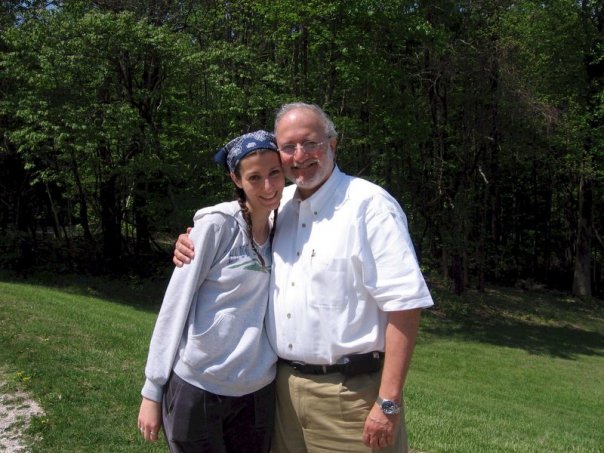
An American who has been jailed in Cuba and denounced as a spy is a 60-year-old international development expert from Potomac who was working on a U.S. government project to help the island's Jewish community access the Internet, according to former colleagues and other sources.
The United States contractor detained in Cuba last month and accused of being a spy is a 60-year-old social worker from the Washington suburbs who had gone to Cuba to provide communications equipment to Jewish nonprofit organizations, according to American officials.

Translate