Showing posts with label oil. Show all posts

Environmentalist Movie Funded by Oil-Rich Royalty

Labels: » » » » » » » » » » » » » »
Matt Damon / AP
(BY: - image Matt Damon / AP) Matt Damon turned to oil-rich Middle East royalty to finance his film attacking domestically produced natural gas.
The environmentalist screed, Promised Land, received a chunk of its funding from the United Arab Emirates, an oil kingdom known for its lavish spending on man-made islands and the world’s tallest building, according to the Heritage Foundation.
The creators of Promised Land have gone to absurd lengths to vilify oil and gas companies, as Scribe’s Michael Sandoval noted Wednesday. Since recent events have demonstrated the relative environmental soundness of hydraulic fracturing – a technique for extracting oil and gas from shale formations – Promised Land’s script has been altered to make doom-saying environmentalists the tools of oil companies attempting to discredit legitimate “fracking” concerns. …
Promised Land was also produced “in association with” Image Media Abu Dhabi, a subsidiary of Abu Dhabi Media, according to the preview’s list of credits. A spokesperson with DDA Public Relations, which is running PR for the film, confirmed that AD Media is a financier. The company is wholly owned by the government of the UAE.
An ever-growing market for domestic fracking threatens dependence on foreign oil from the likes of UAE and OPEC.
A strong global market presence for American natural gas could also work to the UAE’s disadvantage. The Arab nation ranks seventh worldwide in proven natural gas reserves. For instance, Japan’s energy imports are expected to rise significantly over the next five years. The country is currently a major importer of UAE natural gas. If it decided to import more LNG from the United States to accommodate its increased energy demands, it could deal a blow to the UAE economy. …
All of this suggests a direct financial interest on the UAE’s part in slowing the development of America’s natural gas industry. Pop culture can be a powerful means to sway public opinion. While Promised Land, like anti-fracking documentary Gasland, appears to inflate the dangers of hydraulic fracturing, it may have an impact on the public’s view of the practice.
Matt Damon is a longtime Democratic partisan. Though he has voiced criticisms of Barack Obama, he donated $4,600 in 2008 to then-candidate Obama. Damon also co-hosted a star-studded fundraiser for Massachusetts Democrat Elizabeth Warren in Hollywood that netted the “Native American” candidate $250,000.
This entry was posted in Progressive Movement and tagged , , , , , . Bookmark the permalink.
This is the tip of the iceberg when it comes to the Green movement. It isn't just that the UAE is doing this for biz reasons (there are plenty of places that want to buy energy that don't care about Green Tech). The reason the UAE is doing this is for public relations reasons. America needs to be autonomous of this public relations culture on the surface that reveals hardline tyranny.
PS: wasn't it Mother Jones who showcased Carter's video of Romney? and what totalitarian regimes did Mother Jones Rep? For starters Muammar Kaddaffi. Why are we falling for this? Why is it offensive to shout out the truth?

Israel Discovers New Giant Off-Shore Oil and Gas Field.

Labels: » » »
I hope this is true... in three years this would be awesome...(Other News) Israel Discovers New Giant Off-Shore Oil and Gas Field.(INN).An Israel energy company announced Sunday it has discovered an off-shore energy field that may even surpass previous finds in terms of the possibilities of developing commercial grade oil. Israel Opportunity Energy Resources LP announced that its Pelagic licenses indicate 6.7 trillion cubic feet (TCF) of gas and 1.4 billion barrels of oil. By comparison, the previously announced Tamar and Leviathan off-shore fields contain an estimated 9 and 17 TCF of natural gas. The amount of commercial oil, if any, has not been finalized, but estimates of possible oil in the Leviathan field have been downsized to 600 million barrels. Discoveries of oil and gas have made outdated the old joke that Moses took the wrong turn from Egypt, leading Israel to sand and leaving oil for the Arabs. After being chased by Pharaoh to the edge of the “Sea of Reeds,” which often if not correctly is called the Red Sea, Moses asked Heaven to save them, and He replied to step into the sea, which then was split by winds, allowing the Jews to cross and then burying the army of Pharaoh when it followed. Stepping into the sea now can be seen in retrospect as a sign of the treasures buried under the sea. “The quantity of gas discovered in the licenses, and the high probabilities, make it the third largest offshore discovery to date,” according to Israel Opportunity chairman Ronny Halman, quoted by Globes. He added, ”This quantity guarantees Israel's energy future for decades, and makes it possible to export Israeli gas, and boost the state's revenues without worrying about gas reserves for domestic consumption."The new discoveries make it more certain of a virtual revolution in the Israeli economy, with anticipation that Israel will be energy self-sufficient in three years and soon after will be able to export gas and possibly even oil.Read the full story here.

The Coming Oil-Shale Revolution?

Labels: » » » » » » » » »
The chief executive of Saudi Arabia’s state-owned oil company- Aramco- has admitted that the development of large oil shale reserves in North America looks set to shift the monopoly over global energy supplies increasingly away from the Middle East.
Aymenn Jawad Al-Tamimi (h/t Docs Talk)
Media_httpostseisanlg_qgbnhTo preface, when it comes to global petroleum supplies, a distinction is drawn between “conventional” and “unconventional” oil reserves. The former are still in abundance in oil fields throughout the Middle East, and petroleum is produced from them simply by drilling at oil wells. Unconventional reserves include tar sands and oil shale: the latter is a form of sedimentary rock that must first be decomposed at high temperatures before crude oil can be obtained for refinement.
In terms of reserves, it is estimated that conventional sources across the world can yield around 1.2 trillion barrels, while in the United States alone, anywhere between 500 billion and 1.1 trillion barrels are thought to be recoverable from oil shale. An immediately astonishing observation to draw is the low-end of the estimates for U.S. oil shale, which is still around twice as large as Saudi Arabia’s total reserves.
What makes this issue particularly relevant now is the emergence of reports on a potential breakthrough in oil shale extraction technology. Traditionally, extraction of oil shale has required the use of a method known as “fracking,” or “hydraulic fracturing” (to use the more technical term).
Hydraulic fracturing, however, has raised concerns because of issues such as contamination of groundwater and air pollution, besides the large amounts of water required for the process. The high water usage is particularly problematic in the Southwestern states that contain most of the United States’ oil shale reserves and are under water stress owing to drought in recent years.
Nonetheless, companies such as Chevron are now looking into the use of propane gel rather than water. Not only does this method require no water, but it also makes more sense from a technical point of view. As one former Halliburton Co engineer pointed out, “It’s an ideal liquid to crack the rock open with because it does not damage the rock like water would.” Accordingly, this pioneering process, despite some worries over propane gel’s flammability, is increasingly being given the green light by regulators in Canada and the United States.
In light of these developments, the chief executive of Saudi Arabia’s state-owned oil company- Aramco- has come to acknowledge that the development of large oil shale reserves in North America looks set to shift the monopoly over global energy supplies increasingly away from the Middle East. Indeed, Saudi Arabia has now halted a $100 billion expansion program that aims to expand Saudi output to 15 million barrels per day (bpd) by 2020.
Meanwhile, China is expected to be producing 1.1 million bpd of unconventional oil by 2035 (as opposed to 6.6 million bpd from the United States and Canada), a petroleum firm has announced the discovery of significant oil shale reserves in Argentina, and various companies have reported success in drilling wells for extracting natural gas from shale rocks in Poland.
Naturally, the following question arises: Are we finally moving into an era of complete energy independence from the Middle East and OPEC? If so, what are the implications?
As regards the former question, there is still one sign that appears to point to uncertainty. Despite anticipated increases in oil shale production, the fact remains that conventional oil will always be much cheaper to extract and use. Linked to this point is the International Energy Agency’s recent report that predicts Iraq will be the largest contributor to the growth in global oil production over the next 25 years. Iraqi crude, like that in Saudi Arabia, is perhaps the least expensive oil to extract in the world at only a few dollars per barrel.
Since state-control (which still exists) over the Iraqi oil industry and international sanctions have meant that for many years Iraq has produced oil largely for domestic consumption, there is still potential for exploration and discovery of new reserves in the country, hence, for instance, the recent exploration deal signed between ExxonMobil and the Kurdistan Regional Government in Iraq.
Since the 2003 invasion, Iraq has been able to secure numerous contracts with foreign firms in an effort to undergo a massive expansion in production for the international market, and output can only be expected to increase over the coming years. Peak oil for Iraq is not expected to occur until at least 2036.
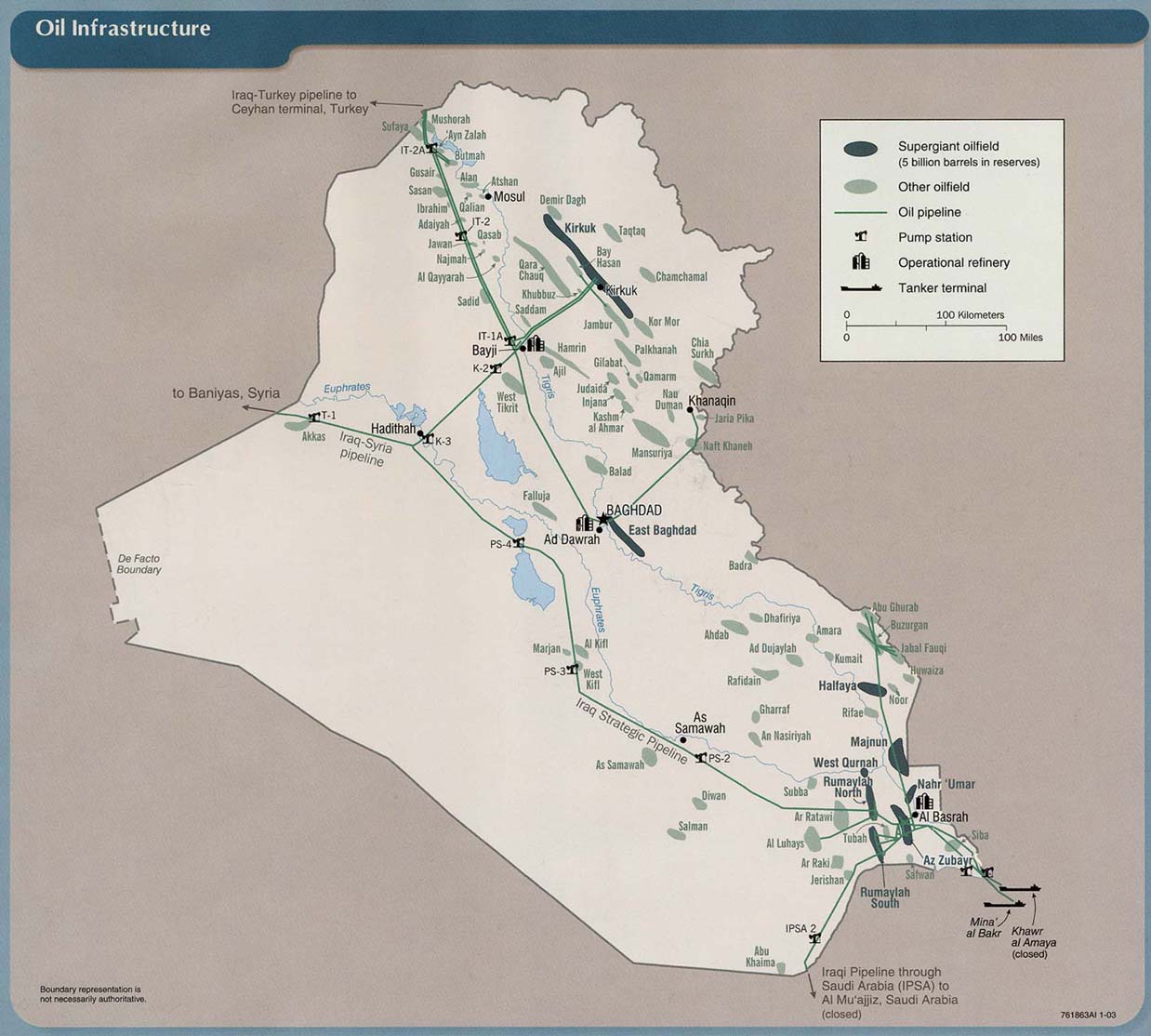
Nonetheless, questions have been raised over export capacity hindered by outdated infrastructure. Perhaps paradoxically, the increased oil revenues for the Iraqi government mean that Baghdad is unlikely to shift towards liberalizing economic reforms, which in turn will continue the problem of excessive bureaucracy that impedes reconstruction and updating of infrastructure.
In any case, regardless of whether the West achieves energy independence from the Middle East, Saudi Arabia’s profits (as well as those of Qatar and the United Arab Emirates) from the oil industry will probably diminish in light of competition from Iraq and oil shale across the world. In this context, commentators will no doubt be wondering if these developments will mark a decline in Islamism around the world.
In fact, what Daniel Pipes terms the “Islamic revival” coincided with the surge in oil prices in the 1970s and 1980s, and so many analysts have drawn a major link between the two events. End the oil dependence, so the reasoning goes, and Saudi Arabia will be exhausted of petrodollars to fund and spread its Wahhabi ideology.
However, I remain skeptical of such claims, which appear to reduce simplistically the growth in Islamist ideology to a single cause. Of course, funds from Saudi Arabia have led to an upsurge in the Wahhabism in countries like Bosnia, where an individual influenced by the Wahhabi movement growing in Bosnia- Mevlid Jasarevic- opened fire on the American embassy in Sarajevo.

Oil revenues helped give militant Islam a start; but once up and running…
Nonetheless, Islamism is ultimately a problem rooted in questions of “identity and circumstance” (as Pipes puts it), and in the age of mass communication, it is much easier for those who draw on broad elements of traditional Islamic theology to justify doctrines of jihad as offensive warfare and imposing Islamic law to attain success in winning over peaceful Muslims to their causes.
Moreover, we see that in Egypt with the Muslim Brotherhood, Pakistan with its numerous Islamist movements, Tunisia with its an-Nahda movement, Yemen with al-Qa’ida, Somalia with ash-Shabaab, and Sudan with its regime under Omar al-Bashir (to name just a few), Islamism enjoys success without dependence on financial boosts from petroleum profits.
As Pipes noted back in 2002: “Oil revenues helped give militant Islam a start; but once up and running… it [militant Islam] no longer depends on this financial boost as shown by oil revenues having several times in the intervening years gone down without a noticeable reduction in militant Islam's steady gains.”
In short, therefore, growing energy independence for the West via oil shale (a pleasing development in its own right) seems unlikely to hamper significantly the problem of Islamist ideology.
The only real solution- necessary, but difficult and almost certainly long-term- is honest reform within mainstream Islam to counter appeal to traditional notions of waging jihad against non-Muslims and imposing Shari’a in the public realm.

THE TECHNOLOGY DRIVEN OIL BOOM? This surge in domestic production would leave Iran, Kuwait and the Arab emirates combined in the rear-view mirror”

Labels: » » » » » » » » » »
A US oil boom — unless greens abort it - By ARTHUR HERMAN

Just a year after the BP oil spill, America is on the verge of a new golden era of oil exploration and production — unless President Obama and his environmentalist friends get their way.
This surge in domestic production would leave Iran, Kuwait and the Arab emirates combined in the rear-view mirror.
The US drilling boom rests on a technique called hydraulic fracturing, or fracking, to open shale-oil reserves. It’s why wells are springing up in places like North Dakota, California and Pennsylvania, with thousands of new jobs in their wake.
Fracking has also opened up supplies of natural gas, sending prices plummeting. Now, even New York’s regulators have recommended lifting the state’s ban on the fossil-fuel gold rush that’s pushed North Dakota’s unemployment rate to 3.2 percent — the lowest in the nation.
The irony is that Obama had hoped higher oil prices would make us all drive electric cars and install backyard windmills. Instead, they’re making it profitable for US companies to expand the hunt for new reserves and to use fracking to reopen old ones.
Just last month, Exxon-Mobil announced the discovery of a vast field in the Gulf of Mexico, with as many as 700 million barrels waiting to be tapped. Other companies are using fracking to return to the Texas basin, the center of US oil production in the 1930s — which will mean millions in investment and thousands of jobs for that state. Montana and North Dakota are sitting on a shale-oil formation that could yield nearly 4 billion barrels.
Not many Americans realize we are already the world’s No. 3 oil producer, at 7.5 million barrels a day. The coming boom should add another 1.5 million by 2015. That’s closing in on Saudi Arabia’s daily total.
And oil-shale rich Canada could surpass Iran’s barrel-per-day output in a few years — so we’re looking at a major shift in the geopolitics of oil.
Easy-to-find oil is running out in the Mideast. After deliberately wrecking a multibillion-dollar deal with BP, Russia — the world’s biggest oil and gas producer — is looking more and more like a bad bet for foreign investors. If you want to make money in the oil biz, America will be the place to go.
But the environmental lobby is bent on preventing it — waging an all-out war on fracking, claiming (against all evidence) that it contaminates ground water. The ideologues hope to use memories of the BP spill and a more recent one on the Yellowstone River to dam up all exploration and pipeline construction.
Never mind that fracking goes on thousands of feet below groundwater sources, and that Obama’s moratorium on offshore drilling did more damage to the Gulf economy than the BP spill ever did — or that the Yellowstone accident has affected an area of less than 10 miles on the edge of a national park of 3,500 square miles.
The promise of prosperity and jobs was enough to get even a blue state like New York to ignore the green lobby’s fearmongering. But Obama may yet derail the boom.
The president has had the oil industry’s two most important tax incentives — the percentage-depletion allowance and the deduction for intangible-drilling costs — in his cross hairs for a long time.
Both help oil and drilling companies recoup the heavy capital investment they need to look for oil, even when they turn up nothing. The White House argues that we must end both “tax breaks for Big Oil” to close the budget deficit.
This is nonsense. Manhattan Institute oil guru Robert Bryce notes that the entire value of the industry’s tax advantage comes to $4.4 billion a year. The notion that scrapping tax abatements that have been around since the 1920s will put a dent in a deficit of $1.4 trillion is laughable — and dangerous.
Besides, those few billions in savings would be washed away in rising oil prices if the impending rebirth of the US oil industry is aborted.
So there’s more at stake in the debt-ceiling impasse than just how we pay for our government. It’s also about whether America will dictate its own energy and economic future — or whether it’s left in the hands of sheiks, dictators and the EPA.
Arthur Herman is a visiting scholar at the American Enterprise via ibloga.blogspot.com

30 Million Barrels of Oil from Reserves; Why now Obama?

Labels: » » » » »
bet that stimulus money is cranking too now. all for an election...
Why did Obama decide to release 30 million barrels of oil from the US Strategic Petroleum Reserves? What is his true motive? Is this an attempt to spike his approval ratings, political posturing? Obama realizes people will be consuming more gas, driving as the summer months progress. Hasn’t retail gas prices been on the slow decline the past 3 week period? Increasing drilling permits in the US will not decrease oil prices but releasing a 2-3 day consumption will. I wonder if Peggy has the money to put gas in her car or pay her mortgage now? via themadjewess.wordpress.com

This Time The Threat May Be For Real

Labels: » » » » » » » »
Robert Gates
Gates threatens Europe.  Says pay for your own shit or stop bitch'n.  Free loaders that do nothing but complain can protect themselves from Qaddaffi who they enabled anyway.

US Defense Secretary Robert Gates is retiring on June 30 and therefore his visit to Europe was a chance for him to express his frustration with some members of the NATO alliance while allowing his successor Leon Panetta to backtrack if necessary or inherit the new policy. Gates essentially warned the Europeans that US patience was wearing thin.

Gates claims that the national restrictions were hampering operations in Afghanistan and premature European troop withdrawals linked to domestic political considerations were debilitating to the common effort.

The Libyan mission against a 3rd rate opponent in Europe's backyard and with no ground troops involved was similarly languishing due to a lack of will and a lack of available resources. This was a reflection of the fact that most NATO countries do not even devote a meager 2% of their budgetary outlays to defense spending.

The United States could not live with a situation where it primarily foot the bill:

"Some two decades after the collapse of the Berlin Wall, the US share of Nato defence spending has now risen to more than 75 percent – at a time when politically painful budget and benefit cuts are being considered at home,"

There was growing resentment over the freeloaders:

In the past, I’ve worried openly about NATO turning into a two-tiered alliance: Between members who specialize in “soft’ humanitarian, development, peacekeeping, and talking tasks, and those conducting the “hard” combat missions. Between those willing and able to pay the price and bear the burdens of alliance commitments, and those who enjoy the benefits of NATO membership - be they security guarantees or headquarters billets - but don’t want to share the risks and the costs. This is no longer a hypothetical worry. We are there today. And it is unacceptable.

Such a disparity has long existed in NATO and one could hear such American mutterings since the 1960s when the United States believed that Western Europe had sufficiently recovered from the devastation of the Second World War and had become economically prosperous under the American security umbrella. The Europeans however grew accustomed to disregarding the American dissatisfaction because during the Cold War they knew that the United States could not risk the loss of Europe to the Soviet Union.

This time around they would be advised not to underestimate the seriousness of Defense Secretary Gates' remarks.

First of all as Gates remarked that the Cold War is a receding memory. Mutual suspicion still exists between the United States and Russia, as witness the antimissile shield that the United States wants to construct in Eastern Europe against Russian opposition. However, this is a far cry from the Cold War. Russia's main pressure point is not tank battalions crashing across the Fulda Gap into West Germany but oil and gas pipelines to Western Europe and European dependence on Russian energy.

The United States, since the Great Depression of the 1930s, has not been in as parlous an economic condition as it is today and many American citizens as illustrated by recent polls ascribe the yawning deficits partially or primarily to the defense expenditures.

The growing importance of the Asia-Pacific area in the world economy means that that region is increasingly supplanting the European Union as a hub of economic activity. The same considerations that ensured the American defense of Europe now apply at least to the same degree in the Pacific region. Gates made this clear to the Europeans as well

President Obama and I believe that despite the budget pressures, it would be a grave mistake for the U.S. to withdraw from its global responsibilities. And in Singapore last week, I outlined the many areas where U.S. defense engagement and investment in Asia was slated to grow further in coming years, even as America’s traditional allies in that region rightfully take on the role of full partners in their own defense.

While Gates did not specify whom the Asian countries had to be defended against, it is no secret that a growingly assertive China preoccupies the United States economically and militarily. The United States would like to see the Europeans acting more like India, Vietnam and South Korea. If that will not happen then the United States will not prop up NATO on its own.
by Amiel Ungar via israelnationalnews.com

Will Israel take over the energy market?

Labels: » » » » » » » » » » » » » » » » » » »
A nice article about Israel's energy potential in the Financial Post:
In the first 25 years after Israel’s founding in 1948, it was repeatedly attacked by the large armies of its Arab neighbours. Each time, Israel prevailed on the battlefield, only to have its victories rolled back by Western powers who feared losing access to Arab oilfields.
The fear was and is legitimate – Arab nations have often threatened to use their “oil weapon” against countries that support Israel and twice made good their threat through crippling OPEC oil embargoes.
But that fear, which shackles Israel to this day, may soon end. The old energy order in the Middle East is crumbling with Iran and Syria having left the Western fold and others, including Saudi Arabia, the largest of them all, in danger of doing so. Simultaneously, a new energy order is emerging to give the West some spine. In this new order, Israel is a major player.
The new energy order is founded on rock – the shale that traps vast stores of energy in deposits around the world. One of the largest deposits – 250 billion barrels of oil in Israel’s Shfela basin, comparable to Saudi Arabia’s entire reserves of 260 billion barrels of oil – has until now been unexploited, partly because the technology required has been expensive, mostly because the multinational oil companies that have the technology fear offending Muslims. “None of the major oil companies are willing to do business in Israel because they don’t want to be cut off from the Mideast supply of oil,” explains Howard Jonas, CEO of IDT, the U.S. company that owns the Shfela concession through its subsidiary, Israeli Energy Initiatives. Jonas, an ardent Zionist, considers the Shfela deposit merely a beginning: “We believe that under Israel is more oil than under Saudi Arabia. There may be as much as half a trillion barrels.”
Because the oil multinationals have feared to develop Shfela, one of the world’s largest oil developments is being undertaken by an unlikely troop. Jonas’s IDT is a consumer-oriented telecom and media company that is a relative newcomer to the heavy industry world of energy development. Joining IDT in this latter-day Zionist Project is Lord Jacob Rothschild, a septuagenarian banker and philanthropist whose forefathers helped finance Zionist settlements in Palestine from the mid-1800s; Michael Steinhardt, a septuagenarian hedge fund investor and Zionist philanthropist; and Rupert Murdoch, the octogenarian chairman of News Corporation who uncompromisingly opposes, in his words, the “ongoing war against the Jews” by Muslim terrorists, by the Western left in general, and by Europe’s “most elite politicians” in particular.

4 billion barrels of oil offshore?

Where others would have long ago retired, these businessmen-philanthropists have joined the battle on Israel’s side. While they’re in it for the money, they are also determined to free the world of Arab oil dependence by providing Israel with an oil weapon of its own. The company’s oil shale technology “could transform the future prospects of Israel, the Middle East and our allies around the world,” states Lord Rothschild.
To win this war, Israeli Energy Initiatives has enlisted some of the energy industry’s savviest old soldiers – here a former president of Mobil Oil (Eugene Renna), there a former president of Occidental Oil Shale (Allan Sass), over there a former president of Halliburton (Dick Cheney). But the Field Commander for the operation, and the person who in their mind will lead them to ultimate victory, is Harold Vinegar, a veteran pulled out of retirement and sent into the fray. Vinegar, a legend in the field, had been Shell Oil’s chief scientist and, with some 240 patents to his name over his 32 years at Shell, revolutionized the shale oil industry. more via elderofziyon.blogspot.com

Gulf of Mexico oil spill: BP sues Transocean for $40bn

Labels: » » » »
Media_httpnewsbbcimgc_cfvff
BP said safety systems on Transocean's Deepwater Horizon rig had failed.
Separately, BP also sued the maker of the rig's blowout preventer, alleging the device failed to stop the huge oil spill that followed the explosion.
Both lawsuits were filed on Wednesday on the first anniversary of the explosion, which killed 11 workers.
Overnight on 20 April 2010, Transocean's Deepwater Horizon burst into flames while drilling a well for BP.
In the months that followed, more than 200 million gallons (780 million litres) of oil flowed in the Gulf of Mexico from the well, soiling hundreds of miles of coastline in the worst US oil spill in recent history.
In federal court in New Orleans on Wednesday, BP said Swiss-based Transocean and Cameron International, the Houston company that supplied the blowout preventer (BOP), should help it pay for tens of billions of dollars in liabilities resulting from the spill, which include clean-up and compensation costs.
BP also wants the court to declare that Cameron caused or contributed to the disaster.
"The Deepwater Horizon BOP was unreasonably dangerous, and has caused and continues to cause harm, loss, injuries, and damages to BP (and others) stemming from the blowout of Macondo well" and resulting spill, the BP lawsuit said.
Cameron has filed counter-claims and defended the integrity of its products. Transocean did not immediately comment on the BP lawsuit but has also requested court judgements against BP, Cameron and others.
BP has estimated its liability at $40.9bn, but could face tens of billions more in fines and penalties.
it is important to find the real cause of this disaster. I support petroleum, but it is important that this kind of disaster is diverted in the future. I feel the same way about other forms of energy development.

Crude Oil Production and Crude Oil Well Productivity

Labels: » »
Go to the site JC Pumps, this is one of the few sellers of oil pump jacks that gives 24 out put rates from its products. The lowest is 33 per 24 hours. Also see the last info below. 1954-2008 oil stats from the EIA. Look at the years of production and who was president at the time. The EIA states all oil wells put out 10 barrels per 24 hours. Yet, the pump jacks put out 33 and up. If you can only get 10 barrels, why make a pump that can recover 400? Careful this info could get you killed. :))

Wikileaks: Saudi oil reserves overstated by 40%?

Labels: » » » » » » » » » » »
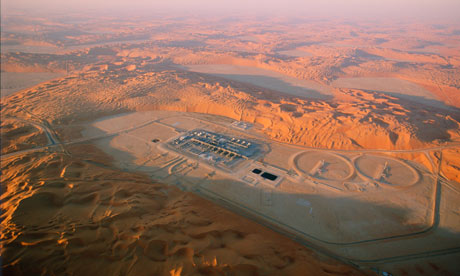
Aerial View of Oil Refinery
WikiLeaks cables suggest the amount of oil that can be retrieved has been overestimated. Photograph: George Steinmetz/Corbis via guardian.co.uk 

Saudi oil refinery. Cables released by Wikileaks report that Saudi oil reserves may be overstated by as much as 40%.
The US fears that Saudi Arabia, the world's largest crude oil exporter, may not have enough reserves to prevent oil prices escalating, confidential cables from its embassy in Riyadh show.
The cables, released by WikiLeaks, urge Washington to take seriously a warning from a senior Saudi government oil executive that the kingdom's crude oil reserves may have been overstated by as much as 300bn barrels – nearly 40%.
The revelation comes as the oil price has soared in recent weeks to more than $100 a barrel on global demand and tensions in the Middle East. Many analysts expect that the Saudis and their Opec cartel partners would pump more oil if rising prices threatened to choke off demand.
However, Sadad al-Husseini, a geologist and former head of exploration at the Saudi oil monopoly Aramco, met the US consul general in Riyadh in November 2007 and told the US diplomat that Aramco's 12.5m barrel-a-day capacity needed to keep a lid on prices could not be reached.
According to the cables, which date between 2007-09, Husseini said Saudi Arabia might reach an output of 12m barrels a day in 10 years but before then – possibly as early as 2012 – global oil production would have hit its highest point. This crunch point is known as "peak oil".
Husseini said that at that point Aramco would not be able to stop the rise of global oil prices because the Saudi energy industry had overstated its recoverable reserves to spur foreign investment. He argued that Aramco had badly underestimated the time needed to bring new oil on tap.
One cable said: "According to al-Husseini, the crux of the issue is twofold. First, it is possible that Saudi reserves are not as bountiful as sometimes described, and the timeline for their production not as unrestrained as Aramco and energy optimists would like to portray."
It went on: "In a presentation, Abdallah al-Saif, current Aramco senior vice-president for exploration, reported that Aramco has 716bn barrels of total reserves, of which 51% are recoverable, and that in 20 years Aramco will have 900bn barrels of reserves.
"Al-Husseini disagrees with this analysis, believing Aramco's reserves are overstated by as much as 300bn barrels. In his view once 50% of original proven reserves has been reached … a steady output in decline will ensue and no amount of effort will be able to stop it. He believes that what will result is a plateau in total output that will last approximately 15 years followed by decreasing output."
The US consul then told Washington: "While al-Husseini fundamentally contradicts the Aramco company line, he is no doomsday theorist. His pedigree, experience and outlook demand that his predictions be thoughtfully considered."
if you like plastic and petroleum jelly then drill here and drill now

WikiLeak: Petraeus: If we wanted Middle Eastern oil, we could've just bought it

Labels: » » » » » » » »
[Nazarbayev] said Supreme Leader Ayatollah Khameni told him that even if Iran compromises on the nuclear issue, the United States would always find another reason to criticize "because they hate us -- all the United States wants is to conquer the entire region and steal the oil." General Petraeus interjected, "We could have bought all the oil in the region for 100 years for what we've spent in Iraq!" Nazarbayev, looking a bit amused, said, "I know. I'm just telling you what he said."

WMDs were in Iraq - Blood for Oil was a lie

Labels: » » » » » » » » » » » » » »

...REPOSTED FROM LAST WEEK BECAUSE THE DHIMMIS STILL DON'T GET IT:

The president's critics accuse his administration of falsifying intelligence about Saddam Hussein having the capability of building weapons of mass destruction.This stems from the claim that the president solely relied on intelligence that Saddam was trying to purchase yellowcake uranium from Niger to build a nuclear weapons program. These reports later proved to be inaccurate. The media failed to emphasize, however, that Saddam was already in possession of 550 tons of yellowcake uranium, which he was storing at the Tuwaitha nuclear complex south of Baghdad. That uranium was found and secured by coalition troops in 2003 after they liberated Iraq and was finally transported to Canada in July 2008. The president's critics also blast him for allegedly implementing a new policy of Iraqi regime change when in fact that policy was established in the Iraq Liberation Act, signed by President Clinton in 1998.The Act made it the official policy of the United States to support the removal of Saddam Hussein from power.

Here is Noam Chomsky recently on WMDs. I know he is a liar, but even he does not agree with the idea that there were no WMDs

Chomsky: "This is even sometimes discussed. You can find it in the strategic analysis literature. Take, say, the invasion of Iraq again. We're told that they didn't find weapons of mass destruction. Well, that's not exactly correct. They did find weapons of mass destruction, namely, the ones that had been sent to Saddam by the United States, Britain, and others through the 1980s. A lot of them were still there. They were under control of U.N. inspectors and were being dismantled. But many were still there. When the U.S. invaded, the inspectors were kicked out, and Rumsfeld and Cheney didn't tell their troops to guard the sites. So the sites were left unguarded, and they were systematically looted. The U.N. inspectors did continue their work by satellite and they identified over 100 sites that were systematically looted, like, not somebody going in and stealing something, but carefully, systematically looted." via Chomsky info

As someone who did not vote for G.W. Bush, I find it amusing that I have spent half a decade defending his actions. Bush was the Bunny Lebowski of politics. A political *bimbo* who prostituted the concept of "Moderate" Islam for his Saudi friends (just like Obama). We threw out a Ringer for a Ringer. (The Chomsky quote is referenced in the post so you can see the html I am quoting)

keep in mind that Saddam himself wanted the world to know he had WMDs: Saddam knew he was finished and was trying to get history to view him in a more favorable light. The man murdered thousands of his own people and was capable of just about any kind of violence and bloodshed. I don't believe he feared Iran (over which he had an overwhelming advantage at the outset of their war) and I don't believe he wanted to cowtow to the United States.

An American leader can declare war simply because there is an attempt of assassination. America can declare war because Iraq was supporting terrorism that killed American citizens. As for the WMDs I find it amusing that people thought they would just show up. did you expect them to give them to us? they found Uranium reserves south of Baghdad.

http://www.washingtontimes.com/news/2009/jan/22/to-dispel-bush-clouds/

In the coming months, years and decades, history will be the judge of what kind of leader former President Bush was, but those Americans interested in preserving his legacy must take an aggressive approach to dispel the many myths and lies that already exist.

Clearly, the most contested area of Mr. Bush's presidency will be his foreign policy, namely his decision to send troops to Iraq. For several years, numerous myths have existed about the war, and it is imperative that we correct any falsehoods for the historical record.

These myths have falsely portrayed Mr. Bush as an imperialist president who illegally invaded a foreign country to seize its oil and dominate its people.

via washingtontimes.com

the US got very little crude oil from Iraq when compared to its other suppliers, while in fact France got a much larger percentage of its total oil requirements from Iraq, and so too did Germany.

so there would be the incentive for Europe to be against a war... wouldn't there be?

If the US defeated Saddam Hussein solely to gain access to Iraqi crude oil, wouldn’t one reasonably think that the governments would have rigged the auctions so that the US could take Iraq’s crude cheaply, effectively and quickly? Exxon Mobil was the only US company that lead a winning bid team in the recent auction, winning the right to develop Iraq's West Qurna 1. Royal Dutch Shell won the right to operate the Majnoon field. The Majnoon has a production target of 1.8 million bpd, and Royal Dutch Shell’s joint bid gets it 45% of that total. Malaysia's Petronas joined Royal Dutch Shell and “won” 30%, with the rest kicked down to more and more minor partners none of which were American.

...Even now, we are hardly dependent at all upon Iraqi crude oil, for as of September Iraq ranks behind Algeria, Nigeria, Saudi Arabia, Venezuela, and of course Canada, and it is barely ahead of “mighty” Ecuador, with Brazil having ranked ahead of Iraq several times in the past six months but having ranked below Iraq in August and September...

via moneyrunner.blogspot.com

The truth however, is that Mr. Bush liberated a country from the cruelty and oppression of a sadistic dictator, returned the oil to the Iraqi people and acted in full compliance with both domestic and international law. In fact, Mr. Bush's decision to send troops back to Iraq not only complied with international law but fulfilled obligations set by the United Nations.

In October 2002, Congress authorized the president to use whatever military force was necessary to fulfill U.N. resolutions pertaining to Iraq and the Gulf war. This was because after the U.N. authorized a coalition of the willing to use military force against Iraq for its illegal invasion of Kuwait in 1990, the U.N. temporarily suspended the Gulf war in 1991 with a cease-fire agreement that imposed stipulations upon Saddam Hussein.

Saddam violated those cease-fire conditions by failing to give U.N. weapon inspectors unfettered access, which actually prompted military action from President Clinton in 1998 when he launched a massive bombing campaign against Iraq during Operation Desert Fox.

In 2002, the United Nations resolved that Saddam was in "material breach" of the cease-fire agreement and that Iraq faced "serious consequences." Because the cease-fire did not end but merely suspended the Gulf war, Saddam Hussein's continued violations of the agreement reactivated the war.

President Bush did not start a new war in 2003 that violated domestic or international law. He merely complied with Congress' 2002 vote by honoring resolutions passed by the United Nations that reactivated the original Gulf war.

The president's critics accuse his administration of falsifying intelligence about Saddam Hussein having the capability of building weapons of mass destruction. This stems from the claim that the president solely relied on intelligence that Saddam was trying to purchase yellowcake uranium from Niger to build a nuclear weapons program. These reports later proved to be inaccurate.

The media failed to emphasize, however, that Saddam was already in possession of 550 tons of yellowcake uranium, which he was storing at the Tuwaitha nuclear complex south of Baghdad. That uranium was found and secured by coalition troops in 2003 after they liberated Iraq and was finally transported to Canada in July 2008.

The president's critics also blast him for allegedly implementing a new policy of Iraqi regime change when in fact that policy was established in the Iraq Liberation Act, signed by President Clinton in 1998. The Act made it the official policy of the United States to support the removal of Saddam Hussein from power. President Bush did not implement a new policy of regime change in Iraq. He was acting in the spirit of the policy already established by President Clinton.

The decision to send troops back to Iraq in 2003 was indeed liberation and not an invasion. Investigations by Amnesty International, Human Rights Watch, the U.S. Department of State and the British government have all found evidence that the Iraqi people lived under a regime that systematically employed methods of torture and fear. Dissidents suffered from bizarre, cruel methods of torture including dismemberment, piercing, bone-crushing, cutting, acid baths and imprisonment inside coffin-size cells.

Women accused of prostitution were publicly beheaded without a trial and male soldiers were authorized to rape women to punish their family members for political resistance. Men were often forced to watch soldiers rape their wives, sisters and daughters as a method of punishment when the female victim was innocent.

The removal of Saddam Hussein from power was not an invasion, it was liberation.

One of the most widely spread conspiracy theories about President Bush and the war is the false allegation that he sent troops to Iraq to illegally steal its oil. There is no truth to this allegation. In fact, the new Oil Draft Law under consideration by the Iraqi government proposes using "production-sharing agreements," which is the same type of oil distribution system used in Iraq for decades.

Production-sharing agreements allow foreign governments or private corporations to drill for oil and keep a small percentage of profits for their work while giving the majority of profits earned to the host country. The new Oil Draft Law will continue to implement production-sharing agreements, but the Iraqi profits will now go to the new democratic government instead of Saddam. The United States is not stealing any oil from Iraq.

There are many more myths and lies the far left has successfully perpetuated about Mr. Bush and the liberation of Iraq, but this column is not the appropriate forum to dispel them. Because these lies have been so deeply ingrained in the consciousness of the American public, those wishing to restore the president's reputation must take a pro-active, aggressive approach that exports knowledge to the people.

Merely relying on a passive institute such as a presidential library and waiting for people to learn the truth on their own will not be sufficient in this unique case. Most people who visit the new George W. Bush presidential library will most likely already be sympathetic to him and there must be a more aggressive approach used to inform all Americans.

It is perhaps one of the greatest historical ironies and tragedies that a leader who cares so deeply about human rights and the freedom of oppressed people has been falsely portrayed as an imperialist invader. It is time for those working on the former president's legacy to adequately communicate his vision of worldwide liberation to the American people. The historical record must be corrected to accurately reflect President Bush's legacy and for the honor of our country.

Jeffrey Scott Shapiro is the National Organizer of HONOR FREEDOM (www.honorfreedom.com), a nonprofit foundation dedicated to correcting the historical record about President Bush and the war in Iraq.


via washingtontimes.com


For those you of that read this and many other rational blogs, you quite familiar with my frustration with the lack of any investigation into the missing WMDs here and here and and as far back as 10/04 here. We know existed (just ask thethousands of families of dead Kurds). We have suffered

through the mendacity of Dhimmicarts talking points "NO WMDS" and leftwing memes to the point where the lie has become accepted the accepted "myth" (to the point where it damn near cost Bush the election) - now there is a really frightening thought.

Saddam WMD: The Mother of All Cover Ups

.So it is long overdue and long necessary that Washington step out from the Democrat's horsewhipping, and fight for the truth particularly now when Iran has all but declared war on the West. It was Syria, Iran's proxy - it's organ grinder's monkey-, that allegedly took possession of the Saddam's WMD. More Here.


- Nearly a year and a half

after a final report from American weapons inspectors concluded they

could not uncover evidence of stockpiles of weapons of mass destruction

in Iraq, the chairman of the House Permanent Select Committee on

Intelligence has reopened the question.......


Chairman Peter Hoekstra, a Republican from Michigan, is said by his

staff to believe that it is too soon to conclude that Saddam Hussein

either destroyed or never had the stockpiles and programs to produce

biological, chemical, and nuclear weapons that Western intelligence

agencies insisted he had before the war.

In the weeks before and following the launch of Operation Iraqi Freedom, at least 10 facilities believed by American, European, and Israeli intelligence to be for the production and research of chemical and biological weapons were systematically looted by members of Iraq's Republican Guard, ordered by the regime's leadership to destroy and hide evidence of the programs, according to current and former intelligence officials from America, Britain and Israel. In interviews with the New York Sun, these officials reflect the position of Defense Secretary Rumsfeld in the months after the war: "


The absence of evidence is not the evidence of absence."


Mr. Ware yesterday said Mr. Hoekstra is worried that equipment or stocks of biological and chemical weapons could have been transferred to a third country or landed in the hands of terrorists.

Story here

I'll say

The former undersecretary of
defense for policy, Douglas Feith, said the question of Iraq's weapons
of mass destruction is still open. "People talk about the former Soviet loose nukes problem. The question is whether this is a loose WMD problem," also held by the State Department's chief of Iraq intelligence between 2003 and 2005, Wayne White. In an interview this week, Mr. White, said, "Just as the pre-war WMD intelligence was largely wrong, the conclusion after the war that absolutely nothing was in Iraq could also be wrong."

Even the mendacious left believes the WMD are somewhere;


Canada's Globe and Mail, Susan Rice, a former assistant secretary of state under President Clinton who would go on to become a foreign policy adviser to Howard Dean during the 2004 election season, raised the prospect of Saddam's missing weapons in terms similar to Mr. Feith. "The richest treasure trove of dangerous WMD material since the collapse of the Soviet Union is on the loose and perhaps far easier for al-Qaeda and other terrorists to acquire than it was under the control of their ideological adversary, Saddam Hussein," she wrote.

The former deputy of the Iraqi air force, General Georges Sada, revealed on

Saturday that that former dictator of Iraq, Saddam Hussein, ordered him
during the first Gulf War to bomb Israeli population centers with chemical weapons. More here.

Why, indeed, did they stop short of Baghdad in '91?

Who can forget the entire population of Israel wearing gas masks during Saddam's SCUD missile attack during the 1991 Gulf war testimony to the House


Permanent Select Committee on Intelligence, David Kay said "Deliberate dispersal and destruction of material and documentation related to weapons programs began pre-conflict and ran trans-to-post conflict."

A former colonel for Israeli military intelligence who worked onIraqi issues, Miri Eisin, says of a transfer of weapons to Syria, "I don't know all of it, but some things went in that route. At the end ofthe day, it would be the type of things they could hide. This wouldstrike out the biological type things, but they could get chemical weapons, possibly residual missile parts."

Photo here: During Iraqi Scud attacks against Israel in 1991, school

children were trained in the proper fitting of gas masks, lest any of the missiles actually be tipped with poison weapons.

Related Articles:

Iraq's WMD Secreted in Syria, Sada Says

Saddam's WMD Moved to Syria, An Israeli Says


via atlasshrugs2000.typepad.com

you might find it interesting that now that the blood for oil claim has been proven false, that many nazis on the internet are defaulting to the stance that it was all Israel's fault. here is a link to a forum that is now blaming Israel instead of the oil companies.

the story changes, but the focused hate and prejudice stays the same. Any progressives that fell for this ruse were Asses

Related:

http://noahdavidsimon.blogspot.com/2008/09/chomsky-changes-his-mind-on-wmds-in.html http://noahdavidsimon.blogspot.com/2014/01/those-wmds-tapes-from-late-dictators.html http://noahdavidsimon.blogspot.com/2013/06/there-were-no-wmds-in-iraq.html http://noahdavidsimon.blogspot.com/2011/02/san-diego-port-director-claims-wmd.html http://noahdavidsimon.blogspot.com/2013/03/the-facts-of-pollard-case-points-1-55.html http://noahdavidsimon.blogspot.com/2012/09/elder-of-ziyon-report-assad-has-plans.html http://noahdavidsimon.blogspot.com/2010/12/wikileaks-show-wmd-hunt-continued-in.html http://noahdavidsimon.blogspot.com/2010/12/saddam-missing-nukes-found-another.html

Iraq Weapons of Mass Destruction

Labels: » » » » » » » » » » » » » »
Wmd_hardware

The president's critics accuse his administration of falsifying intelligence about Saddam Hussein having the capability of building weapons of mass destruction.This stems from the claim that the president solely relied on intelligence that Saddam was trying to purchase yellowcake uranium from Niger to build a nuclear weapons program. These reports later proved to be inaccurate. The media failed to emphasize, however, that Saddam was already in possession of 550 tons of yellowcake uranium, which he was storing at the Tuwaitha nuclear complex south of Baghdad. That uranium was found and secured by coalition troops in 2003 after they liberated Iraq and was finally transported to Canada in July 2008. The president's critics also blast him for allegedly implementing a new policy of Iraqi regime change when in fact that policy was established in the Iraq Liberation Act, signed by President Clinton in 1998.The Act made it the official policy of the United States to support the removal of Saddam Hussein from power.

Here is Noam Chomsky recently on WMDs. I know he is a liar, but even he does not agree with the idea that there were no WMDs
Chomsky: "This is even sometimes discussed. You can find it in the strategic analysis literature. Take, say, the invasion of Iraq again. We're told that they didn't find weapons of mass destruction. Well, that's not exactly correct. They did find weapons of mass destruction, namely, the ones that had been sent to Saddam by the United States, Britain, and others through the 1980s. A lot of them were still there. They were under control of U.N. inspectors and were being dismantled. But many were still there. When the U.S. invaded, the inspectors were kicked out, and Rumsfeld and Cheney didn't tell their troops to guard the sites. So the sites were left unguarded, and they were systematically looted. The U.N. inspectors did continue their work by satellite and they identified over 100 sites that were systematically looted, like, not somebody going in and stealing something, but carefully, systematically looted." via Chomsky info

As someone who did not vote for G.W. Bush, I find it amusing that I have spent half a decade defending his actions. Bush was the Bunny Lebowski of politics. A political *bimbo* who prostituted the concept of "Moderate" Islam for his Saudi friends (just like Obama).  We threw out a Ringer for a Ringer. (The Chomsky quote is referenced in the post so you can see the html I am quoting)

keep in mind that Saddam himself wanted the world to know he had WMDs: Saddam knew he was finished and was trying to get history to view him in a more favorable light. The man murdered thousands of his own people and was capable of just about any kind of violence and bloodshed. I don't believe he feared Iran (over which he had an overwhelming advantage at the outset of their war) and I don't believe he wanted to cowtow to the United States.
An American leader can declare war simply because there is an attempt of assassination. America can declare war because Iraq was supporting terrorism that killed American citizens. As for the WMDs I find it amusing that people thought they would just show up. did you expect them to give them to us? they found Uranium reserves south of Baghdad.

http://www.washingtontimes.com/news/2009/jan/22/to-dispel-bush-clouds/


In the coming months, years and decades, history will be the judge of what kind of leader former President Bush was, but those Americans interested in preserving his legacy must take an aggressive approach to dispel the many myths and lies that already exist.
Clearly, the most contested area of Mr. Bush's presidency will be his foreign policy, namely his decision to send troops to Iraq. For several years, numerous myths have existed about the war, and it is imperative that we correct any falsehoods for the historical record.
These myths have falsely portrayed Mr. Bush as an imperialist president who illegally invaded a foreign country to seize its oil and dominate its people.
via washingtontimes.com

the US got very little crude oil from Iraq when compared to its other suppliers, while in fact France got a much larger percentage of its total oil requirements from Iraq, and so too did Germany.
so there would be the incentive for Europe to be against a war... wouldn't there be?
If the US defeated Saddam Hussein solely to gain access to Iraqi crude oil, wouldn’t one reasonably think that the governments would have rigged the auctions so that the US could take Iraq’s crude cheaply, effectively and quickly? Exxon Mobil was the only US company that lead a winning bid team in the recent auction, winning the right to develop Iraq's West Qurna 1. Royal Dutch Shell won the right to operate the Majnoon field. The Majnoon has a production target of 1.8 million bpd, and Royal Dutch Shell’s joint bid gets it 45% of that total. Malaysia's Petronas joined Royal Dutch Shell and “won” 30%, with the rest kicked down to more and more minor partners none of which were American.

...Even now, we are hardly dependent at all upon Iraqi crude oil, for as of September Iraq ranks behind Algeria, Nigeria, Saudi Arabia, Venezuela, and of course Canada, and it is barely ahead of “mighty” Ecuador, with Brazil having ranked ahead of Iraq several times in the past six months but having ranked below Iraq in August and September...

via moneyrunner.blogspot.com

The truth however, is that Mr. Bush liberated a country from the cruelty and oppression of a sadistic dictator, returned the oil to the Iraqi people and acted in full compliance with both domestic and international law. In fact, Mr. Bush's decision to send troops back to Iraq not only complied with international law but fulfilled obligations set by the United Nations.
In October 2002, Congress authorized the president to use whatever military force was necessary to fulfill U.N. resolutions pertaining to Iraq and the Gulf war. This was because after the U.N. authorized a coalition of the willing to use military force against Iraq for its illegal invasion of Kuwait in 1990, the U.N. temporarily suspended the Gulf war in 1991 with a cease-fire agreement that imposed stipulations upon Saddam Hussein.
Saddam violated those cease-fire conditions by failing to give U.N. weapon inspectors unfettered access, which actually prompted military action from President Clinton in 1998 when he launched a massive bombing campaign against Iraq during Operation Desert Fox.
In 2002, the United Nations resolved that Saddam was in "material breach" of the cease-fire agreement and that Iraq faced "serious consequences." Because the cease-fire did not end but merely suspended the Gulf war, Saddam Hussein's continued violations of the agreement reactivated the war.
President Bush did not start a new war in 2003 that violated domestic or international law. He merely complied with Congress' 2002 vote by honoring resolutions passed by the United Nations that reactivated the original Gulf war.
The president's critics accuse his administration of falsifying intelligence about Saddam Hussein having the capability of building weapons of mass destruction. This stems from the claim that the president solely relied on intelligence that Saddam was trying to purchase yellowcake uranium from Niger to build a nuclear weapons program. These reports later proved to be inaccurate.
The media failed to emphasize, however, that Saddam was already in possession of 550 tons of yellowcake uranium, which he was storing at the Tuwaitha nuclear complex south of Baghdad. That uranium was found and secured by coalition troops in 2003 after they liberated Iraq and was finally transported to Canada in July 2008.
The president's critics also blast him for allegedly implementing a new policy of Iraqi regime change when in fact that policy was established in the Iraq Liberation Act, signed by President Clinton in 1998. The Act made it the official policy of the United States to support the removal of Saddam Hussein from power. President Bush did not implement a new policy of regime change in Iraq. He was acting in the spirit of the policy already established by President Clinton.
The decision to send troops back to Iraq in 2003 was indeed liberation and not an invasion. Investigations by Amnesty International, Human Rights Watch, the U.S. Department of State and the British government have all found evidence that the Iraqi people lived under a regime that systematically employed methods of torture and fear. Dissidents suffered from bizarre, cruel methods of torture including dismemberment, piercing, bone-crushing, cutting, acid baths and imprisonment inside coffin-size cells.
Women accused of prostitution were publicly beheaded without a trial and male soldiers were authorized to rape women to punish their family members for political resistance. Men were often forced to watch soldiers rape their wives, sisters and daughters as a method of punishment when the female victim was innocent.
The removal of Saddam Hussein from power was not an invasion, it was liberation.
One of the most widely spread conspiracy theories about President Bush and the war is the false allegation that he sent troops to Iraq to illegally steal its oil. There is no truth to this allegation. In fact, the new Oil Draft Law under consideration by the Iraqi government proposes using "production-sharing agreements," which is the same type of oil distribution system used in Iraq for decades.
Production-sharing agreements allow foreign governments or private corporations to drill for oil and keep a small percentage of profits for their work while giving the majority of profits earned to the host country. The new Oil Draft Law will continue to implement production-sharing agreements, but the Iraqi profits will now go to the new democratic government instead of Saddam. The United States is not stealing any oil from Iraq.
There are many more myths and lies the far left has successfully perpetuated about Mr. Bush and the liberation of Iraq, but this column is not the appropriate forum to dispel them. Because these lies have been so deeply ingrained in the consciousness of the American public, those wishing to restore the president's reputation must take a pro-active, aggressive approach that exports knowledge to the people.
Merely relying on a passive institute such as a presidential library and waiting for people to learn the truth on their own will not be sufficient in this unique case. Most people who visit the new George W. Bush presidential library will most likely already be sympathetic to him and there must be a more aggressive approach used to inform all Americans.
It is perhaps one of the greatest historical ironies and tragedies that a leader who cares so deeply about human rights and the freedom of oppressed people has been falsely portrayed as an imperialist invader. It is time for those working on the former president's legacy to adequately communicate his vision of worldwide liberation to the American people. The historical record must be corrected to accurately reflect President Bush's legacy and for the honor of our country.
Jeffrey Scott Shapiro is the National Organizer of HONOR FREEDOM (www.honorfreedom.com), a nonprofit foundation dedicated to correcting the historical record about President Bush and the war in Iraq.
For those you of that read this and many other rational blogs, you quite familiar with my frustration with the lack of any investigation into the missing WMDs here and here and and as far back as 10/04 here. We know existed (just ask thethousands of families of dead Kurds). We have suffered
through the mendacity of Dhimmicarts talking points "NO WMDS" and leftwing memes to the point where the lie has become accepted the accepted "myth" (to the point where it damn near cost Bush the election) - now there is a really frightening thought.


Saddam WMD: The Mother of All Cover Ups


.So it is long overdue and long necessary that Washington step out from the Democrat's horsewhipping, and fight for the truth particularly now when Iran has all but declared war on the West. It was Syria, Iran's proxy - it's organ grinder's monkey-, that allegedly took possession of the Saddam's WMD. More Here.
- Nearly a year and a half
after a final report from American weapons inspectors concluded they
could not uncover evidence of stockpiles of weapons of mass destruction
in Iraq, the chairman of the House Permanent Select Committee on
Intelligence has reopened the question.......

Chairman Peter Hoekstra, a Republican from Michigan, is said by his
staff to believe that it is too soon to conclude that Saddam Hussein
either destroyed or never had the stockpiles and programs to produce
biological, chemical, and nuclear weapons that Western intelligence
agencies insisted he had before the war.
In the weeks before and following the launch of Operation Iraqi Freedom, at least 10 facilities believed by American, European, and Israeli intelligence to be for the production and research of chemical and biological weapons were systematically looted by members of Iraq's Republican Guard, ordered by the regime's leadership to destroy and hide evidence of the programs, according to current and former intelligence officials from America, Britain and Israel. In interviews with the New York Sun, these officials reflect the position of Defense Secretary Rumsfeld in the months after the war: "

The absence of evidence is not the evidence of absence."
Mr. Ware yesterday said Mr. Hoekstra is worried that equipment or stocks of biological and chemical weapons could have been transferred to a third country or landed in the hands of terrorists.

Story here
I'll say
The former undersecretary of
defense for policy, Douglas Feith, said the question of Iraq's weapons
of mass destruction is still open. "People talk about the former Soviet loose nukes problem. The question is whether this is a loose WMD problem," also held by the State Department's chief of Iraq intelligence between 2003 and 2005, Wayne White. In an interview this week, Mr. White, said, "Just as the pre-war WMD intelligence was largely wrong, the conclusion after the war that absolutely nothing was in Iraq could also be wrong."
Even the mendacious left believes the WMD are somewhere;
Canada's Globe and Mail, Susan Rice, a former assistant secretary of state under President Clinton who would go on to become a foreign policy adviser to Howard Dean during the 2004 election season, raised the prospect of Saddam's missing weapons in terms similar to Mr. Feith. "The richest treasure trove of dangerous WMD material since the collapse of the Soviet Union is on the loose and perhaps far easier for al-Qaeda and other terrorists to acquire than it was under the control of their ideological adversary, Saddam Hussein," she wrote.
The former deputy of the Iraqi air force, General Georges Sada, revealed on
Saturday that that former dictator of Iraq, Saddam Hussein, ordered him
during the first Gulf War to bomb Israeli population centers with chemical weapons. More here.


Why, indeed, did they stop short of Baghdad in '91?

Who can forget the entire population of Israel wearing gas masks during Saddam's SCUD missile attack during the 1991 Gulf war testimony to the House


Permanent Select Committee on Intelligence, David Kay said "Deliberate dispersal and destruction of material and documentation related to weapons programs began pre-conflict and ran trans-to-post conflict."
A former colonel for Israeli military intelligence who worked onIraqi issues, Miri Eisin, says of a transfer of weapons to Syria, "I don't know all of it, but some things went in that route. At the end ofthe day, it would be the type of things they could hide. This wouldstrike out the biological type things, but they could get chemical weapons, possibly residual missile parts."
Photo here: During Iraqi Scud attacks against Israel in 1991, school
children were trained in the proper fitting of gas masks, lest any of the missiles actually be tipped with poison weapons.
Related Articles:
Iraq's WMD Secreted in Syria, Sada Says
Saddam's WMD Moved to Syria, An Israeli Says

you might find it interesting that now that the blood for oil claim has been proven false, that many nazis on the internet are defaulting to the stance that it was all Israel's fault. here is a link to a forum that is now blaming Israel instead of the oil companies. http://ff.im/cTjr8

the story changes, but the focused hate and prejudice stays the same. Any progressives that fell for this ruse were Asses

THE ASTUTE BLOGGERS: OIL PRICE CONTINUES SLIDING DOWN

Labels: »
NYTIMES:
Oil prices continued their two-week slide on Wednesday after a government report showed demand for crude products dropped even further from the weak levels of a year ago when the recession's grip on the economy was strongest.

Benchmark crude for March delivery fell $1.04 to settle at $73.67 a barrel on the New York Mercantile Exchange. That's the lowest settlement price since Dec. 14, when crude dipped to $73.46.

Wholesale prices for natural gas, heating oil and gasoline also tumbled.


WE PREDICTED IT.

NO ONE ELSE DID, ANYWHERE.

PROEVOUS POSTS HERE AND HERE AND HERE AND HERE AND HERE.


Translate