Showing posts with label Iran's Sanctions. Show all posts
Obama says enough world oil to crack down on Iran
(Obama says enough world oil to crack down on Iran | Reuters) - President Barack Obama vowed on Friday to forge ahead with tough sanctions on Iran, saying there was enough oil in the world market - including emergency stockpiles - to allow countries to cut Iranian imports. In his decision, required by a sanctions law he signed in December, Obama said increased production by some countries as well as "the existence of strategic reserves" helped him come to the conclusion that sanctions can advance.The U.S. has reserves... does China and India?
India to pay for Iranian oil in gold, China likely to follow
What side are these Hindus on? RT with the bad news... we know what side Russia Today is on though. The Ron Paul side.WHORES! (CARL)In a bid to circumvent Western sanctions, India has agreed to purchase Iranian oil using gold instead of dollars, and China is likely to follow suit. Between the two of them, India and China account for 40% of Iranian oil sales. The EU, which agreed on Monday to gradually place an embargo on Iranian oil, accounts for 20% of Iranian oil sales.
Let's go to the videotape.DEBKA adds (Hat Tip: Will):
Iran's second largest customer after China, India purchases around $12 billion a year's worth of Iranian crude, or about 12 percent of its consumption. Delhi is to execute its transactions, according to our sources, through two state-owned banks: the Calcutta-based UCO Bank, whose board of directors is made up of Indian government and Reserve Bank of India representatives; and Halk Bankasi (Peoples Bank), Turkey's seventh largest bank which is owned by the government.What could go wrong?
An Indian delegation visited Tehran last week to discuss payment options in view of the new sanctions. The two sides were reported to have agreed that payment for the oil purchased would be partly in yen and partly in rupees. The switch to gold was kept dark.
Iran, Germany businessmen keen to expand trade ties
We wonder why Anne Frank's name has been used to promote terrorism,,, well this is why.
(JPost) Germany’s annual business with Iran hovers each year around 4 billion euros. During the first half of 2011, German imports of Iranian goods increased to 453 million euros, from 382 million euros in the same period a year earlier. Also during the first six months of 2011, German consumption of Iranian gas and oil rose to 280 million euros, from 197 million euros in the first half of 2010.
The conference’s political goals were ambitious, largely because the Merkel administration and Germany’s business class have fought tooth-and-nail to oppose robust EU and US sanctions clamping down on trade relations with the Islamic Republic.
The Federal Republic, which is Iran’s largest EU trade partner, permits Iran’s main foreign militia and political proxy, the Lebanese group Hezbollah, to operate in its backyard. According to Germany’s domestic intelligence agency, there are an estimated 900 active members of Hezbollah in the Federal Republic and the radical Islamic political party remains a legal entity.
(Trend) Iran's deputy minister of economic affairs and finance says Iranian and German businessmen are eager to expand trade in all areas, Press TV reported.
Mohammad-Reza Farzin made the remarks on the sidelines of meetings with Iranian and German businessmen in Berlin, IRNA reported on Friday.
He noted that Germany is the biggest trade partner of the Islamic Republic in Europe, and expressed hope that the volume of bilateral trade would increase in all spheres.
He went on to say that the Islamic Republic has always been a good economic partner for Germany despite the European financial and economic crisis.
Trade between Iran and Germany witnessed considerable growth throughout 2010 despite the sanctions imposed on Tehran over its nuclear program.
Around 50 German companies have branches in Iran and over 12,000 German companies have trade representatives in the country.
Crude oil and natural gas account for the lion's share of Germany's imports from Iran, while Iran's main imports from Germany are metals, chemicals, and industrial equipment.
On Monday, the chairman of Iran's Chamber of Commerce, Industries and Mines, Mohammad Nahavandian, said that despite all the political barriers, the European Union is still Iran's biggest trade partner in the world.
Eurostat, the European Union statistical office, announced in its October report that Iran's exports to the 27-member EU increased 6.4 percent in the first five months of 2011 compared to the same period last year.
The report added that Iran's exports to the EU exceeded five billion euros from January to May 2011, although imports from EU states have fallen around seven percent to 4.1 billion euros during the five-month period.
Iranian economy with our sanctions grows faster than US economy
In Iran, those sanctions that are designed to stop the country's nuclear program are going just great according to the International Monetary Fund. The economy grew at a rate of 3.2% in 2010-11. That's a better rate than the United States....
The International Monetary Fund gave a rosy portrayal of Iran's economy in a report issued Wednesday, saying it grew by 3.2 % in 2011, contradicting its earlier assessment and surprising Iran analysts who contend that the economy is shrinking.
@ChallahHuAkbar: .@mere_rhetoric .@IsraelMatzav .@Soccerdhg Is Kirk's graph wrong? kirk.senate.gov/pdfs/IranGraph…and the punchline: Take my President please!
Apologizing to Turkey Would Undermine Israel’s Interests Twice Over
Israel to apologize to Turkey?
Evelyn Gordon
Commentary/Contentions
22 July '11
I’d like to add to Michael’s excellent reasons for why Israel shouldn’t apologize to Turkey about last year’s raid on a Turkish-sponsored flotilla to Gaza. As Michael noted, apologizing won’t restore the strategic alliance, because Turkey has made a strategic foreign-policy choice that precludes alliance with Israel. But apologizing wouldn’t merely be ineffective, it would be downright harmful – to both of Israel’s stated goals.First, Israel wants to improve relations with Turkey. But by proving that Prime Minister Recep Tayyip Erdogan’s bullying tactics work – that Ankara can actively undermine every Israeli interest while promoting vicious anti-Israel sentiment at home, and Israel will still come crawling –apologizing will ensure more of the same.
Erdogan openly supports Hamas, which he insists isn’t a terrorist organization; his government actively backed last year’s flotilla, and he now plans a state visit to Gaza. He worked to block UN sanctions on Iran, then undermined them by boosting Turkey’s gasoline exports to Tehran. He reportedly promised arms to Hezbollah. He insisted that NATO’s planned missile-defense system not give Israel information on Iran. He deemed Israel’s 2009 war with Hamas in Gaza worse than the genocide in Darfur.
He also foments anti-Israel sentiment at home. An Israeli theater was forced to cancel an appearance in Turkey after Ankara said it wouldn’t stop radical Islamists from disrupting the performance. Israel cyclists were barred from an international bike race in Turkey because Syria and Iraq said their teams wouldn’t participate if Israel did. A Turkish-Israeli concert for religious tolerance was canceled after IHH, the viciously anti-Israel group behind the flotilla, insisted. As Turkish columnist Burak Bekdil noted, these and many similar incidents aren’t coincidental; they reflect “the systematic injection of Islamist sentiments about Israel into the minds of younger, ordinary Turks, especially in the past two and a half years” of Erdogan’s reign.
By apologizing, Israel would essentially say that none of the above precludes Turkey from being a valued ally. And if so, not only would Erdogan have no incentive to change his behavior, neither would any of his successors.
Yet Israel also has a second goal: sparing its soldiers facing legal action over the nine Turks killed in the raid. Its attorney general is thus reportedly pushing for an apology, bizarrely claiming this would preclude civil or criminal suits.
In reality, however, an Israeli admission of culpability – the only kind of apology Turkey would accept (it repeatedly rejected Israel’s offer to express mere “regret”) – would make legal action more likely. Absent such an admission, Israel has a strong case: A UN report due out later this month reportedly concluded that Israel’s blockade of Gaza was legal, that it had the right to intercept the flotilla and that its soldiers opened fire in self-defense, though it also found they used excessive force. But once Israel admits culpability, it has no case. And even if Ankara promises not to pursue legal action itself, it can’t stop flotilla passengers or their relatives from doing so –which, since most belonged to IHH, they presumably would.
In short, apologizing would undermine Israel’s own interests twice over. It’s high time for Jerusalem to recognize that the clock on Turkey can’t be turned back.
via calevbenyefuneh.blogspot.com
Roubini warns Turkey that they are about to have an economic crises
Renowned economist Prof. Dr. Nouriel Roubini said that the Turkish Central Bank should be supported by economic policies. Roubini said that the current account deficit and high domestic demand posed a risk to the Turkish economy. via hudson-ny.org
Turkey will be on it's hands and knees begging for stimulus money when their economy collapses. The unemployment is high and the loans can not be paid. The alarm bells are ringing now. Our terrorist enabling business men in the West are about to get a wake up call.
"The most significant existing relationship between Iran and the Turkish financial system is through the Bank Mellat branches in Turkey," David Cohen, acting undersecretary for Terrorism and Financial Intelligence, told the Hürriyet Daily News & Economic Review on Tuesday. via hudson-ny.org
Turkish Foreign Minister Ahmet Davutoğlu (L)
meets with his Iranian counterpart, Ali Akbar Salehi,
in Urmia. AA photo.
“Our prime minister has set a target of $30 billion in annual trade with Iran. That is why we are opening this border crossing,” Turkish Foreign Minister Ahmet Davutoğlu said Saturday. “We are announcing to the world that Turkey and Iran will be friends for eternity.” via hurriyetdailynews.com
Me wonders how much those biz contacts with Iran are worth when Turkey needs a loan.Hardly a model of Democracy for the region to follow. If you want Democracy the world needs to learn from the good business people who have a healthy economy in Israel
Turkey Aid Iranian Nuclear Program & Hezbollah Ready to Strike Tel-Aviv with Hundreds of Rockets
Israel believes Turkey is actively helping Iran to sidestep economic sanctions and has also turned a blind eye to Iranian weapons smuggling into Syria, according to leaked US diplomatic cables published on Friday.Hezbollah would be able to strike Tel Aviv directly from an arsenal of more than 20,000 missiles a recent WikiLeaks cable revealed to the Israeli press by WikiLeaks founder Julian Assange.
Citing documents obtained by WikiLeaks, Haaretz said senior Israeli officials had told the United States that Turkey was moving ever-closer to Iran because it needed Iranian energy supplies and because it was revising its global strategy.
During Joint Political Military Group meeting in November 2009, Israeli intelligence officials told their US counterparts that "Hezbollah was preparing for a long conflict with Israel in which it hopes to launch a massive number of rockets at Israel per day," with plans to send "400-600 rockets and missiles...per day, 100 of which will be aimed at Tel Aviv."
Tel Aviv's mayor Ron Holdai responded to the claim that Hezbollah could slam the city with sustained rocket fire during the Tel Aviv Marathon, saying "we live in Israel, and we have threats made to us all the time. If something were to happen we could cope," Israel Radio reported.
WikiLeaks: Iran Undermining U.S. Efforts in Afghanistan and Training Taliban Militants
![]() |
| Tue, April 05, 2011 | The Guardian: Document 1, Document 2, Document 3 and Document 4 |
US embassy cables reveal Tehran’s alleged efforts to influence Afghan politicians, religious scholars and Taliban militants.
Iran is financing a range of Afghan religious and political leaders, grooming Afghan religious scholars, training Taliban militants and even seeking to influence MPs, according to cables from the US embassy in Kabul.
The dispatches, relating conversations between American and Afghan officials, build up a picture of mounting Iranian involvement in its eastern neighbours.
In perhaps the most revealing, a top Hamid Karzai aide recently revealed to have received sacks of cash from the Iranian government told a senior US diplomat that all sorts of Afghan officials were on Tehran’s payroll, including some people nominated for cabinet positions.
Omar Daudzai “also asserted that in addition to financing Afghan religious leaders, Iran had provided salary support for some [Afghan government] deputy ministers and other officials, including ‘one or two even in the [presidential] palace’,” he told the then deputy US ambassador, Francis Ricciardone, in February.
“Daudzai claimed that some of these officials had been relieved of their duties because ‘you can’t be an honest Afghan if you receive a package [from Iran].’” The incident is striking because Daudzai attracted headlines in October when Karzai admitted his chief of staff had received “bags of cash”, containing hundreds of thousands of euros, from an Iranian official during an official trip with the president to Tehran. The money was to support Karzai’s office, something the diplomatic cables reveal the Americans were told about in 2009.
Read related article “WikiLeaks: Afghan MPs and religious scholars ‘on Iran payroll’” in the Guardian here.
Source: WikiLeaks
Document 1: Hamid Karzai on the Taliban, Iran and drugs in Afghanistan. Assistant Secretary of State Richard Boucher has various meetings with top Afghan officials in Kabul in 2007. He discusses cross-border affairs with Karzai and raises Pakistani concerns that the Afghan government is supporting anti-Pakistan Baluch rebels. Karzai blames the sharp deterioration of security in Helmand and boom in opium production on the British and Americans forcing him to sack an influential but corrupt tribal power broker as provincial governor in 2006.Saturday, 08 September 2007, 14:23
C O N F I D E N T I A L SECTION 01 OF 06 KABUL 002998
SIPDIS
SIPDIS
DEPT FOR SCA/FO DAS GASTRIGHT, SCA/A
STATE PASS TO USAID FOR AID/ANE, AID/DCHA/DG
NSC FOR AHARRIMAN
OSD FOR SHIVERS
CENTCOM FOR CG CFC-A. CG CJTF-82 POLAD
EO 12958 DECL: 07/10/2017
TAGS PGOV, PREL, PTER, ECON, IR, AF
SUBJECT: BOUCHER AND KARZAI, SPANTA ON JIRGAS, DRUGS, ECON
COOPERATION, GOVERNANCE, IRAN
Classified By: Charge Christopher Dell for reasons 1.4 (B) and (D)
1. (C) SUMMARY: Assistant Secretary for South and Central Asian Affairs Richard Boucher’s August 27 meetings with President Karzai, Foreign Minister Spanta, Lower House Speaker Qanooni and National Security Advisor Rassoul spanned a range of key topics. Boucher, Karzai and Rassoul agreed to focus on themes of economic cooperation, intelligence- sharing, refugees, controlling illicit border traffic, and engaging the tribes during the upcoming trilateral meeting between Deputy Secretary of State Negroponte, Rassoul, and Pakistani National Security Advisor Aziz. Karzai’s vision of a UN Special Envoy to Afghanistan largely mirrors U.S. thoughts on the issue. Discussion of counternarcotics and governance led Karzai to make a pitch for the international community to give the Afghan government room to do governance “the Afghan way.” Boucher pressed Spanta and Qanooni to ensure that Iran’s role in Afghanistan is limited to a constructive one. End Summary.
——
JIRGAS
——
2. (C) Karzai seemed pleased when Boucher shared that the recent Afghanistan-Pakistan jirga had been portrayed favorably in the U.S. media. Karzai commented that six months would be an ideal time frame after which to host the next jirga in Pakistan. Both agreed that the Afghan jirga was an important confidence-building measure, but Boucher expressed his hope that the next jirga in Pakistan might produce more concrete agreements. He raised the upcoming visit of Deputy Secretary of State Negroponte as an opportunity to capitalize on the momentum of the jirga and ensure continued progress towards the next one. Boucher raised the idea of having the Afghan and Pakistani National Security Advisors meet together with Negroponte during his visit to Jalalabad near the Afghan-Pakistani border and proposed that the three work together to identify specific issues where the greatest cooperation is needed (such as economic cooperation, intelligence-sharing and controlling illicit border traffic). Boucher also pushed for a discussion of how to engage the tribes along the border, whose buy-in is essential to the staying power of any future jirga agreements. Karzai, Spanta and Rassoul were each on board with this.
3. (C) Karzai shared that there was a recent gathering of Pakistani tribal chiefs in Peshawar during which the chiefs expressed a desire for the same rights and freedoms as ordinary Pakistani citizens. However, Karzai noted that these same tribes had recently refused to celebrate Pakistani Independence Day. Karzai said the Pakistani government needed to pull tribal leaders into a system of formal representation, while Boucher noted that Pakistani Interior Minister Sherpao did not think a political party system within the Tribal Areas would be feasible in the near term.
4. (C) In a separate discussion with Boucher, National Security Advisor Rassoul said Karzai had initiated the process of finalizing the list of participants in the commission that will implement the agreements from the first jirga. Boucher seconded Sherpao’s desire to see a commission comprised of those “who can get things done.” In an encouraging sign, Rassoul acknowledged that Sherpao had been a very helpful partner in the lead-up to, execution of and follow-up to the first jirga. Rassoul stated that the first task would be to work on the continuation of dialogue with the “opposition,” including Taliban. Boucher pushed specifically for the jirga commission to identify who the opposition is and relayed Sherpao’s interest in bringing those “who are not part
KABUL 00002998 002 OF 006
of the Taliban but sympathetic to them into the jirga process.” Both agreed that Afghanistan’s official reconciliation process (commonly referred to as “PTS”) is not appropriate for high-level leaders and large groups, so the jirga commission could play a role in defining a more appropriate process for people in this category.
5. (C) Boucher shared his opinion that Pakistan is “making a real effort now by going after the hardest targets, including Pakistani and Arab insurgents,” which has already yielded results. Rassoul noted that his government is considering using the Provincial Communications Center model (currently used to coordinate information among the Afghan National Security Forces at the provincial level) to set up a nexus for intelligence-sharing between the Afghan and Pakistani governments. Pakistan is concerned about Baluch rebels who are operating in and supported from Afghanistan, and Boucher stressed the importance of the Afghan government doing all it can to crack down on this.
6. (C) During the meeting with Spanta, the Foreign Minister indicated that while he had been skeptical about the jirga himself, he had considered it a major success in the end. He said that the Afghan Ministry of Foreign Affairs was sending five newly appointed diplomats to Pakistan for training — a significant goodwill gesture following the jirga, as Afghanistan has refused educational assistance from Pakistan in the past. Spanta said Musharraf’s appearance at the end of the jirga was a real high point. Boucher emphasized that it was Karzai’s urging that changed Musharraf’s mind. Boucher clarified that Musharraf’s initial decision not to attend was not a snub to the jirga itself but a cautionary move by Musharraf, who feared the Pakistani Supreme Court would rule to allow former Prime Minister Nawaz Sharif to return to Pakistan. Spanta conceded that, “We know Sharif is bad news. He is the author of Islamic radicalism in our region.” Boucher agreed that Sharif could return to lead a movement that is pro-Islam, anti-Musharraf and anti- U.S.
—————-
UN SPECIAL ENVOY
—————-
7. (C) When Boucher asked Karzai his thoughts on the best role for a UN Special Envoy to Afghanistan, Karzai stated, “If it would be a UN Envoy that would bring better coordination among the international community at capitals and also cause better coordination in Afghanistan, and within the Alliance on Afghanistan, then good. But if it is someone who would set up a parallel government of internationals, then no.” At one point Karzai stated, “I do not want a stronger UN,” then clarified that “I want the UN to be a stronger coordinator of the international community, yes, but not a parallel government in Afghanistan.” (Note: The British have indicated their vision of a Special Envoy who would be based in and work primarily in Afghanistan, whereas the U.S. and Afghan sides envision an envoy who would spend a great deal of time fund-raising and coordinating donor strategies in donor country capitals. End note.)
8. (C) During his meeting with Rassoul, Boucher commented that the French government had been considering running a Provincial Reconstruction Team and that the French Ministers of Defense and Foreign Affairs plan to visit Afghanistan soon. Boucher, Rassoul, and the Ambassador discussed future prospects for other donor country involvement in Afghanistan, noting that the Canadians were “iffy” and that the Dutch may leave after 2009. The British, French, Australians and U.S. will likely stay
KABUL 00002998 003 OF 006
for longer periods. Rassoul asserted the importance of “Afghanizing” the war in Kandahar both in order to reduce Canadian casualties, which might encourage the Canadians to stay longer, and to prepare the Afghan National Army and police for Canada’s likely withdrawal. Boucher noted that after a withdrawal of maneuver troops, the Canadians may still be willing to run a Provincial Reconstruction Team focused on development, as well as the training and equipping of Afghan National Security Forces. Boucher noted that as 2009 is an election year, it would be good to encourage donor countries to stay throughout 2009- 2010. He also expressed hope that efforts to engage Pakistan now would increase security significantly in the next year or two, perhaps encouraging other countries to stay present in Afghanistan.
————————————
LOOKING AHEAD ON ERADICATION EFFORTS
————————————
9. (C) Boucher noted that the UN Office of Drugs and Crime had released its latest assessment of drug production in Afghanistan. He highlighted the report’s findings that while the number of poppy-free provinces had increased from six to thirteen, overall production in Afghanistan had increased by 34 per cent, particularly in Helmand. Karzai reiterated his position against an aerial eradication campaign. When Boucher asked Karzai for his thinking on ground-based spray, Karzai replied, “We have not said no, but we’re not saying yes either. We would have to inform the population and do it in a way that does not create enmity.” The Ambassador noted the difficulties in relying on manual eradication and pointed out that 16 of the 135 eradicators had been killed last year. Boucher assured Karzai that the aerial spray decision was one for another year. “Another few years,” Karzai interjected. Boucher planted the idea of eventually doing aerial spray in Taliban controlled areas and manual eradication in those parts still loyal to the central government. Karzai gave no immediate reaction.
——————————————-
KARZAI ON DOING GOVERNANCE “THE AFGHAN WAY”
——————————————–
10. (C) The discussion on increased drug cultivation in Helmand sparked Karzai’s thoughts on establishing and maintaining central government authority in the provinces. According to Karzai, “The question is why do we have Taliban controlling these areas now when two years ago I had control of Helmand? When Sher Mohammad was governor there, we had girls in schools and only 160 foreign troops. The international community pushed me to remove him and now look where we are.” Referring to Sher Mohammad, Karzai retorted, “My question for you is, do you want a bad guy on your side or working for the Taliban? Where Afghans are in charge, drugs are less but where the international community is in charge, drugs are up.” The Ambassador countered that the scenario is more accurately read as the international community has invested its resources and manpower in the tougher provinces where, not coincidentally, the Taliban have stepped up their counterinsurgency and drug cultivation efforts to discredit both the Afghan government and international community. Karzai conceded but added that the Afghan people do not see it that way from the ground.
11. (C) Pressing the issue more firmly, Boucher asked Karzai whether it is possible to have the Afghan government in control using good guys, rather than the likes of Sher Mohammad as its agents. “Yes, but that is a gradual process,” said Karzai. Maintaining that
KABUL 00002998 004 OF 006
“the most important thing is bringing the tribes to our side,” he explained that the problem with the international community’s approach to date is that “You are trying to pick and choose tribal chiefs (who will expand the presence of the central government into rural areas), but that is not how the tribal system works. A tribal chiefdom is jealously guarded. It cannot be taken by force and it cannot be imposed from the outside. When we distort tribal structures, the vacuum is filled by the Taliban, and that is exactly what has happened in Helmand and Uruzgan.” He noted that Kandahar is an exception because of his outreach to all the tribal chiefs there. According to Karzai, “the people in Helmand and Uruzgan are uneducated, so you have to fight the Taliban with local ingredients,” unlike in more developed Kandahar. He added, “We cannot bring tribal chiefs on board with governors because we say to them that we want you to support the governor, but we single out particular chiefs and say we don’t want them involved in the process. Whether we like it or not, we have to work with these people.” Karzai and Rassoul both indicated that Karzai is currently focused on an outreach campaign to win backing from tribal leaders in Helmand.
——————————————— ——
ROLE OF IRAN, LOCAL OPPOSITION MUST BE CONSTRUCTIVE
——————————————— ——
12. (C) Boucher informed Karzai that he would meet with Lower House Speaker Qanooni later that day. Boucher told Karzai that his message to Qanooni would be: “Political opposition is okay, but it has to be constructive.” Karzai’s advice was to remind Qanooni that he would not hold his position without U.S. backing. As the conversation turned to political parties, Karzai commented, “I will not be a political party man, but I will support parties,” presumably referring to his rumored alliance with the newly formed Republican Party.
13. (C) During the meeting with Qanooni, Boucher emphasized that Iran and Russia should not be given inroads for influence in a way that would disrupt the system. Boucher clarified that while Iran’s investment in cultural and educational institutions was acceptable, its role in smuggling weapons into Afghanistan was not. Qanooni responded by assuring Boucher and the Ambassador that Afghanistan continues to see the U.S. as its “long-term partner.” Stressing that “We are not asking Afghans to choose sides,” Boucher expressed U.S. understanding for Afghanistan’s need to cultivate cooperative economic, business, cultural, and “normal” political relationships with Iran but reiterated that the line should be drawn at any activities that are disruptive to the establishment of a strong central government in Afghanistan. Qanooni indicated that, aside from Iran and Russia, people allied with the Hizb-i-Islami Gulbuddin party continue to seek more positions of influence within the Afghan government administration.
14. (C) Pointing out that, “The security problems in southern Afghanistan are spreading to the north,” Qanooni added that, “While others think the security situation will remain in control, I and other members of Parliament have some concerns.” He pointed to recent Taliban activity in Kapisa, Nuristan, and Baghlan as evidence of this. “Only Panjshir is protected,” he stated. When Boucher asked how Taliban are able to operate in the north, where Pashtuns are a minority, Qanooni insisted that the Taliban have located and begun to infiltrate the predominantly Pashtun districts which are scattered around the north.
15. (C) Qanooni mentioned the formation of a special committee from the Lower House that will be
KABUL 00002998 005 OF 006
investigating why decisions made by Parliament are not implemented by the executive branch. (Note: He was referring primarily to the decision of Parliament to impeach Foreign Minister Spanta and Minister of Refugees Akbar. Karzai mentioned that the Palace has also established a committee of six ministers to settle the issue with Parliament. End note.)
16. (C) The topic of Iran also surfaced during Boucher’s meeting with Spanta, who acknowledged, “We agree with the U.S. and U.K. that Iran is engaged in a lot of interference, but our interest in dealing with Iran is to be careful not to open a second front along the Iranian border with Afghanistan.” Spanta noted the Afghan government’s recent decision to reject a Memorandum of Understanding on military cooperation proposed by Iran. Spanta also shared that Karzai had raised the issue of Iran’s involvement in smuggling weapons into Afghanistan with Iranian President Ahmedinejad, who Spanta said, “denied it, of course, but the point was made.” Spanta noted that Iran was primarily invested in supporting political parties, mobilizing Shia mullahs, influencing the Afghan media, and providing material support to the Taliban. He added that Iran is funding the completion of a railway that will go from Iran into Afghanistan and end outside Herat City. Spanta expressed his uncertainty about the complicity of the Iranian Foreign Minister in providing material support to the Taliban, stating that “He promised me he is not involved, but said that he is involved in supporting political parties in Afghanistan.”
17. (C) Spanta commented that his biggest problem is that Iran continues to send back Afghan refugees – both those who are registered and those who are not – and added that Iran does not coordinate with the Afghan government on the forced returns.
—————————–
REGIONAL ECONOMIC COOPERATION
—————————–
18. (C) Spanta explained that Afghanistan continues to work with Pakistan on transit trade and updating their formal treaty from the 1960′s. They would also like to address this in the framework of South Asian Association for Regional Cooperation. Afghan Commerce Minister Farhang will travel to Pakistan shortly in hopes of making some progress. Spanta moved next to a request for U.S. financial assistance for the upcoming conference of the Economic Cooperation Organization (ECO), October 16-20, 2007 in Herat, which is focused on regional economic cooperation between Afghanistan, Azerbaijan, Kazakhstan, Kyrgyzstan, Turkey, Turkmenistan, Iran, Tajikistan, Uzbekistan, and Pakistan. Boucher promised to pass on the request but cautioned Spanta that the prospects were not good given how soon the conference would take place and the lack of U.S. membership in the organization.
19. (C) Boucher stressed to Karzai and Spanta the need to follow-up on the success of the Tajik- Afghanistan bridge opening with a trucking and transit agreement that allows Afghan and Tajik vendors and distributors to transport their goods across the border. The Ambassador pitched the idea of a truck leasing consortium project that would allow small- scale distributors, who could not afford to own trucks, to rent them when transporting their products. Both Karzai and Spanta welcomed the idea. Spanta noted that Afghan Commerce Minister Farhang will soon travel to Pakistan to discuss similar issues.
20. (C) Spanta also noted that the Chinese are increasingly interested in becoming a regional economic partner as well as knowing more about what the larger international community is doing to invest in Afghanistan.
KABUL 00002998 006 OF 006
21. (C) Note: Renewed focus on regional economic cooperation will be part of the agenda for the upcoming Afghanistan Ministerial Meeting on September 23 (co-chaired by President Karzai and Secretary General Ban Ki-Moon) that will precede the UN General Assembly. The October 3 meeting of the Joint Coordination and Monitoring Board will also focus on regional economic cooperation. This will be an important follow-up to the success of the Tajik- Afghanistan bridge opening and an opportunity to capitalize on the momentum of the jirga, with economic cooperation presenting a clear win-win for all parties involved. End note.
22. (SBU) The Office of the Assistant Secretary for South and Central Asian Affairs has cleared this cable.
DELLSource: WikiLeaksDocument 2: Iranian influence at Afghanistan parliament. A 2009 analysis of allegations that Iranian spies bribe MPs in a bid to get the Afghan parliament to back ‘anti-Coalition policies’. Some parliamentary staff also believe Iranian intelligence has infiltrated parliament’s legal and IT offices. Mirwais Yaseni, the deputy speaker, told US diplomats that he was visited by an Iranian spy who offered him ‘support’ if he allowed a debate on the legal status of NATO forces in Afghanistan. When he declined, parliament’s pro-Iran MPs went ahead anyway.Tuesday, 03 March 2009, 12:08
S E C R E T KABUL 000495
NOFORN
SIPDIS
C O R R E C T E D COPY CAPTION
EO 12958 DECL: 03/04/2019
TAGS PREL, PGOV, AF, IR
SUBJECT: IRANIAN INFLUENCE AT PARLIAMENT
Classified By: CDA Christopher Dell for reasons 1.4 (b) and (d).
1. (S/NF) SUMMARY. Iranian government officials routinely encourage Parliament to support anti-Coalition policies and to raise anti-American talking points during debates. Pro-Western MPs say colleagues with close Iranian contacts accept money or political support to promote Iran’s political agenda. Some staff members believe Iranian intelligence officials have infiltrated the Parliament’s legal and information technology support offices, compromising the professional staff’s legal advice and the legislature’s electronic communications. Allegations are difficult to verify and may be inspired more by conspiracy theories and inter-ethnic rivalries than actual facts. However, the number of MPs willing to tell us of first-hand encounters with Iranian agents appears to confirm a dedicated effort by Iran to influence Afghan attitudes toward Coalition forces and other issues. End Summary.
Iranian Embassy Relations with Parliament
———–
2. (S/NF) Iranian Embassy officials exploit contacts with a number of Afghan politicians to influence Parliament’s agenda. Many MPs accuse Hazaras, who like Iran’s leaders are mostly Shia Muslims, of having the closest ties with Iran. Moderate Hazaras insist Iranian outreach influences only conservative Hazaras, many of whom received religious educations or lived in Iran while in exile. MPs single out Sayed Hussein Alemi Balkhi (Kabul), Ahmad Ali Jebraili (Herat), and Ustad Mohammad Akbari (Bamyan) as the Hazara MPs who receive the most support from Iran. The Iranian Embassy has also cultivated deep relations with members of opposition groups (including the United Front), Tajik Sayeds, and MPs from Herat and other western provinces.
3. (S/NF) Iranian Embassy officers frequently visit Parliament, but rarely sit in the public gallery and usually avoid high-traffic morning hours, according to Parliament watchers. After Iranian-influence allegations exploded a few years ago, the Iranian Embassy began hosting MPs more often at off-site meetings, where other MPs suspect payments are delivered in exchange for commitments to advocate Iranian policies.
4. (S/NF) According to several contacts, Iran’s top policy goals in Parliament are: increasing criticism of civilian casualty incidents caused by Coalition forces, encouraging the Afghan Parliament to “legalize” foreign forces, advocating rights for Shia (including a separate judicial system), promoting “Persian culture,” and limiting Western support to Afghan media. These subjects often dominate parliamentary debates, even when not on the official agenda.
Iranian Official Hands Over Talking Points to Deputy Speaker
———–
5. (S/NF) Lower House Deputy Speaker Mirwais Yaseni (Nangarhar, Pashtun) told PolOff an Iranian intelligence officer visited his office in mid-February, coinciding with the visit of Iran’s vice president to Kabul, to pressure him to allow a debate on the status of Coalition forces that would push other scheduled items from the 2/17 agenda (Speaker Yunus Qanooni was out of town, leaving Yaseni to chair the session). The intelligence officer offered to provide “support” to Yaseni if he cooperated. Yaseni declined, only to face the wrath of MPs Balkhi and Akbari, who raised the issue during debate on another item. When Yaseni suggested the MPs wait for a better time to discuss foreign forces, Balkhi accused the deputy speaker of “betraying his country” and being a Western puppet. Yaseni said Balkhi’s and Akbari’s remarks were identical to the talking points provided to him by the Iranian official earlier that day.
6. (S/NF) Other MPs have described similar interactions with Iranians they believe to be embassy-based intelligence officers. Some believe Iranian officers work in conjunction with Karzai’s Palace staff to stir up heated reactions from MPs following civilian casualty incidents. Pro-Western MPs worry that Iran exploits such incidents to decrease public support for Coalition troop presence. The Iranian Embassy plays a lower-key role on social issues, paying MPs to support Persian cultural programs and oppose Western countries’ support to local media. Despite Iran’s ambitious lobbying efforts, there are limits to MPs’ willingness to toe the Iranian line. A Lower House debate last November on water rights quickly struck a nationalistic tone, with several MPs accusing Iran of “stealing Afghanistan’s water.” No MP spoke up to disagree.
Suspicions With Staff, Too
———-
7. (S/NF) Parliamentary staffers believe the Iranian Embassy has planted moles in Parliament’s legal and information technology offices. An employee in the Lower House’s legal affairs and research office told PolOff last fall that his new supervisor was editing the staffer’s responses to questions from MPs to reflect Iran-friendly interpretations of Afghan law. Lower House Secretary General Gulam Hassan Gran has repeatedly complained to PolOff that most IT staffers have been trained in Iran and pass electronic communications to the Iranian Embassy. As a result, Gran and other Pashtun staff refuse to use Parliament’s email system. Gran’s deputy keeps a list of MPs who criticize the U.S. and analyzes trends in anti-U.S. rhetoric.
Comment
———-
8. (S/NF) If Iranian efforts to influence MPs are as dedicated as some believe, it means the Iranian government has successfully identified and exploited Parliament’s greatest strength: the bully pulpit. The four-year-old Parliament has often struggled to find its role and usually comes out on the losing end in battles with the judicial and executive branches. Still, MPs have been quick learners when it comes to using the media to draw attention to their causes, even if their views are at times incoherent or serve no other purpose than to bad-mouth the government or political rivals. Iran has deftly taken note, forgoing attempts to influence actual legislation and instead exploiting MPs’ proclivity for media coverage. By strong-arming MPs to incorporate Iranian talking points into their public statements, Iran has opened a potential channel to influence public and elite opinion against U.S. goals and policies for Afghanistan. At a minimum, Iranian interference has helped keep Parliament bogged down in unproductive debates and away from more pressing matters.
DELL
Source: WikiLeaksDocument 3: Iran ‘busy’ trying to undermine the US in Afghanistan. In 2007 meetings in Kabul the Secretary of Defence for Policy Eric Edelman, Karzai says that Iran is ìbusyî trying to undermine the US in Afghanistan and to stop reconstruction in the west of the country. Edelman warns that Iranian support for Afghan insurgents was ìgetting increasingly lethalî and alluded to reports that the Iranians are supplying insurgents in Afghanistan with deadly ìexplosively formed projectile weaponsî and shoulder-launched surface to air missiles.Saturday, 10 November 2007, 06:00
C O N F I D E N T I A L SECTION 01 OF 04 KABUL 003800
SIPDIS
SIPDIS
STATE FOR SCA/FO DAS GASTRIGHT, SCA/A, S/CRS, S/CT,
EUR/RPM, INL/CIVPOL
STATE PASS TO USAID FOR AID/ANE, AID/DCHA/DG
NSC FOR JWOOD
OSD FOR USDP EDELMAN AND DASD SHIVERS
CENTCOM FOR CSTC-A, CG CJTF-82, POLAD
EO 12958 DECL: 11/08/2017
TAGS PREL, MARR, SNAR, PGOV, AF
SUBJECT: USDP EDELMAN NOV 7 MEETING WITH PRESIDENT KARZAI:
IRAN, COUNTERNARCOTICS, MUSA QALA AND PAKISTAN
Classified By: Ambassador William Wood for reasons 1.4 (b) and (d).
1. (C) SUMMARY: In his November 7 office call on President Karzai, USDP Edelman expressed condolences for the victims of the November 6 bombing in Baghlan Province and highlighted the opportunity presented by this heinous act to reinforce Afghan national unity and action against the Taliban. Karzai welcomed FBI assistance in investigating the Baghlan bombing. Edelman urged that the IRoA act in concert with the U.S. to end Iranian lethal support to the Taliban before it reaches the same levels as in Iraq. Karzai agreed that Iran has to be confronted, adding without elaboration that we need to do so “effectively.” In response to Edelman noting intense Congressional interest in the counternarcotics situation, Karzai said Helmand Province (which produces 50 percent of Afghanistan’s opium) must be liberated before poppy production can be addressed, and he added that the people there are tired of Taliban control and want to be liberated. He did not dismiss the need for ISAF to use air power “at the risk of politically difficult civilian casualties” to get the job done. On Pakistan, Karzai expressed the hope that Musharraf,s extra-constitutional approach will work, but it was not clear to Karzai that Musharraf is ready to follow through in the short term on elections and a deal with Benizir Bhutto. Karzai welcomed the prospect of a visit by SecDef Gates before the end of the year. END SUMMARY.
2. (C) USDP Edelman, accompanied by Ambassador Wood, called on President Karzai on November 7. Karzai was accompanied by Defense Minister Wardak, National Security Advisor Rassoul, and two staff. Edelman and Wood were accompanied by DASD Shivers, Deputy Commander of the Combined Security Transition Command – Afghanistan (CSTC-A) BG”>BG George, two OSD staffers and an Embassy notetaker.
Baghlan Bombing: FBI Assistance Welcomed
—————————————–
3. (C) Edelman opened by expressing his deepest condolences for the victims of the November 6 bomb attack in Baghlan Province that killed six parliamentarians and up to 40 other victims, including as many as 15 children. (NOTE: An authoritative assessment of casualties was not available at the time of the meeting.) Clearly shaken by the tragedy, Karzai described it as a terrible and sad event and noted that the basic facts of the attack were still under investigation. He recalled briefly the names and his personal association with most of the six murdered parliamentarians and expressed concern for the security of a parliamentarian still hospitalized. In response to Edelman,s question, Karzai affirmed his conviction that if initial reports that this was a suicide attack are confirmed, it was definitely the work of the Taliban, which had carried out many other such attacks, e.g., in Kandahar.
4. (C) Later in the conversation, Karzai said he wanted the U.S. to help out with the investigation, and he welcomed Ambassador Wood,s offer to request FBI assistance with the investigation of the bombing. Karzai offered to include U.S. personnel in the IRoA delegation being dispatched to investigate the attack site, led by Interior Minister Zarar and including Parliamentary security representatives and the National Directorate for Security (NDS).
An Opportunity for National Unity and Decisive Action
——————————————— ——–
5. (C) Edelman observed that the Baghlan bombing also presented an opportunity to stress national unity and rejection of terrorism. Wood added that this is an opportunity to bring the Afghan people together not only to
KABUL 00003800 002 OF 004
mourn the victims but also to affirm a confident outlook for the future. In spite of Karzai,s difficult relations with Parliamentary Speaker and political rival Qanooni, Wood pointed out that Qanooni is making unifying statements, e.g., supportive of IRoA security measures for the Parliamentary delegation visiting Baghlan; he is not using the occasion to seek to divide the nation for personal political gain. Karzai and Qanooni should join in bringing the nation together and use this as a basis for renewed, decisive action to counter the insurgency and take the hard decisions needed to advance good governance goals.
Iran
—–
6. (C) In this regard, Edelman noted the military situation in Farah Province and asked Karzai whether there might be an Iranian hand behind recent Taliban attacks. Edelman recalled maps of the myriad smuggling routes from Iran into Afghanistan and reports of Taliban recruits training at sites in Iran, although there was no concrete evidence of direct Iranian involvement. He added that ISAF Commander GEN McNeill will want to respond, and he will be seeking to work with Karzai on an effective military strategy.
7. (C) Karzai agreed that Iran is “busy.” It is seeking to undermine the U.S. in Afghanistan, and it is trying to undermine development and reconstruction in western Afghanistan. Karzai asserted that Iran is bothered that Afghanistan is becoming an important transit hub for the region, and it wants to forestall Pakistani and Indian natural gas imports from Central Asia in order to protect its own market.
8. (C) Edelman asked how best to deal with Iran. The explosively-formed projectile weapons (EFPs) intercepted by British troops are worrying; even small numbers, if effectively employed against a small Ally such as the Dutch, could have a strategic effect. EFPs have been a major cause of U.S. casualties in Iraq. Reports of MANPADS coming out of Iran are also of concern. Recalling his conversation with Karzai in March on Iran, Edelman said Iranian meddling is getting increasingly lethal. He appreciated this was a complicated issue and that Afghanistan wants to avoid a two-front war, but Iranian actions, if not checked, will result in a two-front war in any event. We need to work together to put the Iranians back on their heels, adding that the USG is implementing new financial sanctions on the IRCG Quds Force. Iranian lethal assistance to the Taliban must be stopped before it reaches the levels of similar assistance to insurgents in Iraq; Edelman underscored that we need to make clear that Iranian support for the Taliban is equally dangerous to Tehran and Afghanistan.
9. (C) Karzai agreed that Iran has to be confronted, adding without elaboration that we need to do so “effectively.” They are supporting those who are killing Afghan and U.S. personnel, so we cannot keep quiet, he said. Edelman agreed that pressure is what the Iranians understand. The British and French are with us; we need to bring the Germans along. Without going into detail, Karzai said he discussed Iran with Chancellor Merkel when she visited Afghanistan last week.
Governance and Counternarcotics
——————————-
10. (C) Edelman said the perception in Washington is that Afghan and ISAF forces have had tactical successes in disrupting the Taliban, and Congress has appropriated significant new funding to sustain the train-and-equip programs for the Afghan National Army and Afghan National Police. He noted that Congressional committees plan to hold hearings in the near future on Afghanistan and will be asking
KABUL 00003800 003 OF 004
what the IRoA and USG are doing to take advantage of the tactical successes to advance police training and reform, extend governance to the provincial and local levels, create economic opportunity and counter the narcotics trade. Interest in counternarcotics action will become particularly acute in the wake of the UN report on record poppy crops during the last growing season.
Musa Qala and Airpower
———————-
11. (C) Karzai responded by highlighting public frustration in parts of Helmand Province with Taliban control. He recounted a recent phone call he received from a tribal chief in Helmand urging that Afghan and ISAF forces launch an attack on the Musa Qala District center. Karzai said there are 300 shops that sell opium paste and 65 heroin labs in Musa Qala. He added that the people are sick and tired of the situation and want to be liberated. Karzai said that Helmand must be liberated in order to stop poppy production. In response to Edleman,s observations about recent polling results showing significant public opinion against poppy cultivation and trafficking, Karzai said the Afghan people want a better, honest government, and they support the international community,s presence in Afghanistan. The point, he added, is to use this opportunity properly. The more we can bring security to the people and force the Taliban out, the better.
12. (C) Wood noted that GEN McNeill is developing a plan for Musa Qala, but it will likely require air power, which in the past has created political issues due to unintended civilian casualties. Karzai agreed that the plan would have to be discussed, but he reiterated that the people in Musa Qala are fed up, and we need to act.
Pakistan
——–
13. (C) Karzai emphasized that the issue of Taliban sanctuary in Pakistan has to be solved, noting with dismay that the Taliban flag has been raised in three districts in the FATA. He observed that while Afghanistan has a national identity and a weak state, Pakistan has a strong state with no coherent national identity. Noting that he had discussed Pakistan in his November 7 telephone call with President Bush, Karzai expressed the hope that Musharraf’s imposition of extra-constitutional rule will work; Musharraf must be sincere because he has no further room for “more games.”
14. (C) Edelman noted that U.S.-Pakistan Defense Consultative Group (DCG) talks were postponed to underscore U.S. dissatisfaction with the imposition of the Provisional Constitution Order; it was also not clear that our Pakistani interlocutors would be able to focus on the DCG agenda, given the current political turmoil. The USG and Afghanistan share an interest in Pakistani authorities moving against terrorist sanctuaries and the Taliban,s Quetta Shura; arresting lawyers will not help in this regard. We are urging Musharraf to focus on keeping to the election schedule, completing the deal with Bhutto, and taking off his uniform. Although there are special interests that are seeking to extend the period for martial law, it must be kept short. If not, Musharraf’s interests and those of the Pakistani Army may begin to diverge. Karzai agreed the situation is complicated. Musharraf recognizes that if/when Bhutto takes power, he will be out, and he may not be ready yet to take that step.
Possible Gates Visit
——————–
KABUL 00003800 004 OF 004
15. (C) Edelman conveyed the warm regards of SecDef Gates and said the SecDef hopes to visit Afghanistan before the end of the year. Karzai welcomed the prospect of his visit.
WOODSource: WikiLeaksDocument 4: Karzai insider on how US could ‘open the door’ to Iran. In a frank conversation in early 2010 with US Embassy officials Omar Daudzai, Karzai’s chief of staff, talks about the Iranian influence in Afghanistan and says that the Iranians no longer even bother to deny their support for the Taliban. He also said that Karzai could help ‘open the door’ for the US in Iran.Wednesday, 03 February 2010, 13:58
S E C R E T SECTION 01 OF 02 KABUL 000436
SIPDIS
EO 12958 DECL: 02/02/2020
TAGS PREL, IR, AF
SUBJECT: AFGHANISTAN’S OUTLOOK ON IRAN: A KARZAI INSIDER’S
VIEW
KABUL 00000436 001.2 OF 002
Classified By: D/Ambassador Ricciardone; Reasons (b) and (d)
1. (S) Summary: President Karzai’s Chief of Staff and former Ambassador to Iran, Omar Daudzai, offered the Palace’s outlook on Iran’s role in Afghanistan. Daudzai suggested that Karzai could provide “an open door” for the United States to engage Iran, at such time as the U.S. may judge this useful. Daudzai had found in Iran that paradoxically, the Iranian people hate foreigners, except for Americans; but that the Iranian revolution survives on its animosity towards the United States. He said that the Iranians no longer deny their support for the Taliban. While there is room for “indirect” U.S.-Afghan cooperation on Afghanistan, Daudzai cautioned that at best the Iranians would only “tolerate” our presence in Afghanistan. End Summary.
- – - – - – - – - – - – - – - – -
We Can Help Open the Door to Iran
- – - – - – - – - – - – - – - – -
2. (S) At a meeting within the GIRoA with COS Daudzai, D/Amb. Ricciardone asked for Afghanistan’s outlook on the anti-coalition Jundullah organization (Septel), and Karzai’s and Daudzai’s assessments of Afghanistan’s interests with Iran. Daudzai confirmed February 2, that only he and President Karzai had any substantial political engagement with the Iranian government. Karzai does pay close attention to Iran, Daudzai said, and he suggested that Karzai could help “open a door” for the United States to engage Iran “perhaps after Ahmadinejad leaves the scene,” or at any time the USG may judge useful. He explained that Karzai had maintained excellent relations with Iran and Khatami personally, and that Karzai had obtained the former Iranian president’s support for Daudzai’s appointment as Afghan Ambassador to Tehran. Relations had become more complicated with Ahmadinejad’s election. Daudzai went on to serve about a year and a half in Tehran, from 2004-2005.
3. (S) D/Amb. Ricciardone posited that, while President Obama and Secretary Clinton had made clear the United States’ willingness to discuss our differences with the Iranians, Iran evidently is not ready to engage with us. Even though we believe that many Iranians desire more normal relations with the United States, the Iranian government appears out of touch with its people, in particular an increasingly angry middle class.
4. (S) Daudzai related that after the first and only time he was “summoned to the MFA” for a complaint on alleged GIRoA support for Jundullah (Septel), and his categorical denial later proved true, he developed excellent relations with Iranian officials. Nonetheless, living in Tehran had been “challenging”. At first, Iranian intelligence shadowed Daudzai’s every move; after he told the Iranians that he was annoyed that he was being followed, the Iranians became more subtle in their approach. He was astonished that while there were no Sunni mosques in Tehran, an estimated 30 to 40 percent of its population was Sunni (combining Iranian and Afghan Sunnis residing there). He established an informal mosque in the basement of the Afghan Embassy, an act that drew much appreciation from the Sunni population.
- – - – - – - – - – - – - – - – - – - – - – - – - -
Iranian People Dislike Foreigners, Except Americans
- – - – - – - – - – - – - – - – - – - – - – - – - -
5. (S) Reflecting on his time in Tehran, Daudzai said he had reached two main conclusions: 1) “Common” Iranians hate foreigners, except for Americans, whom they “miss”. To illustrate, he said that even his wife’s doctor told her, “Please tell the Americans to bring their soldiers to our country next.” 2) paradoxically, the Iranian revolution lives on its animosity towards the United States. If this animosity ends, then the revolution will end. The national leadership knows this and thus do all they can to sustain “the revolution.” While Daudzai did not foresee that the Iranian revolution would end under Ahmadinejad’s tenure, he predicted that Ahmadinejad’s influence over the remainder of his term would wane. Therefore, he said, it was opportune to now start “preparing the ground” for U.S. relations with Iran under a better leader who would replace Ahmadinejad even though the Supreme Leader really “calls the shots.” Daudzai said that Iran’s “real” Foreign Minister is not Motaki, but rather Ali Akbar Velayati, who reports to the Supreme Leader.
- – - – - – - – - – - – - – - – - – - – - – - – -
The Two Sides of Iranian Influence in Afghanistan
- – - – - – - – - – - – - – - – - – - – - – - – -
6. (S) Daudzai said Iran’s influence in Afghanistan, like
KABUL 00000436 002.2 OF 002
Pakistan’s, has been both helpful and hurtful. (Last year, Daudzai had acknowledged that Iran paid limited amounts of money to the Palace only episodically and unpredictably. He contrasted this with sustained U.S. financial support to Afghanistan with far more than the Iranians’ occasional cash payment.) Iran and Pakistan each had supported their own favored Afghan Mujahedin groups against the Soviets, largely along religious affiliations. Likewise, in the current conflict, Iran, Pakistan, and Saudi Arabia were each supporting their “preferred” Taliban groups. This time, however, Iran’s support was driven by “a war of objectives” not religious sympathies: Iran would even support Sunni Taliban to counter Western influence in Afghanistan, so long as the Taliban factions they supported were not affiliated with Mullah Omar.
7. (S) Daudzai said that two years ago when he raised with the Iranians their support for Afghan Taliban, they had flatly denied any involvement. However, over the past half year, the Iranians, including their Ambassador in Kabul, no longer deny this assertion — now they remain silent, he said. Daudzai attributed the Iranian change in posture to their awareness that the GIRoA has evidence of Iranian support for some Taliban elements.
8. (S) Daudzai said that on occasion, young Afghan males are allowed to cross into Iran, where they are recruited and trained before returning to Afghanistan to fight against the GIRoA and Coalition Forces. The Iranians also recruit Afghan university students and graduates. Daudzai said that approximately 7,000 Afghans hold Iranian university degrees, including three of President Karzai’s cabinet picks, who “fortunately” Parliament did not confirm. He claimed that Iran is also offering three-year visas to Afghans who deposit USD 100,000 in an Iranian bank account.
9. (S) According to Daudzai, Iran grooms thousands of Afghan religious scholars. After completing their education in Iran, they return to Afghanistan to work in Madrassas, where they continue to receive “support packages” from Iran. The support package included a monthly salary. Daudzai claimed that a man named Ibrahim directed this program from the Supreme Leader’s office. He also asserted that in addition to financing Afghan religious leaders, Iran had provided salary support for some GIRoA deputy ministers and other officials, including “one or two even in the Palace.” Daudzai claimed that some of these officials had been relieved of their duties because “you can’t be an honest Afghan if you receive a (Iran) package.”
- – - – - – - – - – - – - – - – - – - – - – - – - – - -
U.S.-Iranian Convergence of Interests is Complicated
- – - – - – - – - – - – - – - – - – - – - – - – - – - -
10. (S) Daudzai opined that there could be room for indirect, but not direct, cooperation between Iran and the U.S. regarding Afghanistan. Iran at best would “tolerate” the U.S. participation in an area of common interest here, he said. He would reflect further on the subject and would look forward to continuing the conversation.
Eikenberry
via crethiplethi.com
No joke. Obama admin just "reminded" Iran it's not allowed to smuggle weapons

Allegedly Carrying Nuclear Weapons, Iranian Plane Forced to Land in Turkey: Excerpts from the Turkish Press
TURKEY INTERVENES IN IRAN'S AND SAUDI ARABIA'S FIGHT OVER BAHRAIN
State Department spokesman Mark Toner said in a statement late Wednesday that the U.S. condemns illicit smuggling of arms and ammunition. He said U.N. resolutions prohibit Iran, in particular, from exporting weapons and that "any activity to the contrary is another example of Iran's destabilizing activities in the region."
Israel said the ship intercepted Tuesday in international waters in the Mediterranean Sea had roughly 2,500 mortar shells, nearly 75,000 bullets and six anti-ship missiles. It said the weapons were sent by Iran by way of Syria, and that the advanced anti-ship missiles could have challenged Israeli enforcement of a naval blockade of the Hamas-controlled Gaza Strip. via foxnews.com
h/t @Mere_Rhetoric
Iran Liberation Act?
Going to war with Iran is not a Republican value,... it is an Islamic value that we inevitably have to deal with. Yesterday's radical leftist pacifist will become tomorrow's Neo Conservative again. Best to keep the paperwork ready for when the public wakes up and starts screaming.
![]() |
via en.wikipedia.org |
I hope the next country we involve ourselves with will allow us to wise up and use less ground troops for occupation and more target bombing. There are ways to run these wars with less American casualties. We need to stop blaming ourselves and protect ourselves from these suicidal cultures. no more occupation thinking. this time we don't fix what we break.In 1998, Republicans pushed a bill through Congress called the Iraq Liberation Act, which made it the official policy of the United States to seek regime change in Iraq. The bill was even signed into law by then-President Bill Clinton. It took five years after that for the US invasion of Iraq under the Bush administration. Now, the 'progressives' fear that Republicans will employ the same treatment for Iran.
Supporters of the Obama administration's diplomatic approach say that advocates of an Iran invasion are pursuing the same long-term strategy now.:By putting the issue on the table right now, Iran hawks are hoping to limit the president's room to maneuver, and make it easier for a future president to launch a military strike. "Iraq didn't happen in two months," Rubin told The Upshot, noting that it took five years from the passage of the Iraq Liberation Act in 1998 until the 2003 invasion. "So this is the playbook."
Indeed, Marc Lynch of Foreign Policy magazine wrote recently that he's anticipating "some kind of Iran Liberation Act on the horizon" from the GOP Congress.
Duss agreed. "You see them running a very similar game as they ran in the '90s," he said. During that period, Republicans and their allies frustrated many of Clinton's political goals, "then offered [the Iraq Liberation Act] as a way to be bipartisan."
And last week's election results give the hawks more leverage. "After the election, they feel the broader Obama agenda has been rejected," Rubin said. "There's a feeling they may have Obama a bit more on the ropes." And that, in turn, may make the president more willing to move toward the GOP on Iran policy, observers say. "Graham is saying: If [Obama] wants Republican support and bipartisanship, being tougher on Iran would work," according to Rubin.
Starting in January, advocates of a tougher line on Iran will have powerful allies in Congress who could help advance that plan. Rep. Ileana Ros-Lehtinen (R-Fla.) [pictured. CiJ], a veteran Iran hawk who has downplayed the effectiveness of sanctions, will take over as chairwoman of the House Foreign Affairs Committee.
North Korean-Iranian Cooperation
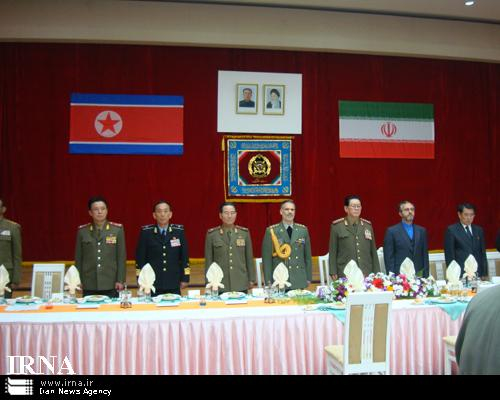
Earlier this week, the appearance of an Iranian-style nosecone on a North Korean missile raised eyebrows all over the wonk-o-sphere. That the two countries cooperate in missile development is not exactly new news, but the images from Kim Il Sung Square gave eloquent testimony to this relationship.
But just how far does the technical collaboration extend? Is it confined to ballistic missiles, or is there a nuclear angle as well?
As it turns out, Iran and North Korea have signed a series of three-year plans for “cultural and scientific exchange.” KCNA has announced three of these, with the most recent signing taking place this past April in Pyongyang. The contents of the plans have not been publicized.
Why Russia is cutting off major arms sales to Iran - CSMonitor.com
After months of sending conflicting signals about whether Russia would fulfill a controversial contract to supply advanced S-300 antiaircraft missiles to Iran, the Kremlin has ordered a halt to all sales of sophisticated Russian weaponry to the Islamic Republic.A decree signed by President Dmitry Medvedev on Wednesday bans the supply of battle tanks, armored vehicles, large-caliber artillery systems, warplanes, military helicopters, ships, and missiles – including S-300 air defense systems – to Iran as part of measures to bring Russia into compliance with tough sanctions agreed by the UN Security Council in June.
Iran has purchased more than $5 billion in Russian weaponry over the past decade, including Tor-M1 short-range antiaircraft missiles, warplanes, submarines, and armored vehicles.
Russian Deputy Foreign Minister Sergei Ryabkov said unspecified defense cooperation with Iran would continue, despite the end of major arms sales. "There are other directions," he told journalists.
The ban on weapons sales has been praised by the US and Israel, but was angrily denounced by Iran, which has felt increasingly alienated over the past year by Mr. Medvedev's Westward foreign policy drift.
"We think Russia should show it has an independent stance in choosing its relations with other countries as well as on international issues," Iranian Defense Minister Gen. Ahmad Vahidi said on state-run TV. "They have not done it so far."
The deal to supply five batteries of long-range S-300 air-defense missiles, which are similar to the US Patriot system, worth almost $1 billion was signed in 2007, and had been the subject of rumor, controversy, and diplomatic shenanigans until now.
There has also been considerable debate inside Russia, with many conservative politicians arguing that Moscow's global credibility as an arms merchant and its influence with long-time economic partner Iran would suffer if the contract were canceled.
But the Kremlin appears to have made a carefully calibrated compromise by deciding last month to complete the long-stalled Bushehr nuclear power plant in southern Iran as a friendly gesture to Iran, while quietly deciding to shelve the missile deal.
"We do not have any illusions about the character of the Iranian regime at all," Mikhail Margelov, who heads the security committee of the Federation Council, Russia's upper house of parliament, told journalists at the time.
"That is why, if we cooperate with Iran in the field of nuclear energy, as we do by completing Bushehr, we do so because this is the only legal mechanism to keep them cooperating with the international institutions," he said.via csmonitor.comRussia is still selling arms to Syria (Iran and Hezbollah's ally) ...purely a diplomatic move without any substance.
Official: Iran Imports, Exports Not Affected by New Sanctions
TEHRAN (FNA)- The Security Council's sanctions resolution against Iran will leave no impact on the country's imports and exports, a customs official said on Sunday, stressing that the measure cannot inflict any damage on the Iranian nation. "The new Security Council sanctions against Iran have been imposed on strategic goods, including weapons and munitions, and will not have any effect on Iran's exports and imports of commodities through intermediaries and investment," Iranian Customs' Director-General for Statistics and Information Technology Hossein Kakhaki told FNA.
The official also said Iran's non-oil exports showed a 33.3% growth in value and amounted to over $4.5 billion in the first two months of the current Iranian year (March 20 to May 20).
read the details via docstalk.blogspot.com
Subscribe to:
Posts (Atom)