Showing posts with label environment. Show all posts

Decades of mismanagement have left our forests vulnerable to terrorism

Labels: » » » » »
if you don't weed out a little then you get a chaos that is not reflective of untouched nature

Smokey Bear told us: “Only we can prevent forest fires.” But behind him was a vast and growing firefighting bureaucracy, equipped with fleets of heavy equipment, aerial tankers, helicopters and satellite guided workforces. 

This firefighting juggernaut has not only crushed many would be disastrous fires over the years, but many beneficial ones as well.

Many of the forests protected by these fire fighting efforts have also been shielded from best forest management practices.  In the name of restoring our forests to their former pre-mankind condition, man was taken out of the equation. As a result, many of our forests are unnaturally overgrown with decades of underbrush, dry branches and millions of disease ridden trees.  

But the west is now on fire and reports say some of these fires have been caused by arson. This  leads many to believe that America's national security Achilles heel,  is it's tinder dry, over protected, overgrown forests, which can instantly be transformed into mega-fires with one match.

The Lake Tahoe basin which sits on the border of California and Nevada was managed by a maze of bureaucratic environmental agencies.  Through ineptitude, these agencies did not allow property owners to even hand clean brush on their property, in the fear that it would intrude on the "natural state" of the forest.

As a result of this idiotic forest management practice, the area was consumed by a mega fire which burned down 253 homes and consumed 3,100 acres……This is just 1 small forest area out of hundreds of thousands of square miles being subjected to the same or similar practices. 

But there is a solution to the madness which has proven over and over again to work.  When these rampaging fires reach privately managed forest land, they are checked.

Privately owned or leased forests, are maintained to produce a healthy vibrant environment which can in turn, be used to harvest timber and forest products.  They are in the business of having forests of healthy trees and do what’s necessary to make them that way.

I spoke to Tom Ray, vice president of northwest resources for Plum Creek Corporation. Plum Creek is the largest and most geographically diverse private timberland owner in the United States with approximately 6.6 million acres of timber in major timber producing regions of the country.

Tom helps manage his company’s land according to the Sustainable Forest Initiative, which looks out for the best long term care of their forests.  These practices include thinning-harvesting of timber and brush clearing as necessary. 

Managing the land in a healthy vibrant condition is good for the forests as well as for the owners of the property.

Tom said out of control fires on public lands that have swept into managed forests, have been stopped.  The fire intensity lessened due to the availability of less fuel and the presence of access roads on managed forests allowed personnel to reach the fires.

Much of Plum Creeks 6.6 million acres of land is open to the public for recreation purposes as well, showing that private forest land management is compatible with public use.

When you look at the ability of just one corporation to successfully manage 6.6 million acres of forest land, it doesn’t take much to wonder why some of these practices aren’t transferred to our national and state forestlands.  After all, the public can have access to these privately managed lands that are not dry diseased tinderboxes.

Peter Kolb, Associate Professor of Forest management at the University of Montana has been observing the effects of public policies affecting forests across the Northern Rockies for years.

Kolb has determined that forests can benefit from well planned and thoughtful tree harvesting in order to help revitalize forest landscapes that have become homogenized by a combination of past climatic phases and fire suppression, which produce mega fires. 

He feels it is best to create a forest with greater species and structural diversity using a combination of thinning and irregular sized” patch” cuts.   These types of mosaics in the forest have been shown to provide firebreaks, good habitat enhancement for wildlife and a birthplace for a new generation of trees. 

Such management emulates historic natural process and forests can be made more resilient and functional for the future…. This is the definition of conservation – “to keep “functioning” rather than “restoration” which is to bring back to the way it was.

But many conservation groups seem to be stuck with the outdated concept of bringing forests back to a snapshot of 200 years ago

Perhaps we should be focusing more on what it will take to keep forests healthy and functional in the future.  It seems obvious that the hands-off approach is not working all that well, and costing us an enormous federal bankroll we can ill afford. 

Private companies could provide active forest management more consistent with conservation, and at no cost.  But rather could provide tax revenue and jobs, in exchange for harvesting some timber across the vast national forests of the west.   

Forestry, logging and science, have come a long way over the decades, it’s time to move into the future and allow a different paradigm to take over.  It’s time to help our forests cope with changes in climate and the wildfires and insect outbreaks that come with them in unprecedented destructive waves.

Green Fail: New York Metro Gives Up on Hybrid Busses

Labels: » » » » »
In a reversal of greenism, Michael Bloomberg’s New York Metropolitan Transit Agency is giving up on hybrid transportation. The city with the mayor nicknamed “Nanny Bloomberg” may be stumping for all sorts of chic, activist causes, from the campaign to rid us of our Second Amendment rights, to the elimination of trans fats in our foods, to the downsizing of soda portions, but one cause the city is souring on is hybrid busses. The New York Post reports that the city hasn’t bought a new hybrid buss in three years and is now moving to retrofit many of the ones it has with diesel engines. The MTA is reporting that it will retrofit 389 hybrid electric busses with diesel engines because the hybrid engines are too unreliable and too expensive to repair. “The electric-traction motors are burning out. They’re so expensive to replace that it’ll be cheaper to stick a diesel engine in there,” a source inside the MTA told the Post. MTA officials also point out that new diesel engines are at least as fuel-efficient as the hybrids are these days, so the savings in fuel is no longer a chief selling point for new hybrids. But, despite the new efficiency of the diesel engines on the market today, it is the cost of repairs that is driving the retrofits. As it happens, the five-year warrantee is about to run out on many units of New York’s hybrid bus fleet and repair costs will soon devolve from the manufacturer to the city. The costs for maintenance will skyrocket. About 1,677 out of the MTA’s fleet of 5,719 busses are hybrids. 

Famed Environmentalist Celebrates New Year in Australia, Then Hops Private Jet to Vegas For More Festivities

Labels: » » »
goredicaprio2
Nothing like being exposed as a total fraud. From his green cred bio:
A committed environmentalist, DiCaprio has received praise from environmental groups for opting to fly on commercial flights instead of chartering private jets, which use more fuel.
That was then, this is now:
Leo DiCaprio and his “Wolf of Wall Street” co-star Jonah Hill racked up some impressive air miles for their New Year’s celebrations — cheering in the New Year in both Sydney and Vegas. The actors were spotted partying on a boat with a group of attractive bikini-clad women while cruising Sydney Harbor on Saturday. The pair flew from Australia to Vegas on a chartered 747 along with stars including Jamie Foxx, Kevin Connolly and Leo’s latest love, Margot Robbie. A source tells us, “They partied at Marquee Star Lounge Sydney and left at 1 a.m. Australia time, flew 13 hours to Vegas, arriving at 10 p.m. to Vegas, and went to Lavo to watch the fireworks.” Leo and his crew later partied at Marquee until the early hours.
So in less than a day he flew a private jet across the globe just so he could party. We don’t want to hear another goddamn word about “saving the planet” from this fraud.

Environmentalist Movie Funded by Oil-Rich Royalty

Labels: » » » » » » » » » » » » » »
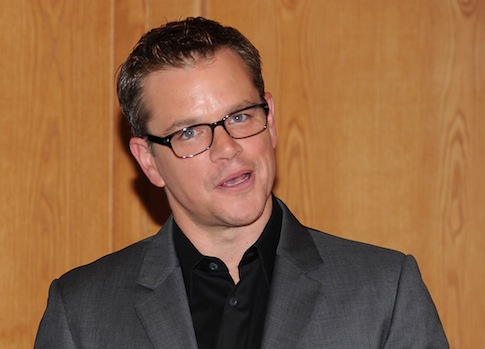
Matt Damon / AP
(BY: - image Matt Damon / AP) Matt Damon turned to oil-rich Middle East royalty to finance his film attacking domestically produced natural gas.
The environmentalist screed, Promised Land, received a chunk of its funding from the United Arab Emirates, an oil kingdom known for its lavish spending on man-made islands and the world’s tallest building, according to the Heritage Foundation.
The creators of Promised Land have gone to absurd lengths to vilify oil and gas companies, as Scribe’s Michael Sandoval noted Wednesday. Since recent events have demonstrated the relative environmental soundness of hydraulic fracturing – a technique for extracting oil and gas from shale formations – Promised Land’s script has been altered to make doom-saying environmentalists the tools of oil companies attempting to discredit legitimate “fracking” concerns. …
Promised Land was also produced “in association with” Image Media Abu Dhabi, a subsidiary of Abu Dhabi Media, according to the preview’s list of credits. A spokesperson with DDA Public Relations, which is running PR for the film, confirmed that AD Media is a financier. The company is wholly owned by the government of the UAE.
An ever-growing market for domestic fracking threatens dependence on foreign oil from the likes of UAE and OPEC.
A strong global market presence for American natural gas could also work to the UAE’s disadvantage. The Arab nation ranks seventh worldwide in proven natural gas reserves. For instance, Japan’s energy imports are expected to rise significantly over the next five years. The country is currently a major importer of UAE natural gas. If it decided to import more LNG from the United States to accommodate its increased energy demands, it could deal a blow to the UAE economy. …
All of this suggests a direct financial interest on the UAE’s part in slowing the development of America’s natural gas industry. Pop culture can be a powerful means to sway public opinion. While Promised Land, like anti-fracking documentary Gasland, appears to inflate the dangers of hydraulic fracturing, it may have an impact on the public’s view of the practice.
Matt Damon is a longtime Democratic partisan. Though he has voiced criticisms of Barack Obama, he donated $4,600 in 2008 to then-candidate Obama. Damon also co-hosted a star-studded fundraiser for Massachusetts Democrat Elizabeth Warren in Hollywood that netted the “Native American” candidate $250,000.
This entry was posted in Progressive Movement and tagged , , , , , . Bookmark the permalink.
This is the tip of the iceberg when it comes to the Green movement. It isn't just that the UAE is doing this for biz reasons (there are plenty of places that want to buy energy that don't care about Green Tech). The reason the UAE is doing this is for public relations reasons. America needs to be autonomous of this public relations culture on the surface that reveals hardline tyranny.
PS: wasn't it Mother Jones who showcased Carter's video of Romney? and what totalitarian regimes did Mother Jones Rep? For starters Muammar Kaddaffi. Why are we falling for this? Why is it offensive to shout out the truth?

Gaddafi Dead: Will the Great Man Made River Follow?

Labels: » » » » » »

(Green Prophet) Gaddafi’s grand ecological projects, including The Great Man Made River and the mid-Sahara pivot irrigation farming projects. ...The artificial river project was already bringing millions of gallons of fresh water from a large prehistoric underground reservoir, formed in a previous Ice Age, and located in an area where it was once green and various species of African plains animals roamed freely – as well as the peoples who hunted them. Began in the early 1980s, and built at a cost of more than $33 billion USD, the GMMR project involved pumping “fossilized” water from depths of more than 500 meters, purifying it, and then sending the water to the country’s major population areas. Along the way, some of the water has been diverted to the pivot irrigation projects which have been growing a number of crops, including grains, fruits and vegetables, and animal fodder.
How does anyone benefit from Muammar Gaddafi's demise?

the only children who benefit are the spawn of green technology executives

Labels: » » » »
The people rally to protest against closing firehouses, and the mayor hears 'Fire Island' and goes to deliver a speech on gay marriage. "Should government permit men and women of the same sex to marry?” he asks. Why not. We've got some empty firehouses they can get married in. Sultan Knish and image via UTNE: Why Are Gays Greener?, Cup Cake Blog and Jag9889

Turkish Scientist Could Be Jailed For Publishing Report on Poisonous Metals in Babies, Mothers’ Milk

Labels: » » » » » » » » » » » » » » »
Professor Onur Hamzaoğlu could face jail time for publishing a report that found poisonous metals in the systems of Turkish townsfolk. But he is “not afraid,” he tells Green Prophet in an exclusive interview.
Earlier this week, officials from the Turkish province of Kocaeli filed a complaint against Hamzaoğlu for inciting “fear and panic” amongst locals. Hamzaoğlu had indeed published something fearful and alarming: a study showing high levels of heavy metals, such as arsenic, mercury, and lead, in samples of infant feces and mother’s milk from the town of Dilovası.
According to the abstract of the study, it aimed to measure the levels of heavy metals in the population and figure out how it could affect the DNA of newborns.
But as reward for bringing this disturbing information to light, Hamzaoğlu is now being investigated by his employer, Kocaeli University. He could also face a court hearing, and a sentence of several years in prison, if the university decides to turn his case over to the public prosecutor.
“Politicians of local governments and the Council of Higher Education (YOK) [put] pressure on the universities” in Turkey, Hamzaoğlu tells Green Prophet. He acknowledges that Turkey’s treatment of scientists who publish disturbing findings casts it in a negative light, particularly in the context of the European Union, which Turkey’s leaders – publicly, at least – say they hope to join.
While most European countries are trying to move away from dirty industries and seek cleaner forms of energy and fuel, Hamzaoğlu says Turkey is “moving to high pollution factories, such as… cement, paint, and iron and steel.”
The local picture
Dilovası is a stark illustration of this. According to Hamzaoğlu, the province of Kocaeli has been the site of 15 percent of Turkey’s cumulative manufacturing industry over the past decade. The main sectors include chemical products, metal products, and basic metals, so it’s little surprise that traces of these are showing up in the air of the region and the bodies of its residents.
Two highways pass through Dilovası itself, and the center of the town is an official industrial zone comprising 174 companies. Thirteen percent of the firms in Dilovası operate metal factories, and 11 percent are within the paint and chemical sectors.
“In summary, the problems are happening in front of everyone’s eyes,” says Hamzaoğlu.
In the nearby town of Kandıra, where there is practically no industrial activity, cancer rates are far lower than in Dilovası, according to Hamzaoğlu’s report.
The research and the backlash
Hamzaoğlu is head of the public health department at Kocaeli University. Therefore, he says, “my basic task is to determine [the] health problems of populations and reasons of the problems, and produce solutions.”

Ecological Intifada

Piece Activist

Jooos Good For Terrorists to POOP ON!

That’s why he looked at samples of the purest, most basic fluids that come from babies and mothers: infant meconium, or the earliest stool of an infant, and colostrum, the concentrated milk rich in antibodies that mothers produce until their children are at least a few days old. In addition to arsenic, mercury, and lead, Hamzaoğlu found trace amounts of copper, aluminum, zinc, cadmium, and iron in the samples.
Kocaeli University will likely hand down a decision on Hamzaoğlu’s case in the next few months. If the university chooses to turn his case over to the public prosecutor, he will face more investigations and a possible prison term of two to four years.
via greenprophet.com

The Roman Empire fell because everyone went RETARDED.... perhaps this explains the flotilla thing they are sending to Israel.

Engineering Biological Change @NYTimes. Planting Foreign Species for Global Warming. How Colonialist!

Labels: » » » » » » » »
CHICAGO — The Windy City is preparing for a heat wave —
a permanent one,,,
City planners in Chicago have been told that as temperatures rise, some plants native to the region will die out.Climate scientists have told city planners that based on current trends, Chicago will feel more like Baton Rouge than a Northern metropolis before the end of this century.  So, Chicago is getting ready for a wetter, steamier future. Public alleyways are being repaved with materials that are permeable to water. The white oak, the state tree of Illinois, has been banned from city planting lists, and swamp oaks and sweet gum trees from the South have been given new priority. Thermal radar is being used to map the city’s hottest spots, which are then targets for pavement removal and the addition of vegetation to roofs. And air-conditioners are being considered for all 750 public schools, which until now have been heated but rarely cooled. via nytimes.com
this is how you make an environment unbalanced... by futzing with it. who knows what the long term effect will be of planting species that are not native... hey that sounds very liberal... but Environmentalists know this as textbook 101. Saving the environment is best done through NON INTERVENTION. It is as if we learned nothing from Lysenkoism and MAO
So Chicago is turning to swamp white oaks and bald cypress. It is like the rest of adaptation strategy, Ms. Malec-McKenna explains: “A constant ongoing process to make sure we are as resilient as we can be in facing the future.”


The Great sparrow campaign (Chinese: 打麻雀运动; pinyin: Dǎ Máquè Media_httpuploadwikim_gqcuwYùndòng) also known as the Kill a sparrow campaign (Chinese: 消灭麻雀运动; pinyin: Xiāomiè Máquè Yùndòng), and officially, the Four Pests campaign was one of the first actions taken in the Great Leap Forward from 1958 to 1962. The four pests to be eliminated were rats, flies, mosquitoes, and sparrows.[1] The extermination of the latter upset the ecological balance, and enabled crop-eating insects to proliferate. 
The campaign against the 'Four Pests' was initiated in 1958 as a hygiene campaign by Mao Zedong, who identified the need to exterminate mosquitoes, flies, rats, and sparrows. Sparrows – mainly the Eurasian Tree Sparrow[1][2] – were included on the list because they ate grain seeds, robbing the people of the fruits of their labour. The masses of China were mobilized to eradicate the birds, and citizens took to banging pots and pans or beating drums to scare the birds from landing, forcing them to fly until they fell from the sky in exhaustion. Sparrow nests were torn down, eggs were broken, and nestlings were killed.[3] Sparrows and other birds were shot down from the sky, resulting in the near-extinction of the birds in China.[4] Non-material rewards and recognition were offered to schools, work units and government agencies in accordance with the volume of pests they had killed.
By April 1960, Chinese leaders realized that sparrows ate more insects than grains. Mao ordered the end of the campaign against sparrows, replacing them with bedbugs in the ongoing campaign against the Four Pests.[3] By this time, however, it was too late. With no sparrows to eat them, locust populations ballooned, swarming the country and compounding the ecological problems already caused by the Great Leap Forward, including widespread deforestation and misuse of poisons and pesticides. Ecological imbalance is credited with exacerbating the Great Chinese Famine in which upwards of 30 million people died of starvation. via en.wikipedia.org

“Cities adapt or they go away,” said Aaron N. Durnbaugh, deputy commissioner of Chicago’s Department of Environment. “Climate change is happening in both real and dramatic ways, but also in slow, pervasive ways. We can handle it, but we do need to acknowledge it. We are on a 50-year cycle, but we need to get going.”
Across America and in Congress, the very existence of climate change continues to be challenged — especially by conservatives. The skeptics are supported by constituents wary of science and concerned about the economic impacts of stronger regulation. Yet even as the debate rages on, city and state planners are beginning to prepare.
The precise consequences of the increase of man-made greenhouse gases in the atmosphere are hard to determine, but scientists are predicting significant sea level rise; more extreme weather events like storms, tornadoes and blizzards; and, of course, much more heat. New York City, which is doing its own adaptation planning, is worried about flooding from the rising ocean. The Navy has a task force on climate change that says it should be preparing to police the equivalent of an extra sea as the Arctic ice melts.
Some of these events will occur in the near-enough term that local governments are under pressure to act. Insurance companies are applying pressure in high-risk areas, essentially saying adapt or pay higher premiums — especially in urban and commercial areas.
The reinsurance giant Swiss Re, for example, has said that if the shore communities of four Gulf Coast states choose not to implement adaptation strategies, they could see annual climate-change related damages jump 65 percent a year to $23 billion by 2030.
“Society needs to reduce its vulnerability to climate risks, and as long as they remain manageable, they remain insurable, which is our interest as well,” said Mark D. Way, head of Swiss Re’s sustainable development for the Americas.
Melissa Stults, the climate director for ICLEI USA, an association of local governments, said that many of the administrations she was dealing with were following a strategy of “discreetly integrating preparedness into traditional planning efforts.”
Second City First
Chicago is often called the Second City, but it is way out in front of most in terms of adaptation.
The effort began in 2006, under the mayor at the time, Richard M. Daley. He said he was inspired in part by the Kyoto international treaty for reducing carbon emissions, which took effect in 2005, and also by an aspiration to raise Chicago’s profile as an environmentally friendly town.
As a first step, the city wanted to model how global warming might play out locally. Foundations, eager to get local governments moving, put up some money.
“There was real assumption that Chicago could be a model for other places,” said Adele Simmons, president of Global Philanthropy Partnership, a nonprofit group based in Chicago that helped bring in $700,000 at the early stages.
Climatologists took into account a century’s worth of historical observations of daily temperatures and precipitation from 15 Chicago-area weather stations as well as the effect of Lake Michigan in moderating extreme heat and cold to come up with a range of possibilities based on a higher and lower range of worldwide carbon emissions.
The forecasts, while not out of line with global predictions, shocked city planners.
If world carbon emissions continued apace, the scientists said, Chicago would have summers like the Deep South, with as many as 72 days over 90 degrees before the end of the century. For most of the 20th century, the city averaged fewer than 15.
By 2070, Chicago could expect 35 percent more precipitation in winter and spring, but 20 percent less in summer and fall. By then, the conditions would have changed enough to make the area’s plant hardiness zone akin to Birmingham, Ala.
But what would that mean in real-life consequences? A private risk assessment firm was hired, and the resulting report read like an urban disaster film minus Godzilla.
The city could see heat-related deaths reaching 1,200 a year. The increasing occurrences of freezes and thaws (the root of potholes) would cause billions of dollars’ worth of deterioration to building facades, bridges and roads. Termites, never previously able to withstand Chicago’s winters, would start gorging on wooden frames.
Armed with the forecasts, the city prioritized which adaptations would save the most money and would be the most feasible in the light of tight budgets and public skepticism.
“We put each of the priorities through a lens of political, economic and technical,” said Suzanne Malec-McKenna, the commissioner of Chicago’s Department of Environment. “What is it, if you will, that will pass the laugh test?”
Among the ideas rejected, Ms. Malec-McKenna said, were plans to immediately shut down local coal-powered energy plants — too much cost for too little payback.
For actions the city felt were necessary but not affordable, it got help again from a local institution, the Civic Consulting Alliance, a nonprofit organization that builds pro bono teams of business experts. In this case, the alliance convinced consulting firms to donate $14 million worth of hours to projects like designing an electric car infrastructure and planning how to move the city toward zero waste.
Mr. Daley embraced the project. He convened 20 city departments in 2010 and told them to weigh their planning dollars against the changes experts were predicting. The department heads continued to meet quarterly, and members of Mayor Rahm Emanuel’s administration have said he is committed to moving the goals of the plan forward, albeit with an added emphasis on “projects that accelerate jobs and economic development.”
Updating Infrastructure
Much of Chicago’s adaptation work is about transforming paved spaces. “Cities are hard spaces that trap water and heat,” said Janet L. Attarian, a director of streetscapes at the city’s Department of Transportation. “Alleys and streets account for 25 percent of groundcover, and closer to 40 percent when parking lots are included.”
The city’s 13,000 concrete alleyways were originally built without drainage and are a nightmare every time it rains. Storm water pours off the hard surfaces and routinely floods basements and renders low-lying roads and underpasses unusable.
To make matters worse, many of the pipes that handle storm overflow also handle raw sewage. After a very heavy rain, if overflow pipes become congested, sewage backs up into basements or is released with the rainwater into the Chicago River — an emergency response that has attracted the scrutiny of the Environmental Protection Agency.
As the region warms,
Sally Ryan for The New York Times
Chicago is expecting more frequent and extreme storms. In the last three years, the city has had two intense storms classified as 100-year events.
So the work planned for a six-point intersection on the South Side with flooding and other issues is a prototype. The sidewalk in front of the high school on Cermak Road has been widened to include planting areas that are lower than the street surface. This not only encourages more pedestrian traffic, but also provides shade and landscaping. These will be filled with drought-resistant plants like butterfly weed and spartina grasses that sponge up excess water and help filter pollutants like de-icing salts. In some places, unabsorbed water will seep into storage tanks beneath the streets so it can be used later for watering plants or in new decorative fountains in front of the high school.
The bike lanes and parking spaces being added along the street are covered with permeable pavers, a weave of pavement that allows 80 percent of rainwater to filter through it to the ground below. Already 150 alleyways have been remade in this way.
The light-reflecting pavement is Chicago’s own mix and includes recycled tires. Rubbery additives help the asphalt expand in heat without buckling and to contract without cracking.
The new streets bring new challenges, of course. The permeable pavers have to be specially cleaned or they eventually become clogged with silt and lose effectiveness.
Still, the new construction is no more expensive than traditional costs, Ms. Attarian said. Transforming one alleyway costs about $150,000. But now, she said, “We can put a fire hose on it full blast and the water seeps right in.”
Reconsidering the Trees
Awareness of climate change has filled Chicago city planners with deep concern for the trees.
Not only are they beautiful, said Ms. Malec-McKenna, herself trained as a horticulturalist, but their shade also provides immediate relief to urban heat islands. Trees improve air quality by absorbing carbon dioxide, and their leaves can keep 20 percent of an average rain from hitting the pavement.
Chicago spends over $10 million a year planting roughly 2,200 trees. From 1991 to 2008, the city added so many that officials estimate tree cover increased to 17.6 percent from 11 percent. The goal is to exceed 23 percent this decade.
The problem is that for trees to reach their expected lifespan — up to 90 years — they have to be able to endure hotter conditions. Chicago has already changed from one growing zone to another in the last 30 years, and it expects to change several times again by 2070.
Knowing this, planners asked experts at the city’s botanical garden and Morton Arboretum to evaluate their planting list. They were told to remove six of the most common tree species.
Off came the ash trees that account for 17 percent of Chicago tree cover, or more than any other tree. Gone, too, are the enormous Norway maples, which provide the most amount of shade.
A warming climate will make them more susceptible to plagues like emerald ash disease. Already white oak, the state tree of Illinois, is on the decline and, like several species of conifer, is expected to be extinct from the region within decades.via nytimes.com
Lysenko studying wheat
Trofim Denisovich Lysenko (Russian: Трофи́м Дени́сович Лысе́нко, Ukrainian: Трохим Денисович Лисенко, Trofym Denysovych Lysenko) (September 29 [O.S. September 17] 1898 – November 20, 1976) was a Soviet agronomist of Ukrainian origin, who was director of Soviet biology under Joseph Stalin. Lysenko rejected Mendelian genetics in favor of the hybridization theories of Russian horticulturist Ivan Vladimirovich Michurin, and adopted them into a powerful political-scientific movement termed Lysenkoism. Today much of Lysenko's agricultural experimentation and research is largely viewed as fraudulent.
His unorthodox experimental research in improved crop yields earned the support of Soviet leader Joseph Stalin, especially following the famine and loss of productivity resulting from forced collectivization in several regions of the Soviet Union in the early 1930s. In 1940 he became director of the Institute of Genetics within the USSR's Academy of Sciences, and Lysenko's anti-Mendelian doctrines were further secured in Soviet science and education by the exercise of political influence and power. Scientific dissent from Lysenko's theories of environmentally acquired inheritance was formally outlawed in 1948, and for the next several years opponents were purged from held positions, and many imprisoned. Lysenko's work was officially discredited in the Soviet Union in 1964, leading to a renewed emphasis there to re-institute Mendelian genetics and orthodox science.
Though Lysenko remained at his post in the Institute of Genetics until 1965,[1] his influence on Soviet agricultural practice declined by the 1950s. The Soviet Union quietly abandoned Lysenko's agricultural practices in favor of modern agricultural practices after the crop yields he promised failed to materialize. via en.wikipedia.org

The UN’s 50 Million Missing Refugees

Labels: » » » »
In 2005, the United Nations Environment Program (UNEP) predicted that there would be 50 million refugees in 2010 due to climate change. An enterprising reporter wondered what happened to UNEP’s prediction, and found that those areas UNEP claimed were most at risk have actually gained population. How did UNEP respond? According to Anthony Watts, UNEP tried to erase the evidence of its initial claim — without success. It seems folks at UNEP were unaware of Google caches.
The original UNEP claim was ridiculous on its face, and UNEP’s subsequent effort to rewrite history is farcical. Regrettably, we’re unlikely to hear much about this story from the environmentalist community or those who allegedly police the politicization of science. And this is part of the problem. Climate change is real, and the evidence of a human contribution to the gradual warming of the atmosphere is strong. There’s no need to conjure fantastical projections of an impending climate apocalypse. But UNEP and various organizations insist on doing so nonetheless — indeed, UNEP is now claiming there will be 50 million climate refugees by 2020 — and the climate community raises not a peep. In the end, this ends up doing more to discredit legitimate concerns about climate change than to encourage action.
interesting... and not surprised, but I see little evidence that Climate Change is real.
It so happens that just a few of these islands and other places most at risk have since had censuses, so it should be possible for us now to get some idea of the devastating impact climate change is having on their populations. Let’s have a look at the evidence:
Bahamas:
Nassau, The Bahamas – The 2010 national statistics recorded that the population growth increased to 353,658 persons in The Bahamas.  The population change figure increased by 50,047 persons during the last 10 years.
St Lucia:
The island-nation of Saint Lucia recorded an overall household population increase of 5 percent from May 2001 to May 2010 based on estimates derived from a complete enumeration of the population of Saint Lucia during the conduct of the recently completed 2010 Population and Housing Census.
Seychelles:
Population 2002, 81755
Population 2010, 88311
Solomon Islands:
The latest Solomon Islands population has surpassed half a million – that’s according to the latest census results.
It’s been a decade since the last census report, and in that time the population has leaped 100-thousand.
Meanwhile, far from being places where people are fleeing, no fewer than the top six of the very fastest growing cities in China, Shenzzen, Dongguan, Foshan, Zhuhai, Puning and Jinjiang, are absolutely smack bang within the shaded areas identified as being likely sources of climate refugees.
Similarly, many of the fastest growing cities in the United States also appear within or close to the areas identified by the UNEP as at risk of having climate refugees.
More censuses are due to come in this year, and we await the results for Bangladesh and the Maldives - said to be places most at risk - with interest.
However, a very cursory look at the first available evidence seems to show that the places identified by the UNEP as most at risk of having climate refugees are not only not losing people, they are actually among the fastest growing regions in the world.
Britain's Guardian reported October 12, 2005:
Rising sea levels, desertification and shrinking freshwater supplies will create up to 50 million environmental refugees by the end of the decade, experts warn today. Janos Bogardi, director of the Institute for Environment and Human Security at the United Nations University in Bonn, said creeping environmental deterioration already displaced up to 10 million people a year, and the situation would get worse.
"There are well-founded fears that the number of people fleeing untenable environmental conditions may grow exponentially as the world experiences the effects of climate change," Dr Bogardi said. "This new category of refugee needs to find a place in international agreements. We need to better anticipate support requirements, similar to those of people fleeing other unviable situations." [...]
Hans van Ginkel, UN under-secretary-general and rector of the university, said: "This is a highly complex issue, with global organisations already overwhelmed by the demands of conventionally recognised refugees. However, we should prepare now to define, accept and accommodate this new breed of refugee."
THE SKY IS FALLING... THE SKY IS FALLING... THE SKY IS FALLING...

Latest Victim of Global Warming: Coffee

Labels: » » » » »
...YES IT IS TRUE... Xerxes= Ahusuerus

It's raining here in New Jersey today. Obviously, global warming is to blame. Later this year it'll warm up: Global warming, no doubt. Unions throwing an extended temper tantrum in Wisconsin? Global warming, silly.
And now, put down your coffee and brace yourselves. Your thirst for caffeine will now suffer from, you guessed it, global warming.
Profits of high-end coffee chains like Starbucks and Green Mountain have been eroded. Coffee futures of Arabica, the high-end bean that comes predominantly from Latin America, have risen more than 85 percent since last June, to $2.95 a pound, partly over concerns about supply, extreme weather and future quality, said George Kopp, an analyst at the International Futures Group in Chicago.
Yet as stockpiles of some of the best coffee beans shrink, global demand is soaring as the rising middle classes of emerging economies like Brazil, India and China develop the coffee habit.
“Coffee production is under threat from global warming, and the outlook for Arabica in particular is not good,” said Peter Baker, a coffee specialist with CABI, a research group in Britain Ithat focuses on agriculture and the environment, noting that climate changes, including heavy rains and droughts, have harmed crops across many parts of Central and South America.
A top coffee scientist, he has rattled trade forums by warning, Cassandra-like, of the possibility of “peak coffee,” meaning that, like oil supplies, coffee supplies might be headed for an inexorable decline unless growers make more concerted efforts to expand production globally.
The Specialty Coffee Association of America warned this year, “It is not too far-fetched to begin questioning the very existence of specialty coffee.”
By the way, if you're not buying this global warming nonsense, it's because your brain is functioning irrationally.
What's the answer for environmentalists? Change the message and frame the issue in a way that doesn't trigger unconscious opposition among so many Americans. That can be a simple as using the right labels: a recent study by researchers at the University of Michigan found that Republicans are less skeptical of "climate change" than "global warming," possibly because climate change sounds less specific. Possibly too because so broad a term includes the severe snowfalls of the past winter that can be a paradoxical result of a generally warmer world. Greens should also pin their message on subjects that are less controversial, like public health or national security. Instead of issuing dire warnings about an apocalyptic future — which seems to make many Americans stop listening — better to talk about the present generation's responsibility to the future, to bequeath their children and grandchildren a safer and healthy planet.
Gee, the nonstop gloom and doom scenarios have people tuning out? Crazy how that is. Maybe if even a single dire prediction had ever come true people might listen to the scaremongers.
Posted via email from noahdavidsimon's posterous

if only Al Gore thought up an asteroid like they did in the middle ages.  Hailey's comet?  any one... any one?  was a real scare.


Electric Car Conversions

Labels: » »
Media_httpwwwcmuedune_uebgl
The cost of such a conversion is still being determined, but Nourbakhsh said the project team expects to have estimates available at the open house. The cost won't be negligible, he acknowledged, but conversion is a means of recycling and extending the life of older vehicles, while eliminating harmful emissions and supporting local mechanics and garages. Because each vehicle is customized, the size of the battery pack — the most expensive part of an electric car — can be determined based on the commuting needs of the vehicle owner/driver, he noted.
unfortunately you can only convert one kind of Honda... but they hope to expand models that are possible 

EPA’s New Mercury Controls

Labels: » » » »
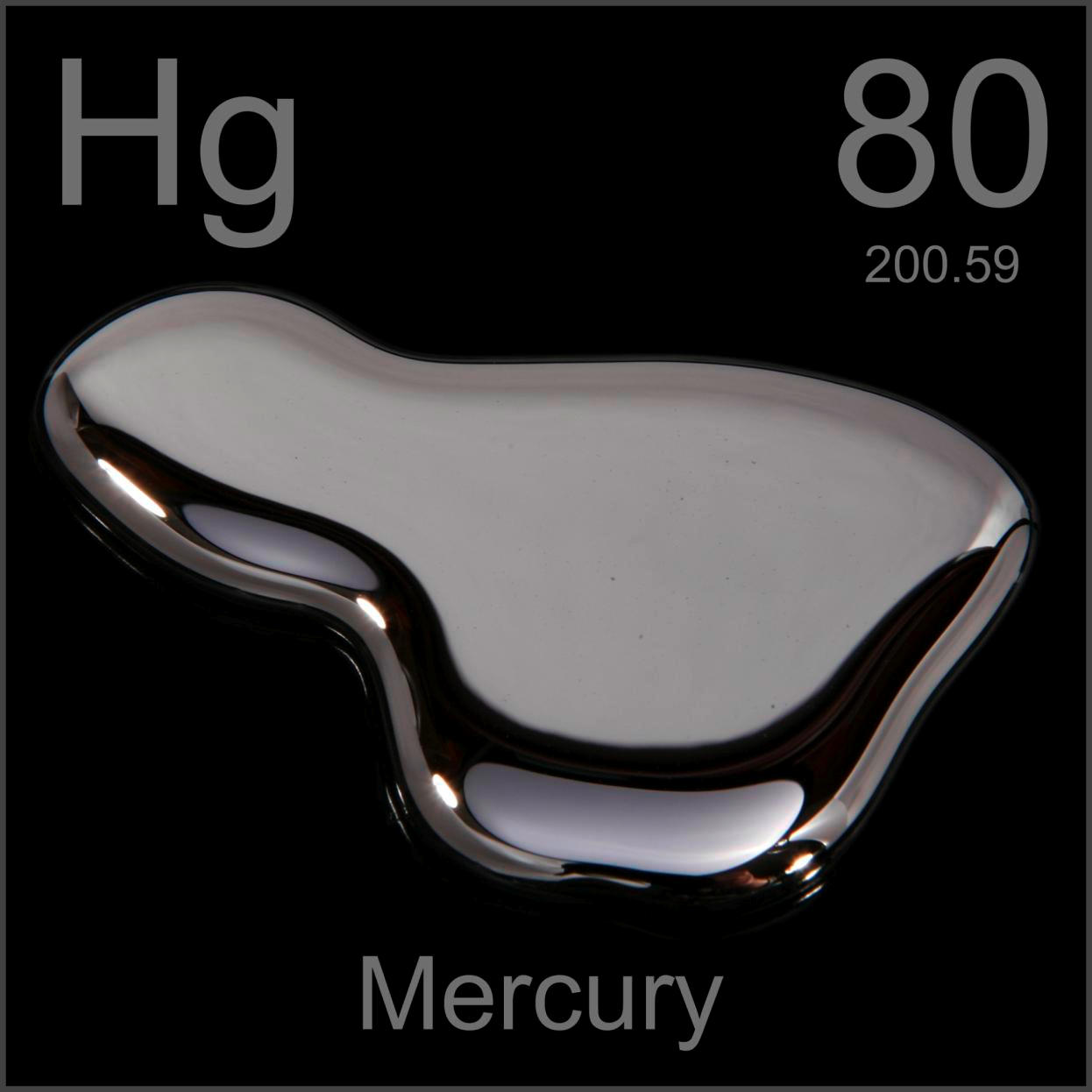
Last week, the Environmental Protection Agency proposed new regulations governing emissions of mercury and other toxic air pollutants from power plants.  This rule has been a long time coming.  In the waning moments of the Clinton Administration, the EPA made a finding that would trigger mercury emission controls on power plants under the Clean Air Act.  The finding had been in the works for some time, but the Clinton EPA had been reluctant to pull the trigger until December 2000.   The Bush Administration did not appreciate the house-warming gift, and tried to undo the Clinton Administration’s handiwork with an alternative approach.  They first tried legislation, but when Congress wouldn’t bite they pushed through regulations.  The only problem was that the Bush EPA disregarded the Clean Air Act’s plain text in the process, earning a well-deserved rebuke from the U.S. Court of Appeals for the D.C. Circuit.  The new rules, once finalized, may well trigger litigation, but I doubt we’ll see the same result.  From what I’ve looked at so far, this is a fairly traditional regulatory approach.
This EPA fact sheet gives some background on the rule, stressing the anticipated reductions of mercury emissions.  What the fact sheet does not mention is that, the lack of meaningful federal mercury controls notwithstanding, mercury emissions have declined since 1990.  As the EPA’s Report on the Environment shows between 1990–93 and 2005, mercury emissions declined by 58 percent.  Coal-burning facilities — which are covered by the new rule — represent the lion’s share of the rest.
The emission trends are positive.  So, too, are trends in blood mercury levels.  As the same EPA report shows blood mercury levels in women have declined, particularly among those at the 90th and 95th percentiles. From the EPA report: “during the 1999–2000 survey, 10 percent (i.e., 90th percentile value) of surveyed women age 16 to 49 had blood mercury levels of 4.9 µg/L or higher. In the 2007–2008 survey, however, the 90th percentile value had decreased to 2.7 µg/L.”  That’s a significant drop for those with among the highest levels in the country.
These positive trends do not mean additional mercury controls are unnecessary, but it does put their urgency in perspective. It also suggests that the Bush Administration’s approach, which would have utilized a more flexible cap-and-trade approach instead of facility-specific limits, may have been good policy after all, even if it was horribly bad law.

Ethanol is Anti-Greenhouse

Labels: » » » » » » » » » » »
Egypt want to eat CORN? Arabs Starving?
Drop Arab Prices on Petroleum then.
Otherwise... NO CORN FOR YOU

More Biofuels, More Greenhouse Gases? 
I don't think so.  
If we are starving other countries then 
they can lower their petroleum prices!
A new study from the University of Illinois estimates that the world has more than 702 million hectares of marginal land suitable for growing biofuels. The researchers assessed land around the world based on its soil quality, slope, and regional climate. They added degraded or low-quality cropland but ruled out any good cropland, pasture, or forests; they also assumed no irrigation. They came up with the surprising total 2.7 million sq. miles of marginal land that could be available for switchgrass or other biofuel crops.
But the Illinois team didn't, apparently, factor in a 2010 Stanford University study that found plowing new cropland anywhere in the world would sharply increase the level of greenhouse gases in the atmosphere. Plowing would release massive amounts of soil carbon -mostly as nitrous oxide, a greenhouse gas 300 times as powerful as CO2. The Stanford conclusion was that the 6.6 million square miles of lands not plowed because of the higher yields from the Green Revolution prevented the release of greenhouse gases equal to one-third of all the industrial gases emitted worldwide since 1850!
This makes modern farming-with its nitrogen fertilizer, pesticides, no-till herbicides and high yield seeds-the most fabulous anti-greenhouse-warming project ever implemented by mankind. It is, in fact, the only human project that has ever forestalled a major increase in human-emitted greenhouse gases. Europe, for example has not reduced its greenhouse emissions at all since 1997 despite the Kyoto Treaty.
If we consider both studies valid, we have a big problem, All this untouched biofuel land would have to be plowed. The Stanford soil carbon figures tell us this would be the worst aggravation of greenhouse gases ever. Stanford says in effect we should plow only as much cropland as we urgently need for human food, and leave the rest to wildlife.
The Illinois paper did note a class of low-impact, high-diversity perennial grasses that could be over seeded on the existing grasses without plowing (not included in the 702 M hectare estimate). Unfortunately, the perennial-grasses ethanol yields are dismal. Plus, harvesting costs would be very high. Factoring in the cost of road-building and the highway fuels needed for transporting the harvest, it is hard to see that there would be a net gain in fuel, and there would certainly be a net loss to wildlife.
Why all of this focus on biofuels? Current U.S. and EU ethanol mandates have already produced two huge food-price spikes in the past three years, causing political unrest around the world. Japan says it has spent $78 billion on biomass projects in the past six years-with no effective impact on its global warming emissions.
Let's remember that the world's temperatures have officially increased by a net of only 0.2 degrees over the past 70 years. Even that warming assumes we believe the "adjusted" temperatures in the "official" records kept by James Hansen's NASA and the discredited University of East Anglia.
Let's burn our newly-abundant natural gas instead of the biofuels, put nuclear higher on the wish list, and let the marginal lands be wild.
[Source, Ximing Cai, "Land Availability for Biofuel Production" Published on Civil and Environmental Engineering at the University of Illinois. http://cee.illinois.edu]


DENNIS T. AVERY, a senior fellow for the Hudson Institute in Washington, DC, is an environmental economist. He was formerly a senior analyst for the Department of State. He is co-author, with S. Fred Singer, of Unstoppable Global Warming Every 1500 Hundred Years, Readers may write him at PO Box 202, Churchville, VA 24421 or email to cgfi@hughes.net
©2011 Dennis Avery. All rights reserved.
the crops are engineered to create conversion to oxygen

Tikkun Olam תיקון עולם‎ and Technion : JEWS IN SPACE

Labels: » » » » » »
The Technion grad is making strides to advance Canada's greater adoption of "Mild Hybrid", "Hybrid", and "Electric Cars", that might soon utilize his "IEP" (Integrated Electric Pump), as well as the work being done by the company Better Place in Israel. Technion alumnus Shai Agassi is the founder and chief executive of Better Place, the leading electric vehicle services provider. Agassi and his company have been focused on one of this century's biggest challenges: moving the world from oil-based to sustainable transportation. The result of the work completed by Better Place so far is an infrastructure and intelligent network, delivering a range of services to drivers, enabling widespread adoption of electric vehicles, and optimizing energy use.
A glimpse into their accomplishments can be seen in the video.


In an interactive discussion, titled Batteries Not Included 2, keynote speaker will be Dr. Victor Chernov. A graduate from the Faculty of Aerospace Engineering at Technion, his work has focused on the rheology of gel fuels. Dr. Chernov, presently a Lyon Sachs post-doctoral fellow in the Department of Mechanical and Industrial Engineering at the University of Toronto, investigates the creation and behaviour of soot in hydrocarbon-air flames.

With the human race continuing to push the boundaries on how far we can travel through space, rocket and jet propulsion is a fascinating and complex field that is based on simple, intuitive principles.

Dr. Chernov will discuss the basic physics and the principles (we promise - no equations!) behind modern, state-of-the-art aviation and space propulsion. Additionally, it will be shown how these principles are taken to the edge at the Technion – Israel Institute of Technology in several ground-breaking works of water ram-jets, the aforementioned gel fuels for rocket propulsion and more.

Palestine Against Trees?

Labels: » » » » » » » »

Palestine on an institutional level is more interested in burning people and the land of Israel down then actually saving it:


More than a year ago, I reported that the Fatah was upset over a donation of 3,000 trees by the Jewish National Fund to the new 'Palestinian' city of Rawabi (you know - the one that is boycotting 'settlement' products and labor). 
Fatah wasn't upset about taking the donation - only that it had been publicized. I wrote that I was upset that the Jewish National Fund was donating trees to the 'Palestinians' at all.  Uri Davis, a Jew who is a member of the 'Palestine National Council' (we have all types here), has now criticized the 'Palestinian Authority' for accepting the trees. He's now calling Rawabi a 'Zionist project.'  
If building homes for Jews is an atrocity like Obama and his ass hat's in Washington think,imagine what a tree is perceived to do for a Jew: 
Salaam, Came across something interesting. Was talking to someone and they said that the Jews are planting a certain type of tree all over Israel.  It reminded me of this Hadith:  "The Day of Judgement will not come about until Muslims fight the Jews  
(killing the Jews), when the Jew will hide behind stones and trees. The 

stones and trees will say O Muslims, O Abdullah, there is a Jew behind me, 
come and kill him. Only the Gharkad tree, (a certain kind of  
tree) would not do that because it is one of the trees of the 
Jews." (related by al-Bukhari and Muslim).  
via ummah.com


Makes one wonder how Abu Mazen could have made the argument for global warming at the U.N. and the rest of us did not call him out on his bullshit.  I notice Al Gore was quiet on this issue

Translate