 | ||
|

 |
 |

 Labels:
environment»
green economy»
Green Revolution»
green Technology»
Libya»
Muammar al-Gaddafi»
Muammar Gaddafi
Labels:
environment»
green economy»
Green Revolution»
green Technology»
Libya»
Muammar al-Gaddafi»
Muammar Gaddafi
| ||
|
|
|
Labels:
Fifth Amendment»
green economy»
Green Jobs»
green Technology»
Solar Energy»
Solyndra

You can use the Fifth Amendment to avoid answering questions designed to criminalize, but not political questions in a political forum. Subcommittee members MUST establish whether they were properly invoking the privilege or misusing it as an over broad shield to avoid answering non-incriminating, but politically embarrassing questions.(National Review) Waxman’s assertion that it was inappropriate for members to continue asking questions is... legally incorrect. The Solyndra executives sought to use the Fifth Amendment as a broad shield to refuse answering any questions. However, the Fifth doesn’t work that way.
(National Review) Rep. Diana DeGette (D., Colo.) unwittingly confirmed this misuse when she accused the Republicans on the Subcommittee of “a cheap gimmick to lob out political questions designed for press and not to actually get to the bottom of an investigation.”
Labels:
alternative energy»
biofuels»
China»
EIA»
Energy»
ethanol»
fracking»
green economy»
hydropower»
India»
natural gas»
Nuclear»
petroleum»
shale»
Solar Energy
Global energy use is expected to jump 53% by 2035, largely driven by strong demand from places like India and China, according to a report Monday.
TRANSFORM!
Combined, developing nations currently use slightly more energy than those in the developed world, according to the U.S. government’s Energy Information Administration. By 2035, they are expected to use double.
“Concerns about fiscal sustainability and financial turbulence suggest that economic recovery in the [developed] countries will not be accompanied by the higher growth rates associated with past recoveries,” the report said. “In contrast, growth remains high in many emerging economies, in part driven by strong capital inflows and high commodity prices.”
The 53% rise is slightly more than the 49% increase the agency predicted in last year’s report.
Accompanying the surge in energy use is a correspondingly large jump in greenhouse gas emissions. EIA sees energy-related carbon dioxide emissions rising 43% by 2035.
The projections, in the agency’s 2011 International Energy Outlook, are based on current policies. They could change substantially if countries like the United States and China passed stronger laws restricting carbon dioxide emissions.
Higher or lower energy price projections can also influence the report’s findings.
EIA assumed slightly lower oil prices in calculating this year’s report. The agency predicts oil prices to reach $108 per barrel in 2020 and $125 per barrel in 2035.
Last year EIA thought oil would be at $133 a barrel by 2035. EIA’s numbers do not include price increases attributed to the normal rise in inflation.
Fossil fuels will continue to be the dominant fuel choice in 2035, the agency predicts, with renewables constituting just 14% to the world’s overall energy consumption.
But that’s a substantial jump from renewable energy consumption in 2008, which stood at 10%. That growth rate makes renewables the fastest growing of all the energy sources, the report said.
The agency noted that most future renewable energy supply will continue to come from wind and hydropower. It did not include biofuels like ethanol as part of its renewable catalog, instead lumping it in with liquid fuels like oil.
EIA does not expect solar power to become a significant energy source by 2035. That runs counter to the opinion of solar power supporters who foresee rapidly declining prices for solar panels in the coming years.
The agency predicts nuclear power will go from about 5% of overall energy consumption in 2008 to about 7% in 2035. The vast majority of new nuclear plants are expected to be built in China. EIA did not factor in how last year’s nuclear disaster in Japan might impact nuclear power plant construction.
Natural gas continues to make up nearly a quarter of the world’s energy consumption, driven by increasing development of shale gas.
EIA projections for natural gas use by 2035 are 8% higher in this year’s report compared to last year’s, largely due to shale gas development.
Natural gas from shale, which is found in a different type of rock than most previous natural gas developments, has grown rapidly in recent years thanks to new drilling and extracting technology.
The technology involves cracking the shale rock with pressurized, water, sand and chemicals — a process knows as hydraulic fracturing, for “fracking” for short.
But the process has many people concerned over its effects on the groundwater, and shale gas development has been put on hold or stopped in some locations.
Despite the concerns, EIA predicts shale gas and other unconventional forms of natural gas will make up three quarters of U.S. natural gas production by 2035, up from about half today. Similar patterns are expected in China and Canada.
{CNN Money/Matzav.com }
Labels:
BDS»
boycott»
Energy»
Ethical Oil»
green economy»
hypocrites»
Lush Cosmetics»
oil sands»
petroleum»
Saudi Arabia»
soap»
Sri Lanka
 |
....images from some Tree Hugger hypocrite... |
 Lush knows that few people will speak out against what they are doing, and that nary a peep of pushback is likely to come from the Canadian government. As a result, Lush will continue to look good in the eyes of feel-good, save-the-planet-type consumers who feel they are buying from a benevolent organization rather than a giant, rich corporation. The outcome is more profits for Middle Easterm oligarchs as gullible customers flock to buy Lush products.
Lush has to be held accountable and demand answers. When confronted with the EthicalOil.org charge of hypocrisy, Sean Gifford, Lush's "campaign manager," answered that the company is concerned about women's rights in the Middle East but that it is prevented from speaking out because of the Kingdom's restrictions on free speech. How principled.
Whether intentional or not, Gifford exposed something important in that response: if a country has restrictions on free speech, Lush will not say a word. They will open stores anyway, so long as it is profitable. There is nothing wrong with a company trying to make more money, of course. But it is unacceptable when that same company is castigating Canada and Israel for being open and honest and at the same time, turning a blind eye to the Saudis and other human rights violators.
The Lush hypocrisy doesn't stop there. It also supports Plane Stupid, an anti-air travel group -- yet Mark Constantine, the company's co-founder and CEO, flies on planes and Lush has several stores in airport terminals.
People of conscience who care about human rights and respect for women ought to do the exact opposite of what Lush preaches – support the development of the oil sands and, most importantly: stop buying their products.
Labels:
alternative energy»
Architecture»
Energy»
green economy»
green Technology»
Solar Energy
Lush knows that few people will speak out against what they are doing, and that nary a peep of pushback is likely to come from the Canadian government. As a result, Lush will continue to look good in the eyes of feel-good, save-the-planet-type consumers who feel they are buying from a benevolent organization rather than a giant, rich corporation. The outcome is more profits for Middle Easterm oligarchs as gullible customers flock to buy Lush products.
Lush has to be held accountable and demand answers. When confronted with the EthicalOil.org charge of hypocrisy, Sean Gifford, Lush's "campaign manager," answered that the company is concerned about women's rights in the Middle East but that it is prevented from speaking out because of the Kingdom's restrictions on free speech. How principled.
Whether intentional or not, Gifford exposed something important in that response: if a country has restrictions on free speech, Lush will not say a word. They will open stores anyway, so long as it is profitable. There is nothing wrong with a company trying to make more money, of course. But it is unacceptable when that same company is castigating Canada and Israel for being open and honest and at the same time, turning a blind eye to the Saudis and other human rights violators.
The Lush hypocrisy doesn't stop there. It also supports Plane Stupid, an anti-air travel group -- yet Mark Constantine, the company's co-founder and CEO, flies on planes and Lush has several stores in airport terminals.
People of conscience who care about human rights and respect for women ought to do the exact opposite of what Lush preaches – support the development of the oil sands and, most importantly: stop buying their products.
Labels:
alternative energy»
Architecture»
Energy»
green economy»
green Technology»
Solar Energy
 Israel saving the world, again:
| One of the problems with solar panels is they are expensive and the only way you can get a grant from the government is by cutting down all the trees on your property to increase the light. With this design it makes it so the individual would want to spend their own money and not depend on the government. FRIGG'N BRILLIANT! |
Labels:
green economy»
Post Marxism»
Post Modern»
Richard Dawkins
The absurdity of the postmodern left is that it is a chimera crossbred of contradictions mixing together technocracy and environmentalism. Hunting through the trash for discarded food and triumphantly blogging about it on a 500 dollar device. Big government projects and making your own shoes. Stand up to the man and tell him to appoint more bureaucrats. Read Dawkins and then blog about visiting a Middle Eastern mosque. Reject materialism in the latest carefully branded 200 dollar shoes made from recycled rubber tires.
If the old left at least had something resembling rational project, the postmodern left has its broken vestiges, dressed up in directionless rage, superstition, anti-materialism and primitivism. The end result of this progressive reactionarism isn't just ugly, it's unsustainable.
Labels:
CFL»
climate change»
Climategate»
Energy»
Global Warming»
green economy»
green Technology»
Incandescent Light Bulb»
mercury

 Defenders of the light bulb ban have failed to provide a single rationale why the government should meddle with consumer light bulbs. Do they present a safety hazard? No, unlike the most prevalent replacement, the CFL laden with mercury the Incandescent Light Bulb is safe. Elaboration at American Thinker
Labels:
BDS»
Clegg»
Coldplay»
David Cameron»
fashion»
Genocide»
green economy»
Gwyneth Paltrow»
Liberal Democrats»
music»
Tories
Defenders of the light bulb ban have failed to provide a single rationale why the government should meddle with consumer light bulbs. Do they present a safety hazard? No, unlike the most prevalent replacement, the CFL laden with mercury the Incandescent Light Bulb is safe. Elaboration at American Thinker
Labels:
BDS»
Clegg»
Coldplay»
David Cameron»
fashion»
Genocide»
green economy»
Gwyneth Paltrow»
Liberal Democrats»
music»
Tories
 |
 |

 The Blind Accordion Player (Ben Shahn) via Modern Art 2011 |  Those who survived were a red-eyed phalanx of psychos who snorted vodka, smoked trees, dammed rivers with human heads, played Poland like an accordion and parked their tanks on top of Hitler's house. Not pretty, but more effective at getting rid of Nazis than Futurist poetry, innovative camera techniques and endless speccy speeches. via alfanalf.blogspot.com Those who survived were a red-eyed phalanx of psychos who snorted vodka, smoked trees, dammed rivers with human heads, played Poland like an accordion and parked their tanks on top of Hitler's house. Not pretty, but more effective at getting rid of Nazis than Futurist poetry, innovative camera techniques and endless speccy speeches. via alfanalf.blogspot.com |
Labels:
Bloomberg»
environment»
Gay Marriage»
green economy»
Green Jobs
 |
 |
 The people rally to protest against closing firehouses, and the mayor hears 'Fire Island' and goes to deliver a speech on gay marriage. "Should government permit men and women of the same sex to marry?” he asks. Why not. We've got some empty firehouses they can get married in. Sultan Knish and image via UTNE: Why Are Gays Greener?, Cup Cake Blog and Jag9889
Labels:
aluminum»
Another flotilla»
arsenic»
cadmium»
copper»
dead babies»
environment»
Flotilla»
green economy»
Hamzaoğlu»
Iron»
Lead»
mercury»
pollution»
Turkey»
zinc
The people rally to protest against closing firehouses, and the mayor hears 'Fire Island' and goes to deliver a speech on gay marriage. "Should government permit men and women of the same sex to marry?” he asks. Why not. We've got some empty firehouses they can get married in. Sultan Knish and image via UTNE: Why Are Gays Greener?, Cup Cake Blog and Jag9889
Labels:
aluminum»
Another flotilla»
arsenic»
cadmium»
copper»
dead babies»
environment»
Flotilla»
green economy»
Hamzaoğlu»
Iron»
Lead»
mercury»
pollution»
Turkey»
zinc
Professor Onur Hamzaoğlu could face jail time for publishing a report that found poisonous metals in the systems of Turkish townsfolk. But he is “not afraid,” he tells Green Prophet in an exclusive interview.
Earlier this week, officials from the Turkish province of Kocaeli filed a complaint against Hamzaoğlu for inciting “fear and panic” amongst locals. Hamzaoğlu had indeed published something fearful and alarming: a study showing high levels of heavy metals, such as arsenic, mercury, and lead, in samples of infant feces and mother’s milk from the town of Dilovası.
According to the abstract of the study, it aimed to measure the levels of heavy metals in the population and figure out how it could affect the DNA of newborns.
But as reward for bringing this disturbing information to light, Hamzaoğlu is now being investigated by his employer, Kocaeli University. He could also face a court hearing, and a sentence of several years in prison, if the university decides to turn his case over to the public prosecutor.
“Politicians of local governments and the Council of Higher Education (YOK) [put] pressure on the universities” in Turkey, Hamzaoğlu tells Green Prophet. He acknowledges that Turkey’s treatment of scientists who publish disturbing findings casts it in a negative light, particularly in the context of the European Union, which Turkey’s leaders – publicly, at least – say they hope to join.
While most European countries are trying to move away from dirty industries and seek cleaner forms of energy and fuel, Hamzaoğlu says Turkey is “moving to high pollution factories, such as… cement, paint, and iron and steel.”
The local picture
Dilovası is a stark illustration of this. According to Hamzaoğlu, the province of Kocaeli has been the site of 15 percent of Turkey’s cumulative manufacturing industry over the past decade. The main sectors include chemical products, metal products, and basic metals, so it’s little surprise that traces of these are showing up in the air of the region and the bodies of its residents.
Two highways pass through Dilovası itself, and the center of the town is an official industrial zone comprising 174 companies. Thirteen percent of the firms in Dilovası operate metal factories, and 11 percent are within the paint and chemical sectors.
“In summary, the problems are happening in front of everyone’s eyes,” says Hamzaoğlu.
In the nearby town of Kandıra, where there is practically no industrial activity, cancer rates are far lower than in Dilovası, according to Hamzaoğlu’s report.
The research and the backlash
Hamzaoğlu is head of the public health department at Kocaeli University. Therefore, he says, “my basic task is to determine [the] health problems of populations and reasons of the problems, and produce solutions.”
That’s why he looked at samples of the purest, most basic fluids that come from babies and mothers: infant meconium, or the earliest stool of an infant, and colostrum, the concentrated milk rich in antibodies that mothers produce until their children are at least a few days old. In addition to arsenic, mercury, and lead, Hamzaoğlu found trace amounts of copper, aluminum, zinc, cadmium, and iron in the samples.
Ecological Intifada
Piece Activist
Jooos Good For Terrorists to POOP ON!
Kocaeli University will likely hand down a decision on Hamzaoğlu’s case in the next few months. If the university chooses to turn his case over to the public prosecutor, he will face more investigations and a possible prison term of two to four years.
Labels:
Chicago»
climate change»
Climategate»
environment»
green economy»
Green Jobs»
Lysenko»
Mao»
NYTimes
 |
| CHICAGO — The Windy City is preparing for a heat wave — a permanent one,,, |
The Great sparrow campaign (Chinese: 打麻雀运动; pinyin: Dǎ MáquèYùndòng) also known as the Kill a sparrow campaign (Chinese: 消灭麻雀运动; pinyin: Xiāomiè Máquè Yùndòng), and officially, the Four Pests campaign was one of the first actions taken in the Great Leap Forward from 1958 to 1962. The four pests to be eliminated were rats, flies, mosquitoes, and sparrows.[1] The extermination of the latter upset the ecological balance, and enabled crop-eating insects to proliferate.
The campaign against the 'Four Pests' was initiated in 1958 as a hygiene campaign by Mao Zedong, who identified the need to exterminate mosquitoes, flies, rats, and sparrows. Sparrows – mainly the Eurasian Tree Sparrow[1][2] – were included on the list because they ate grain seeds, robbing the people of the fruits of their labour. The masses of China were mobilized to eradicate the birds, and citizens took to banging pots and pans or beating drums to scare the birds from landing, forcing them to fly until they fell from the sky in exhaustion. Sparrow nests were torn down, eggs were broken, and nestlings were killed.[3] Sparrows and other birds were shot down from the sky, resulting in the near-extinction of the birds in China.[4] Non-material rewards and recognition were offered to schools, work units and government agencies in accordance with the volume of pests they had killed.
By April 1960, Chinese leaders realized that sparrows ate more insects than grains. Mao ordered the end of the campaign against sparrows, replacing them with bedbugs in the ongoing campaign against the Four Pests.[3] By this time, however, it was too late. With no sparrows to eat them, locust populations ballooned, swarming the country and compounding the ecological problems already caused by the Great Leap Forward, including widespread deforestation and misuse of poisons and pesticides. Ecological imbalance is credited with exacerbating the Great Chinese Famine in which upwards of 30 million people died of starvation. via en.wikipedia.org
“Cities adapt or they go away,” said Aaron N. Durnbaugh, deputy commissioner of Chicago’s Department of Environment. “Climate change is happening in both real and dramatic ways, but also in slow, pervasive ways. We can handle it, but we do need to acknowledge it. We are on a 50-year cycle, but we need to get going.”
Across America and in Congress, the very existence of climate change continues to be challenged — especially by conservatives. The skeptics are supported by constituents wary of science and concerned about the economic impacts of stronger regulation. Yet even as the debate rages on, city and state planners are beginning to prepare.
The precise consequences of the increase of man-made greenhouse gases in the atmosphere are hard to determine, but scientists are predicting significant sea level rise; more extreme weather events like storms, tornadoes and blizzards; and, of course, much more heat. New York City, which is doing its own adaptation planning, is worried about flooding from the rising ocean. The Navy has a task force on climate change that says it should be preparing to police the equivalent of an extra sea as the Arctic ice melts.
Some of these events will occur in the near-enough term that local governments are under pressure to act. Insurance companies are applying pressure in high-risk areas, essentially saying adapt or pay higher premiums — especially in urban and commercial areas.
The reinsurance giant Swiss Re, for example, has said that if the shore communities of four Gulf Coast states choose not to implement adaptation strategies, they could see annual climate-change related damages jump 65 percent a year to $23 billion by 2030.
“Society needs to reduce its vulnerability to climate risks, and as long as they remain manageable, they remain insurable, which is our interest as well,” said Mark D. Way, head of Swiss Re’s sustainable development for the Americas.
Melissa Stults, the climate director for ICLEI USA, an association of local governments, said that many of the administrations she was dealing with were following a strategy of “discreetly integrating preparedness into traditional planning efforts.”
Second City First
Chicago is often called the Second City, but it is way out in front of most in terms of adaptation.
The effort began in 2006, under the mayor at the time, Richard M. Daley. He said he was inspired in part by the Kyoto international treaty for reducing carbon emissions, which took effect in 2005, and also by an aspiration to raise Chicago’s profile as an environmentally friendly town.
As a first step, the city wanted to model how global warming might play out locally. Foundations, eager to get local governments moving, put up some money.
“There was real assumption that Chicago could be a model for other places,” said Adele Simmons, president of Global Philanthropy Partnership, a nonprofit group based in Chicago that helped bring in $700,000 at the early stages.
Climatologists took into account a century’s worth of historical observations of daily temperatures and precipitation from 15 Chicago-area weather stations as well as the effect of Lake Michigan in moderating extreme heat and cold to come up with a range of possibilities based on a higher and lower range of worldwide carbon emissions.
The forecasts, while not out of line with global predictions, shocked city planners.
If world carbon emissions continued apace, the scientists said, Chicago would have summers like the Deep South, with as many as 72 days over 90 degrees before the end of the century. For most of the 20th century, the city averaged fewer than 15.
By 2070, Chicago could expect 35 percent more precipitation in winter and spring, but 20 percent less in summer and fall. By then, the conditions would have changed enough to make the area’s plant hardiness zone akin to Birmingham, Ala.
But what would that mean in real-life consequences? A private risk assessment firm was hired, and the resulting report read like an urban disaster film minus Godzilla.The city could see heat-related deaths reaching 1,200 a year. The increasing occurrences of freezes and thaws (the root of potholes) would cause billions of dollars’ worth of deterioration to building facades, bridges and roads. Termites, never previously able to withstand Chicago’s winters, would start gorging on wooden frames.Armed with the forecasts, the city prioritized which adaptations would save the most money and would be the most feasible in the light of tight budgets and public skepticism.
“We put each of the priorities through a lens of political, economic and technical,” said Suzanne Malec-McKenna, the commissioner of Chicago’s Department of Environment. “What is it, if you will, that will pass the laugh test?”
Among the ideas rejected, Ms. Malec-McKenna said, were plans to immediately shut down local coal-powered energy plants — too much cost for too little payback.
For actions the city felt were necessary but not affordable, it got help again from a local institution, the Civic Consulting Alliance, a nonprofit organization that builds pro bono teams of business experts. In this case, the alliance convinced consulting firms to donate $14 million worth of hours to projects like designing an electric car infrastructure and planning how to move the city toward zero waste.
Mr. Daley embraced the project. He convened 20 city departments in 2010 and told them to weigh their planning dollars against the changes experts were predicting. The department heads continued to meet quarterly, and members of Mayor Rahm Emanuel’s administration have said he is committed to moving the goals of the plan forward, albeit with an added emphasis on “projects that accelerate jobs and economic development.”
Updating Infrastructure
Much of Chicago’s adaptation work is about transforming paved spaces. “Cities are hard spaces that trap water and heat,” said Janet L. Attarian, a director of streetscapes at the city’s Department of Transportation. “Alleys and streets account for 25 percent of groundcover, and closer to 40 percent when parking lots are included.”
The city’s 13,000 concrete alleyways were originally built without drainage and are a nightmare every time it rains. Storm water pours off the hard surfaces and routinely floods basements and renders low-lying roads and underpasses unusable.
To make matters worse, many of the pipes that handle storm overflow also handle raw sewage. After a very heavy rain, if overflow pipes become congested, sewage backs up into basements or is released with the rainwater into the Chicago River — an emergency response that has attracted the scrutiny of the Environmental Protection Agency.
As the region warms,
Chicago is expecting more frequent and extreme storms. In the last three years, the city has had two intense storms classified as 100-year events.
Sally Ryan for The New York Times
So the work planned for a six-point intersection on the South Side with flooding and other issues is a prototype. The sidewalk in front of the high school on Cermak Road has been widened to include planting areas that are lower than the street surface. This not only encourages more pedestrian traffic, but also provides shade and landscaping. These will be filled with drought-resistant plants like butterfly weed and spartina grasses that sponge up excess water and help filter pollutants like de-icing salts. In some places, unabsorbed water will seep into storage tanks beneath the streets so it can be used later for watering plants or in new decorative fountains in front of the high school.
The bike lanes and parking spaces being added along the street are covered with permeable pavers, a weave of pavement that allows 80 percent of rainwater to filter through it to the ground below. Already 150 alleyways have been remade in this way.
The light-reflecting pavement is Chicago’s own mix and includes recycled tires. Rubbery additives help the asphalt expand in heat without buckling and to contract without cracking.
The new streets bring new challenges, of course. The permeable pavers have to be specially cleaned or they eventually become clogged with silt and lose effectiveness.
Still, the new construction is no more expensive than traditional costs, Ms. Attarian said. Transforming one alleyway costs about $150,000. But now, she said, “We can put a fire hose on it full blast and the water seeps right in.”
Reconsidering the Trees
Awareness of climate change has filled Chicago city planners with deep concern for the trees.
Not only are they beautiful, said Ms. Malec-McKenna, herself trained as a horticulturalist, but their shade also provides immediate relief to urban heat islands. Trees improve air quality by absorbing carbon dioxide, and their leaves can keep 20 percent of an average rain from hitting the pavement.
Chicago spends over $10 million a year planting roughly 2,200 trees. From 1991 to 2008, the city added so many that officials estimate tree cover increased to 17.6 percent from 11 percent. The goal is to exceed 23 percent this decade.
The problem is that for trees to reach their expected lifespan — up to 90 years — they have to be able to endure hotter conditions. Chicago has already changed from one growing zone to another in the last 30 years, and it expects to change several times again by 2070.
Knowing this, planners asked experts at the city’s botanical garden and Morton Arboretum to evaluate their planting list. They were told to remove six of the most common tree species.
Off came the ash trees that account for 17 percent of Chicago tree cover, or more than any other tree. Gone, too, are the enormous Norway maples, which provide the most amount of shade.
A warming climate will make them more susceptible to plagues like emerald ash disease. Already white oak, the state tree of Illinois, is on the decline and, like several species of conifer, is expected to be extinct from the region within decades.via nytimes.comHis unorthodox experimental research in improved crop yields earned the support of Soviet leader Joseph Stalin, especially following the famine and loss of productivity resulting from forced collectivization in several regions of the Soviet Union in the early 1930s. In 1940 he became director of the Institute of Genetics within the USSR's Academy of Sciences, and Lysenko's anti-Mendelian doctrines were further secured in Soviet science and education by the exercise of political influence and power. Scientific dissent from Lysenko's theories of environmentally acquired inheritance was formally outlawed in 1948, and for the next several years opponents were purged from held positions, and many imprisoned. Lysenko's work was officially discredited in the Soviet Union in 1964, leading to a renewed emphasis there to re-institute Mendelian genetics and orthodox science.
Lysenko studying wheat Trofim Denisovich Lysenko (Russian: Трофи́м Дени́сович Лысе́нко, Ukrainian: Трохим Денисович Лисенко, Trofym Denysovych Lysenko) (September 29 [O.S. September 17] 1898 – November 20, 1976) was a Soviet agronomist of Ukrainian origin, who was director of Soviet biology under Joseph Stalin. Lysenko rejected Mendelian genetics in favor of the hybridization theories of Russian horticulturist Ivan Vladimirovich Michurin, and adopted them into a powerful political-scientific movement termed Lysenkoism. Today much of Lysenko's agricultural experimentation and research is largely viewed as fraudulent.
Though Lysenko remained at his post in the Institute of Genetics until 1965,[1] his influence on Soviet agricultural practice declined by the 1950s. The Soviet Union quietly abandoned Lysenko's agricultural practices in favor of modern agricultural practices after the crop yields he promised failed to materialize. via en.wikipedia.org
Labels:
climate change»
Climategate»
environment»
Global Warming»
green economy
In 2005, the United Nations Environment Program (UNEP) predicted that there would be 50 million refugees in 2010 due to climate change. An enterprising reporter wondered what happened to UNEP’s prediction, and found that those areas UNEP claimed were most at risk have actually gained population. How did UNEP respond? According to Anthony Watts, UNEP tried to erase the evidence of its initial claim — without success. It seems folks at UNEP were unaware of Google caches.
The original UNEP claim was ridiculous on its face, and UNEP’s subsequent effort to rewrite history is farcical. Regrettably, we’re unlikely to hear much about this story from the environmentalist community or those who allegedly police the politicization of science. And this is part of the problem. Climate change is real, and the evidence of a human contribution to the gradual warming of the atmosphere is strong. There’s no need to conjure fantastical projections of an impending climate apocalypse. But UNEP and various organizations insist on doing so nonetheless — indeed, UNEP is now claiming there will be 50 million climate refugees by 2020 — and the climate community raises not a peep. In the end, this ends up doing more to discredit legitimate concerns about climate change than to encourage action.
It so happens that just a few of these islands and other places most at risk have since had censuses, so it should be possible for us now to get some idea of the devastating impact climate change is having on their populations. Let’s have a look at the evidence:
Bahamas:
Nassau, The Bahamas – The 2010 national statistics recorded that the population growth increased to 353,658 persons in The Bahamas. The population change figure increased by 50,047 persons during the last 10 years.St Lucia:
The island-nation of Saint Lucia recorded an overall household population increase of 5 percent from May 2001 to May 2010 based on estimates derived from a complete enumeration of the population of Saint Lucia during the conduct of the recently completed 2010 Population and Housing Census.Seychelles:
Population 2002, 81755Solomon Islands:
Population 2010, 88311
The latest Solomon Islands population has surpassed half a million – that’s according to the latest census results.Meanwhile, far from being places where people are fleeing, no fewer than the top six of the very fastest growing cities in China, Shenzzen, Dongguan, Foshan, Zhuhai, Puning and Jinjiang, are absolutely smack bang within the shaded areas identified as being likely sources of climate refugees.
It’s been a decade since the last census report, and in that time the population has leaped 100-thousand.
Similarly, many of the fastest growing cities in the United States also appear within or close to the areas identified by the UNEP as at risk of having climate refugees.
More censuses are due to come in this year, and we await the results for Bangladesh and the Maldives - said to be places most at risk - with interest.
However, a very cursory look at the first available evidence seems to show that the places identified by the UNEP as most at risk of having climate refugees are not only not losing people, they are actually among the fastest growing regions in the world.
Britain's Guardian reported October 12, 2005:
Rising sea levels, desertification and shrinking freshwater supplies will create up to 50 million environmental refugees by the end of the decade, experts warn today. Janos Bogardi, director of the Institute for Environment and Human Security at the United Nations University in Bonn, said creeping environmental deterioration already displaced up to 10 million people a year, and the situation would get worse."There are well-founded fears that the number of people fleeing untenable environmental conditions may grow exponentially as the world experiences the effects of climate change," Dr Bogardi said. "This new category of refugee needs to find a place in international agreements. We need to better anticipate support requirements, similar to those of people fleeing other unviable situations." [...]Hans van Ginkel, UN under-secretary-general and rector of the university, said: "This is a highly complex issue, with global organisations already overwhelmed by the demands of conventionally recognised refugees. However, we should prepare now to define, accept and accommodate this new breed of refugee."
Labels:
Bill Clinton»
Clean Air Act»
environment»
EPA»
green economy
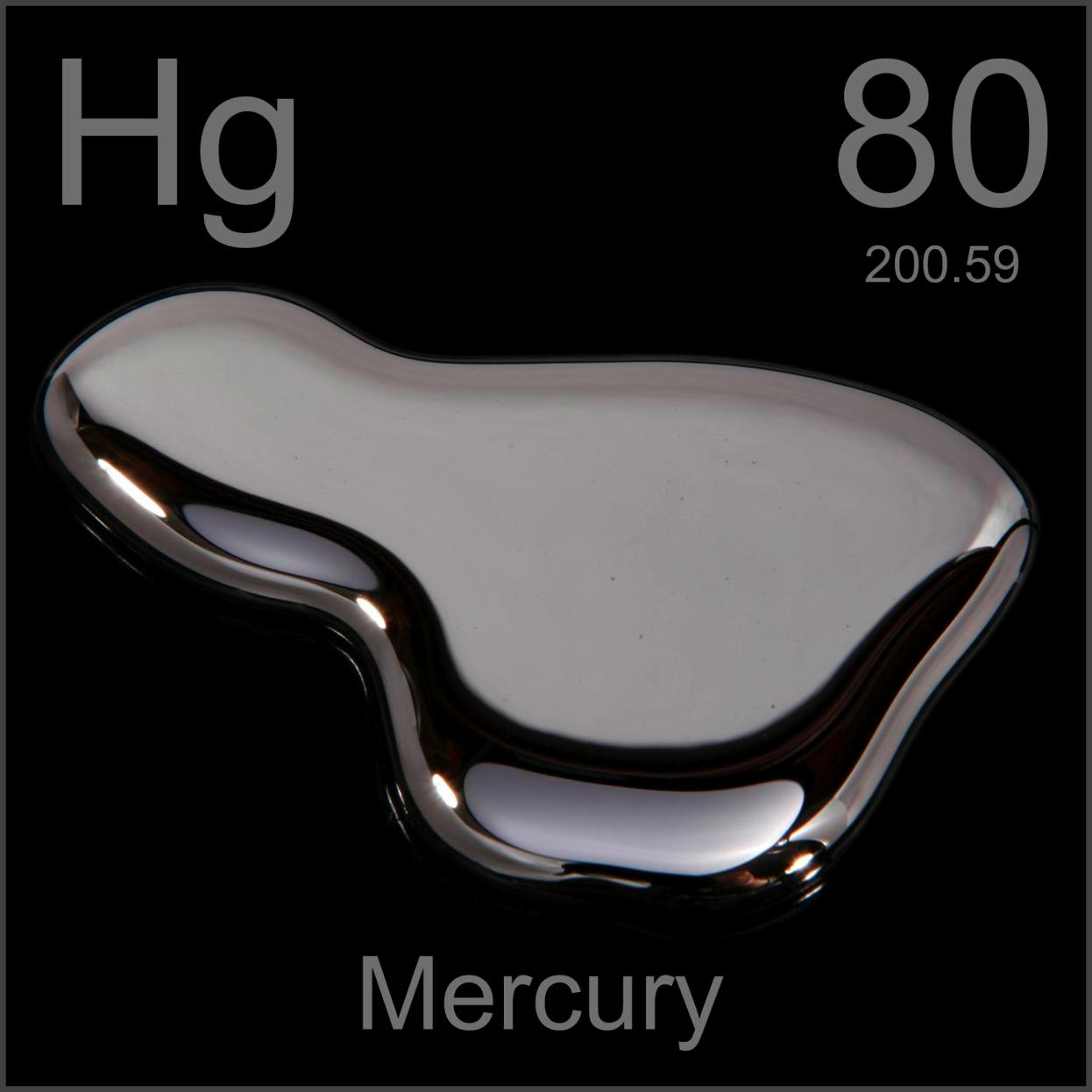 Last week, the Environmental Protection Agency proposed new regulations governing emissions of mercury and other toxic air pollutants from power plants. This rule has been a long time coming. In the waning moments of the Clinton Administration, the EPA made a finding that would trigger mercury emission controls on power plants under the Clean Air Act. The finding had been in the works for some time, but the Clinton EPA had been reluctant to pull the trigger until December 2000. The Bush Administration did not appreciate the house-warming gift, and tried to undo the Clinton Administration’s handiwork with an alternative approach. They first tried legislation, but when Congress wouldn’t bite they pushed through regulations. The only problem was that the Bush EPA disregarded the Clean Air Act’s plain text in the process, earning a well-deserved rebuke from the U.S. Court of Appeals for the D.C. Circuit. The new rules, once finalized, may well trigger litigation, but I doubt we’ll see the same result. From what I’ve looked at so far, this is a fairly traditional regulatory approach.
This EPA fact sheet gives some background on the rule, stressing the anticipated reductions of mercury emissions. What the fact sheet does not mention is that, the lack of meaningful federal mercury controls notwithstanding, mercury emissions have declined since 1990. As the EPA’s Report on the Environment shows between 1990–93 and 2005, mercury emissions declined by 58 percent. Coal-burning facilities — which are covered by the new rule — represent the lion’s share of the rest.
The emission trends are positive. So, too, are trends in blood mercury levels. As the same EPA report shows blood mercury levels in women have declined, particularly among those at the 90th and 95th percentiles. From the EPA report: “during the 1999–2000 survey, 10 percent (i.e., 90th percentile value) of surveyed women age 16 to 49 had blood mercury levels of 4.9 µg/L or higher. In the 2007–2008 survey, however, the 90th percentile value had decreased to 2.7 µg/L.” That’s a significant drop for those with among the highest levels in the country.
These positive trends do not mean additional mercury controls are unnecessary, but it does put their urgency in perspective. It also suggests that the Bush Administration’s approach, which would have utilized a more flexible cap-and-trade approach instead of facility-specific limits, may have been good policy after all, even if it was horribly bad law.
Labels:
China»
green economy»
Green Jobs»
stimulus

Steve Marcus / Las Vegas Sun
Three weeks before Election Day, Senate Majority leader Harry Reid, D-Nev., center, arrives for the dedication of a wind farm in Henderson, Nev., on Oct. 12, 2010. With him are, second from left, Kai Huang, deputy mayor of Shenyang, China; Jinxiang Lu, second from right, chairman and CEO of A-Power Energy Generation Systems, a Chinese company, and Tom Conway, right, international vice president of the United Steelworkers union. Reid's support, and the plan to create jobs in Nevada, helped blunt congressional criticism that stimulus money was going to the Chinese company, which also plans a large wind farm in West Texas. The company is hoping to receive money through the U.S. Energy Department.
WASHINGTON — Top Democratic fundraisers and lobbyists with links to the White House are behind a proposed wind farm in Texas that stands to get $450 million in stimulus money, even though a Chinese company would operate the farm and its turbines would be built in China.The farm’s backers also have close ties with Senate Majority Leader Harry Reid, D-Nev., who, at the height of his hard-fought re-election bid this fall, helped blunt congressional criticism over stimulus dollars possibly going to create jobs in China by endorsing a proposal by the Chinese company to build a factory in his home state. Although his campaign received thousands of dollars in donations from the wind farm’s backers and Reid stood on stage with them at a campaign event they hosted, his office declined to answer any questions about the wind farm’s organizers or their plans for Nevada
The wind farm, first announced more than a year ago, would consist of 300 2-megawatt wind turbines, each perched atop a 26-story-tall steel tower and spinning three blades — each half the length of a football field. The farm would span three counties and 36,000 acres in West Texas land best known for its oil. Dubbed the Spinning Star wind farm, the project’s 600-megawatt capacity is, theoretically, enough to power 180,000 American homes and would be the sixth-largest wind farm in the country.
It is being planned by an unusual joint partnership between the U.S. Renewable Energy Group, a Dallas investment firm with strong ties to Washington and the Democratic Party, and A-Power Energy Generation Systems, an upstart Chinese supplier of wind turbines. Filings with the Securities and Exchange Commission indicate the Chinese are bringing financing and the turbines.
What the Americans are supplying is the local know-how and political clout in Washington, where decisions on how to distribute billions in loan guarantees, stimulus grants and financial incentives are made.
Labels:
green economy»
green Technology»
Lithium

Iranian Minister of Industries and Mines Ali-Akbar Mehrabian says Iran will help Bolivia industrialize its lithium mines and produce lithium batteries.
Mehrabian said that the cooperation will be based on agreements signed between the two countries during the recent visit of Bolivian President Evo Morales to Tehran.
Iran will render technical and engineering assistance for the projects and will also cooperate with Bolivia in producing other lithium products, IRNA quoted Mehrabian as saying on Sunday.
During the Bolivian president’s visit, Tehran and La Paz inked five memoranda of understating following talks in the Iranian capital.
Last year, Iran signed a deal with Bolivia to help the Andean nation conduct research on the exploitation of lithium in the Salar de Uyuni desert.
Iranian experts, Brazil’s Ministry of Science, and researchers from companies such as France’s Eramet SA and Bollore SA conducted a joint study on Bolivia’s lithium reserves.
Bolivia possesses about 70 percent of the world’s lithium and should thus be able to supply the international market for the next 500 years and reduce the world’s reliance on dwindling fossil fuels, experts say.
Lithium has wide applications in the production of rechargeable batteries in cell phones, laptops, and electric cars. Lithium can also be compounded with aluminum for use in the production of light bodies for airplanes and cars.
The Bolivian government plans to eventually produce 30,000 tons of lithium per annum.
Iran is one of Bolivia’s main partners in the area of lithium production and has inked a number of agreements on the exploitation of the country’s lithium mines.
(Source: Press TV)
So now that we know that Green Tech is also dependent on terrorists... now what?
Labels:
environment»
global»
Global tax»
Global Warming»
green economy»
Guardian»
Healthcare»
Moralistic Therapeutic Deism
 | |||
 |
 |
Labels:
batteries»
China»
environment»
green economy»
green Technology»
Lithium»
rare elements»
REE

The signals of a tougher Chinese trade stance come after American trade officials announced on Friday that they would investigate whether China was violating World Trade Organization rules by subsidizing its clean energy exports and limiting clean energy imports. The inquiry includes whether China’s steady reductions in rare earth export quotas since 2005, along with steep export taxes on rare earths, are illegal attempts to force multinational companies to produce more of their high-technology goods in China.
REE, used in fiber-optic telecom cables, military gear, computers and other technologies, aren’t actually as uncommon as the name implies. Some of them are about as abundant as industrial metals like nickel, copper, zinc and lead. For comparison, the two least abundant REE (thulium and lutetium) are almost 200 times more common than gold. But the problem is it’s rare for these metals to become concentrated in deposits that are easy to tap, and as a result, most of the world’s supply comes from just a few sites.
China, which has been blocking shipments of crucial minerals to Japan for the last month, has now quietly halted shipments of those materials to the United States and Europe, three industry officials said on Tuesday.
Labels:
alternative energy»
batteries»
cerium»
China»
green economy»
green Technology»
hybrid»
iphones»
lanthanum»
neodymium and europium»
rare elements»
tantalum»
wind turbines
uh oh... one of those uh huh moments. we need to look at all these green technologies and ask ourselves how sustainable are they really?Most people have no idea what rare earth elements are, but a wide array of the technologies that we use every single day are dependent on them. Without rare earth elements, we would have no hybrid car batteries, flat screen televisions, cell phones or iPods. Without rare earth elements, the entire "green economy" would not be able to function, because almost all emerging green technologies use them. Not only that, but rare earth elements are used by the U.S. military in radar systems, missile-guidance systems, satellites and aircraft electronics. Without rare earth elements, the U.S. military (and militaries all over the globe) would not be able to function. There are 17 key rare earth elements that we rely on every day. But there is a huge problem. China owns more than 85 percent of the known global reserves of rare earth elements. Right now, the rest of the world is absolutely dependent on China's exports of these metals. Without these Chinese exports, the western world would quickly run out of these precious resources. But in just a few years, the rapidly expanding Chinese economy will gobble up the entire domestic production of Chinese rare earth elements. So what will the rest of the world do at that point?
This is a major problem that you aren't hearing a lot about in the mainstream news.
But analysts are now predicting that by 2012 this could be a tremendous crisis.
So exactly what are rare earth elements?
Well, rare earth elements are a group of 17 relatively rare chemical elements that you can find on the periodic table. These rare metals have names you may not be familiar with such as lanthanum, cerium, tantalum, neodymium and europium. As mentioned above, they are used in products that we use every day such as laptop computers, iPhones, magnets, catalytic converters, night vision goggles and wind turbines. These metals are not well known, but they are absolutely crucial to our way of life.
So what is going to happen when we start running out of them?
According to The Independent, the move towards "green technology" will cause a dramatic increase in demand for rare earth metals in the years ahead. In fact, it is being projected that the world will need 200,000 tons of rare earth elements by the year 2014.
But analysts fear that China may drop exports of rare earth elements to exactly zero tons by 2012.
Can anyone else see a problem forming?
Last summer, one leaked report indicated that Chinese authorities were already considering a complete export ban of the most critical of the rare earth elements.
But while we may speculate when the complete ban is coming, the truth is that China has already moved to dramatically cut back exports of the metals.
China recently announced that they have cut export quotas for rare earth elements by 72 percent for the second half of 2010. The U.S. government reacted quite angrily to this news and warned that this could potentially cause a trade war.
TechNewsDaily recently quoted W. David Menzie, chief of the international minerals section at the U.S. Geological Survey, regarding the coming shortage of rare earth elements....
"Countries and companies that have or plan to develop industries that need rare earth minerals to make products are concerned about China's growing consumption, which they fear will eliminate China's exports of rare earths."
So what needs to be done?
Well, nations and corporations that use rare earth elements need to start weaning themselves off the supply coming from China.
But there is a huge problem.
That cannot be done overnight.
According to a recent report by the U.S. Government Accountability Office, building an independent U.S. supply chain for rare earth elements could take up to 15 years.
So what in the world will we do until then?
That is a very good question.
The truth is that those running the U.S. government are just not very good at thinking strategically.
The U.S. Government Accountability Office report mentioned above lists Mountain Pass, California as perhaps the largest non-Chinese rare earth deposit in the world.
But it almost fell into Chinese hands unnoticed.
You see, the mine in Mountain Pass is owned by Unocal, and in 2005 a Chinese bid for Unocal almost succeeded.
Yes, the Chinese were trying to strengthen their monopoly on rare earth elements and it almost worked.
Not that they don't have the rest of the world in a very difficult situation already.
The truth is that if China cut off the export of all rare earth elements to the rest of the world tomorrow, it would throw the global economy into absolute chaos.
That is a lot of power for China to have.
Let's just hope they don't use it any time soon.
IN THE MIDDLE EAST CHAPTER OF HER BOOK MS CLINTON MAKES STATEMENTS THAT AT BEST COULD BE CONSIDERED INSENSITIVE TO ISRAEL, OR AT WORST THA...


